









Introduction
Every workplace, including offices, factories, warehouses, construction sites, restaurants, and healthcare facilities, contains potential risks that can cause injuries or illnesses. Identifying and controlling these risks is a key responsibility of every employer.
Workplace safety hazards can lead to accidents, lost working days, financial losses, legal consequences, and reduced employee confidence. Some hazards are easy to recognize, while others develop gradually through repeated exposure, poor working conditions, or unsafe practices.
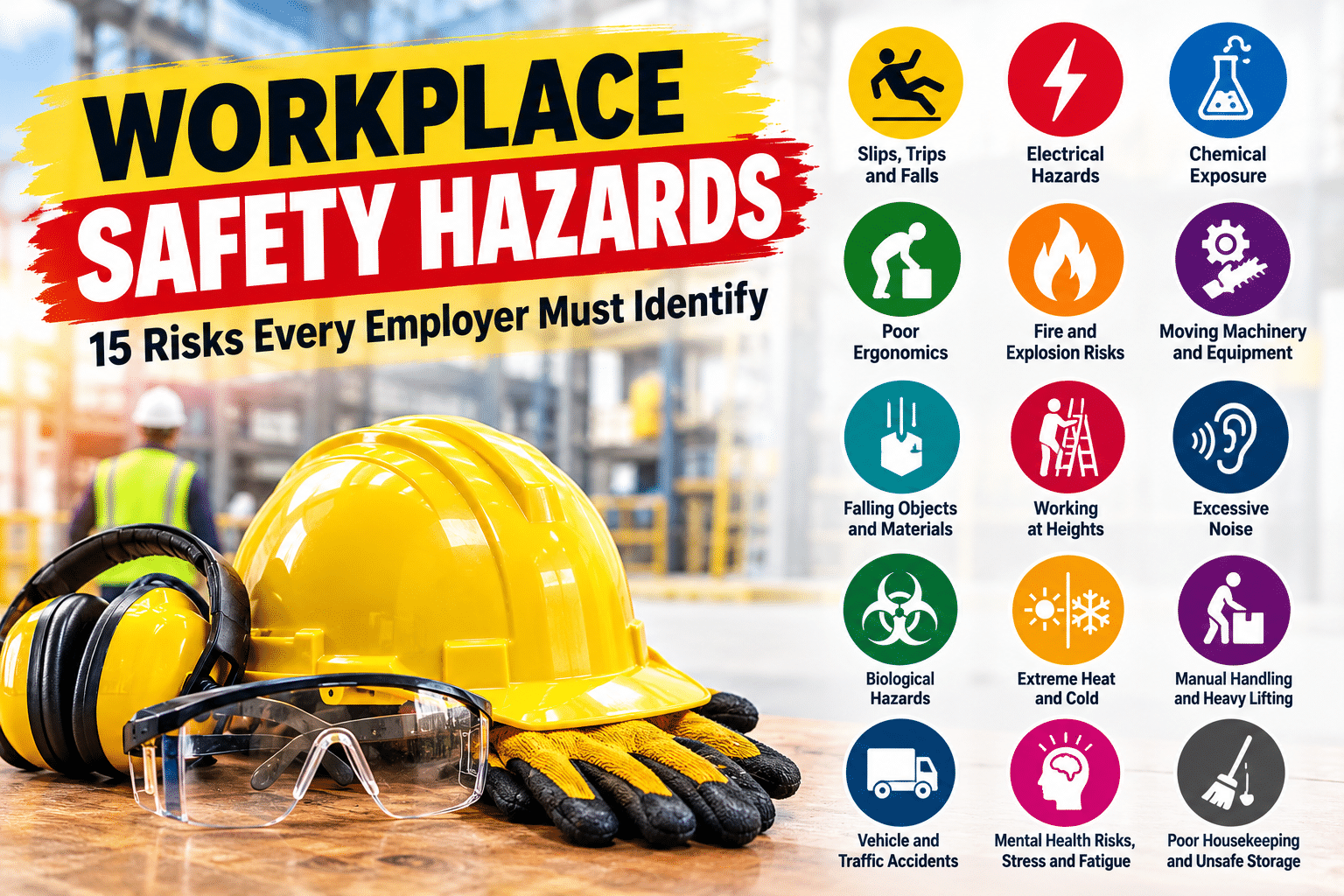
Employers should regularly inspect their workplaces, train employees, maintain equipment, and establish effective safety procedures. This article explores 15 major workplace safety hazards every employer must identify and explains practical ways to prevent them.
What Are Workplace Safety Hazards?
Workplace safety hazards are conditions, substances, activities, or behaviors that have the potential to cause injury, illness, property damage, or other harm to workers.
These hazards vary depending on the type of workplace. For example, construction workers may face falling objects and unprotected edges, while office employees may experience ergonomic problems and electrical risks.
Recognizing workplace safety hazards early allows employers to take preventive action before an incident occurs. Effective hazard identification should be part of an ongoing workplace health and safety program.
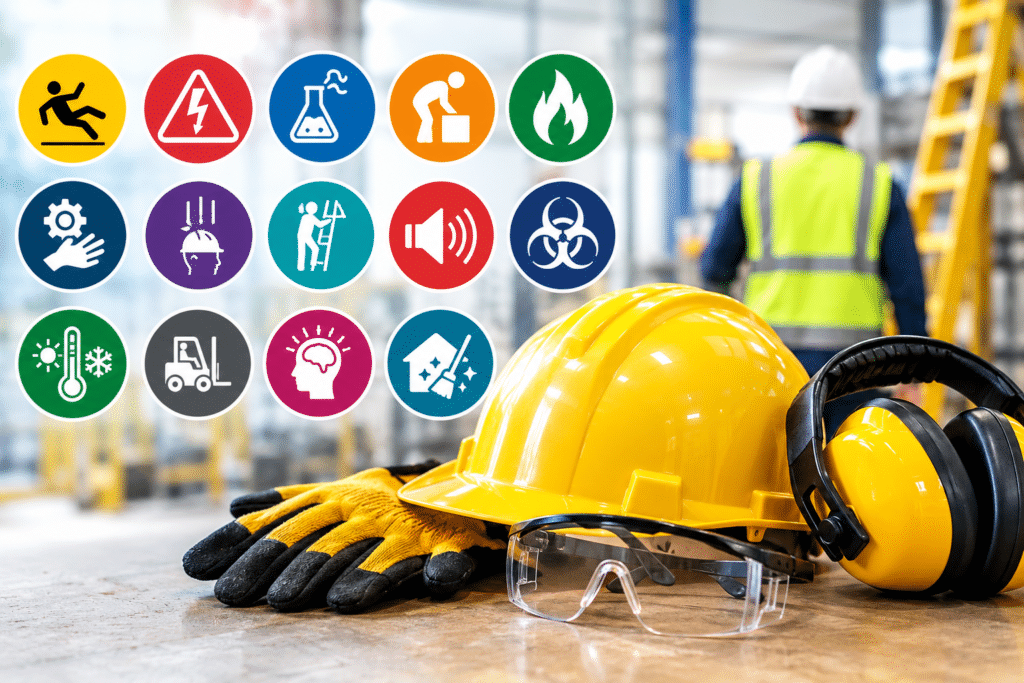
15 Workplace Safety Hazards Every Employer Must Identify
1. Slips, Trips, and Falls
Wet floors, spilled liquids, loose cables, uneven surfaces, cluttered walkways, and poor lighting can increase the risk of accidents. Employees may suffer bruises, sprains, fractures, or serious head injuries after falling.
Prevention measures:
- Clean spills immediately and use warning signs when floors are wet.
- Repair damaged flooring and secure loose cables.
- Provide suitable footwear and adequate lighting.
Employers should inspect floors and walkways regularly to identify workplace safety hazards before someone gets hurt.
2. Electrical Hazards
Electricity can cause electric shocks, burns, fires, and fatal injuries. Damaged wires, overloaded sockets, exposed conductors, faulty equipment, and improper electrical repairs are common sources of danger. Electrical hazards can be particularly serious in damp environments or workplaces where machinery operates continuously.
Prevention measures:
- Inspect electrical equipment and cables regularly.
- Replace damaged plugs, wires, and electrical devices.
- Avoid overloading electrical outlets.
- Allow only qualified and authorized personnel to perform electrical work.
- Use appropriate isolation and lockout procedures before maintenance.
Employees should never attempt repairs on energized equipment unless they are specifically trained and authorized to perform the work safely.
3. Chemical Exposure
Many workplaces use cleaning products, solvents, paints, industrial chemicals, fuels, and other potentially hazardous substances. Depending on the chemical, exposure may cause irritation, burns, breathing difficulties, poisoning, or long-term health problems.
Prevention measures:
- Maintain an updated inventory of hazardous substances.
- Provide accessible safety data sheets.
- Label chemical containers clearly.
- Ensure adequate ventilation and safe storage.
- Provide suitable protective equipment and chemical-handling training.
Employers should assess chemical risks before introducing new substances into the workplace.
4. Poor Ergonomics
Poor ergonomics occurs when workstations, tools, furniture, or tasks do not suit workers’ physical needs. Incorrect desk height, awkward postures, repetitive movements, and heavy lifting can contribute to back pain, neck strain, and musculoskeletal disorders. Office workers, warehouse employees, production staff, and healthcare workers may all experience ergonomic problems.
Prevention measures:
- Adjust chairs, desks, monitors, and tools to suit the task.
- Provide lifting aids for heavy materials.
- Encourage regular movement and appropriate breaks.
- Train workers in safe lifting and handling techniques.
- Redesign repetitive tasks where possible.
A well-designed workstation can reduce discomfort, improve productivity, and help prevent injuries.
5. Fire and Explosion Risks
Fire hazards may arise from flammable materials, gas leaks, faulty electrical equipment, hot work, combustible dust, and unsafe storage practices. A fire can cause severe burns, smoke inhalation, structural damage, and loss of life. Explosions may occur when flammable gases, vapors, or dust ignite under dangerous conditions.
Prevention measures:
- Store flammable materials in suitable designated areas.
- Inspect electrical systems and gas connections.
- Control ignition sources and follow hot-work procedures.
- Maintain suitable fire detection and suppression systems.
- Conduct emergency evacuation drills.
- Keep escape routes and fire exits unobstructed.
Employers should ensure that employees understand alarm procedures, evacuation routes, and their responsibilities during emergencies.
6. Moving Machinery and Equipment
Machines such as conveyors, presses, cutting tools, forklifts, and industrial mixers can cause crushing injuries, cuts, amputations, and entanglement. Missing machine guards, inadequate training, poor maintenance, and unsafe cleaning procedures increase the likelihood of serious accidents.
Prevention measures:
- Install and maintain appropriate machine guards.
- Train employees before authorizing equipment use.
- Never bypass safety interlocks.
- Apply lockout/tagout or other effective energy-isolation procedures during servicing.
- Inspect machinery according to manufacturers’ recommendations.
Employers must ensure that workers understand the hazards of every machine they operate or maintain.
7. Falling Objects and Falling Materials
Falling tools, unsecured building materials, unstable shelves, and improperly stacked products can injure workers below.
Prevention measures:
- Stack goods safely and observe load limits.
- Inspect shelving and storage racks.
- Establish exclusion zones beneath overhead work.
- Use suitable head protection where required.
Good housekeeping and proper material storage can substantially reduce the risk of falling-object injuries.
8. Working at Heights
Working on roofs, ladders, scaffolds, platforms, and elevated structures can expose employees to serious fall hazards. Damaged ladders, unstable scaffolding, missing guardrails, and unsafe work practices increase the danger.
Prevention measures:
- Avoid work at height when a safer alternative is reasonably possible.
- Use properly inspected ladders and scaffolding.
- Install guardrails and suitable fall-prevention systems.
- Provide appropriate fall-arrest equipment where necessary.
Employers should assess each elevated task and prioritize fall prevention over reliance on personal protective equipment alone.
9. Excessive Noise
High noise levels from machinery, power tools, vehicles, and industrial processes can damage hearing over time. Excessive noise may also make it difficult for employees to hear alarms, instructions, or approaching vehicles.
Prevention measures:
- Assess workplace noise levels.
- Reduce noise at its source where possible.
- Maintain equipment and install suitable acoustic controls.
- Limit exposure where necessary.
- Provide appropriate hearing protection and hearing-conservation measures.
Employers should not assume that workers have become accustomed to noise simply because they no longer complain about it.
10. Biological Hazards
Biological hazards include bacteria, viruses, fungi, contaminated materials, and other biological agents. They may be present in healthcare facilities, laboratories, food-processing operations, waste management, and poorly maintained buildings. Exposure can result in infections, allergic reactions, or other illnesses.
Prevention measures:
- Follow appropriate hygiene and sanitation procedures.
- Provide suitable handwashing facilities.
- Use appropriate protective equipment.
- Establish safe waste-handling and disposal procedures.
- Provide infection-control training where relevant.
- Assess exposure risks and implement appropriate controls.
Biological risk assessments should reflect the actual activities and potential exposure routes within each workplace.
11. Extreme Heat and Cold
Workers may experience extreme temperatures in outdoor environments, kitchens, foundries, cold storage facilities, and poorly ventilated buildings. Heat exposure can cause dehydration, heat exhaustion, and potentially fatal heatstroke. Cold exposure can contribute to hypothermia, frostbite, and reduced dexterity.
Prevention measures:
- Monitor temperature and environmental conditions.
- Provide drinking water and suitable rest areas.
- Schedule recovery breaks and adjust work schedules when necessary.
- Provide appropriate clothing and protective equipment.
- Train employees to recognize symptoms of heat- and cold-related illness.
- Establish emergency response procedures.
Employers should pay particular attention to new workers and employees who have not yet acclimatized to demanding temperature conditions.
12. Manual Handling and Heavy Lifting
Lifting, carrying, pushing, and pulling heavy or awkward objects can cause muscle strains, back injuries, and other musculoskeletal problems. Risk increases when workers lift loads that are too heavy, twist while carrying objects, or repeat the same movement throughout the day.
Prevention measures:
- Use trolleys, hoists, and mechanical lifting aids.
- Redesign storage to reduce awkward lifting.
- Train employees in appropriate handling techniques.
- Avoid relying on training alone when equipment or task redesign can remove the risk.
Manual handling procedures should reflect the task and the worker’s working environment rather than applying one lifting technique to every situation.
13. Vehicle and Workplace Traffic Accidents
Forklifts, delivery vehicles, trucks, and other mobile equipment can collide with pedestrians, structures, or other vehicles. Blind spots, excessive speed, poor visibility, and unclear traffic routes contribute to accidents.
Prevention measures:
- Mark traffic lanes and crossing points.
- Train and authorize vehicle operators.
- Maintain vehicles and safety systems.
- Use suitable speed limits, warning signals, and visibility measures.
- Control loading and unloading activities.
Employers should review traffic arrangements whenever workplace layouts or vehicle movements change.
14. Mental Health Risks, Stress, and Fatigue
Workplace hazards are not limited to physical dangers. Excessive workloads, long shifts, bullying, harassment, poor management, inadequate staffing, and lack of recovery time can harm mental health and increase the risk of mistakes.
Fatigue can reduce concentration, slow reaction times, and contribute to incidents involving machinery, vehicles, and other high-risk activities.
Prevention measures:
- Monitor workloads and staffing levels.
- Provide reasonable rest periods and manageable schedules.
- Establish clear policies against bullying and harassment.
- Provide confidential support and appropriate reporting channels.
- Investigate organizational causes instead of placing responsibility solely on individual workers.
Employers should treat psychosocial risks as an important part of workplace health and safety management.
15. Poor Housekeeping and Unsafe Storage
Cluttered work areas, blocked exits, unsecured materials, spilled liquids, and improperly stored tools can create multiple hazards at once.
Poor housekeeping can increase the risk of trips, fires, falling objects, contamination, and delays during emergency evacuation.
Prevention measures:
- Establish clear housekeeping responsibilities.
- Remove waste regularly.
- Keep aisles, stairs, and emergency exits clear.
- Store tools and materials in designated locations.
- Inspect storage areas and correct unsafe conditions promptly.
Consistent housekeeping practices help employers control several workplace safety hazards through a single, practical prevention strategy.
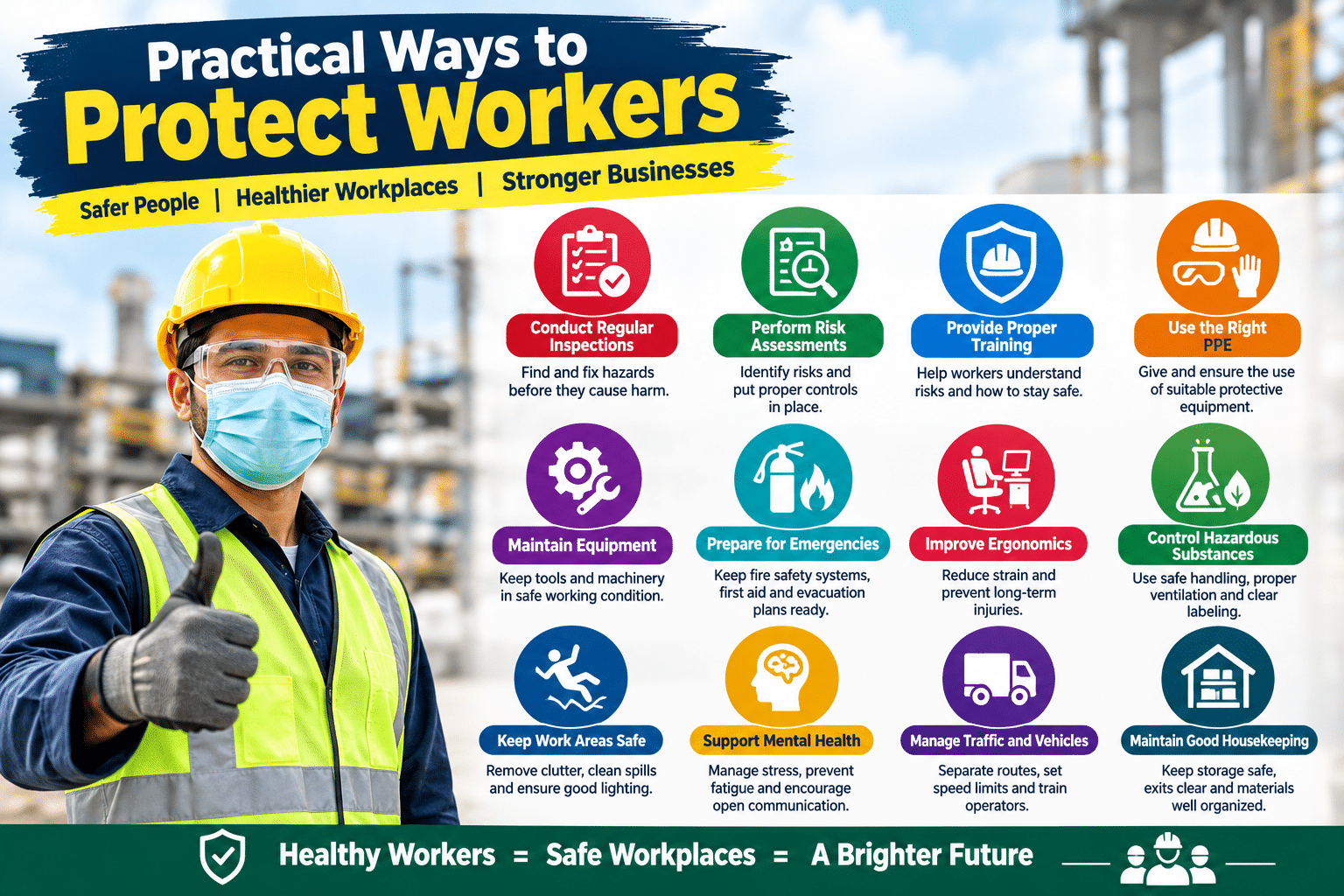
How Employers Can Identify and Control Workplace Safety Hazards
Recognizing hazards is only the first step. Employers should use a structured process to evaluate risks, implement controls, and confirm that those controls remain effective.
1. Conduct Regular Workplace Inspections
Inspect work areas, equipment, electrical systems, storage facilities, emergency exits, and employee workstations. Include routine inspections and additional checks after incidents or significant workplace changes.
2. Perform Risk Assessments
Identify hazards, determine who may be harmed, evaluate the likelihood and severity of potential harm, and decide which controls are necessary. Record significant findings and review assessments when conditions change.
3. Follow the Hierarchy of Controls
The hierarchy of controls helps employers choose more effective ways to manage risks:
Elimination: Remove the hazard entirely.
Substitution: Replace a dangerous substance or process with a safer alternative.
Engineering controls: Isolate people from the hazard through guards, barriers, ventilation, or other physical measures.
Administrative controls: Use training, procedures, signage, scheduling, and supervision.
Personal protective equipment (PPE): Provide suitable gloves, helmets, respirators, hearing protection, or other equipment when required.
Employers should prioritize eliminating hazards and implementing effective engineering controls rather than relying on PPE alone.
4. Train Employees and Encourage Reporting
Employees should understand the hazards associated with their jobs, the safe operating procedures, and the emergency arrangements relevant to their work.
Encourage workers to report near misses, unsafe equipment, spills, and other dangerous conditions without fear of retaliation. Near-miss reports can reveal problems before a serious incident occurs.
5. Investigate Incidents and Review Performance
When an accident or near miss occurs, investigate its underlying causes. Focus on equipment failures, inadequate procedures, training gaps, workload, and other contributing factors.
Track incidents, inspection findings, corrective actions, and employee feedback. Review these records to determine whether workplace safety controls are working as intended.
Why Workplace Safety Hazards Must Be Managed
Effective hazard management benefits both employees and employers.
Protects employee health: Identifying hazards early reduces the likelihood of preventable injuries and occupational illnesses.
Improves productivity: Safe equipment, organized work areas, and effective procedures help reduce disruption and unplanned downtime.
Reduces costs: Preventing incidents can reduce medical expenses, compensation costs, property damage, and lost working time.
Supports legal compliance: Employers must follow the occupational health and safety requirements applicable to their location and industry.
Builds a positive safety culture: Employees are more likely to participate in safety programs when management demonstrates commitment, listens to concerns, and acts on reported risks.