









Introduction
Workplaces are changing rapidly in 2026 as organizations adopt new technologies, introduce flexible working arrangements, and respond to increasing business demands. Although these developments create new opportunities, they also introduce challenges that can affect employees’ psychological well-being, productivity, and physical safety.
Workplace mental health and safety has become an important part of occupational health and safety management. If these problems are ignored, they can contribute to absenteeism, mistakes, workplace accidents, and reduced employee performance.
According to the World Health Organization (WHO), approximately 12 billion working days are lost globally every year because of depression and anxiety. This highlights the importance of creating working environments that protect both physical and mental well-being.
This article explores the major workplace mental health and safety challenges in 2026 and explains practical solutions employers and employees can use to create healthier, safer, and more productive workplaces.
What Is Workplace Mental Health and Safety?
It involves more than offering counseling or encouraging employees to manage stress. Organizations must also identify and address the working conditions that contribute to mental health problems. Examples include:
- Maintaining reasonable workloads and working hours.
- Preventing bullying, harassment, and discrimination.
- Providing appropriate training and managerial support.
- Encouraging work-life balance.
- Establishing clear responsibilities and expectations.
- Providing access to confidential mental health support.
- Creating physically safe and psychologically supportive environments.
The WHO recommends addressing workplace risks through organizational changes, manager training, employee education, and support for workers experiencing mental health conditions.
Why Workplace Mental Health and Safety Matters in 2026
Employee well-being is closely connected to organizational performance. Workers who feel supported and respected are better positioned to concentrate, communicate effectively, and perform their responsibilities.
In contrast, poor working conditions can increase stress and contribute to mental health difficulties. The International Labour Organization (ILO) highlighted psychosocial risks in its 2026 global report, including excessive demands, unclear roles, limited control over work, and unfair management practices.
The benefits of effective workplace mental health and safety practices include:
- Improved productivity:Employees can concentrate better when unnecessary stress is reduced.
- Fewer workplace mistakes:Appropriate workloads and adequate rest can support safer decision-making.
- Reduced absenteeism:Early intervention can help employees receive support before difficulties become more severe.
- Stronger teamwork:Respectful communication encourages cooperation.
- Improved workplace culture:Employees are more likely to raise concerns when they feel safe to speak.
Organizations should therefore treat psychological well-being as an essential part of their overall health and safety strategy.
Top Workplace Mental Health and Safety Challenges in 2026
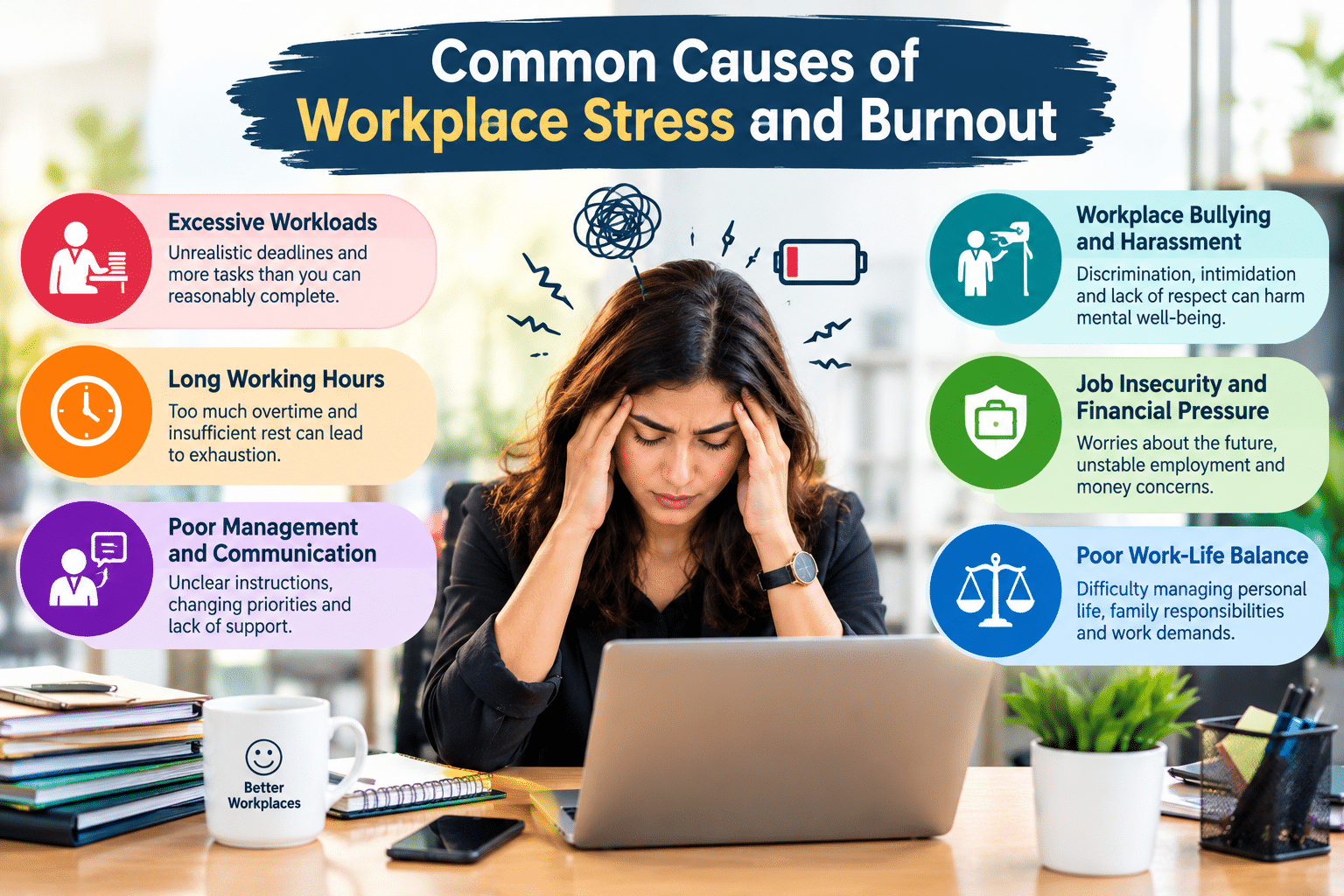
1. Workplace Stress and Excessive Workloads
Tight deadlines, staff shortages, long working hours, and unrealistic performance targets can create continuous pressure. Employees who regularly work under these conditions may experience fatigue, irritability, difficulty concentrating, and reduced motivation.
For example, an employee who manages several urgent projects without sufficient support may struggle to complete tasks accurately. In a factory, hospital, or construction site, reduced concentration may also increase the risk of accidents.
Solutions:
- Set realistic deadlines and achievable targets.
- Distribute responsibilities fairly among employees.
- Review staffing levels and workloads regularly.
- Provide sufficient breaks and rest periods.
- Encourage managers to identify early signs of excessive stress.
- Allow employees to report workload concerns without fear of punishment.
Employers should examine the causes of stress rather than relying entirely on employees to cope with unreasonable demands.
2. Employee Burnout and Emotional Exhaustion
Burnout can develop when prolonged workplace stress is not successfully managed. It is commonly associated with exhaustion, increased mental distance from work, and reduced professional effectiveness.
Employees experiencing burnout may feel constantly tired, lose interest in their responsibilities, or find it increasingly difficult to complete ordinary tasks.
Burnout is particularly relevant in demanding environments such as healthcare, customer service, education, manufacturing, and emergency services.
Solutions:
Organizations can reduce burnout risks by:
- Monitoring overtime and consecutive long shifts.
- Encouraging employees to take their entitled leave.
- Providing adequate staffing and managerial support.
- Reviewing unrealistic performance expectations.
- Offering confidential access to professional support.
- Creating opportunities for recovery after demanding periods.
Managers should avoid treating exhaustion as a sign of commitment. Sustainable performance requires appropriate workloads, sufficient rest, and realistic expectations.
3. Anxiety and Uncertainty About Employment
Economic uncertainty, organizational restructuring, changing job requirements, and concerns about job security can increase employee anxiety.
Workers may worry about losing their jobs, receiving insufficient income, or being unable to adapt to new technologies. These concerns can affect concentration, sleep, motivation, and relationships with colleagues.
In 2026, organizations introducing artificial intelligence and automated systems should communicate clearly about how these changes may affect employees.
Solutions:
- Explain organizational changes as early as reasonably possible.
- Provide training for new responsibilities and technologies.
- Establish transparent performance and promotion criteria.
- Offer employees opportunities to ask questions.
- Communicate honestly about employment decisions.
- Provide career development and reskilling opportunities.
Clear communication cannot eliminate every uncertainty, but it can reduce confusion and help employees prepare for change.
4. Workplace Bullying, Harassment, and Discrimination
Bullying and harassment can damage employees’ confidence and create an unsafe working environment. Examples include repeated humiliation, threatening behavior, exclusion, offensive remarks, and the misuse of managerial authority.
Discrimination based on personal characteristics can also prevent employees from participating fully in workplace activities.
These behaviors may contribute to anxiety, emotional distress, absenteeism, and employee turnover.
Solutions:
Employers should establish a clear policy against bullying, harassment, and discrimination. The policy should explain unacceptable behavior, confidential reporting options, investigation procedures, and appropriate consequences.
Additional measures include:
- Training managers to respond professionally to complaints.
- Providing safe reporting channels.
- Investigating concerns fairly and promptly.
- Protecting employees against retaliation.
- Applying workplace rules consistently.
- Promoting respect across teams and departments.
A written policy is only effective when employees trust that complaints will be handled seriously and fairly.
5. Poor Work-Life Balance
Digital communication tools have made it easier to work remotely and collaborate across locations. However, they can also blur the boundaries between professional and personal life.
Employees may feel pressure to answer messages after working hours, attend meetings during personal time, or remain available throughout the day.
Over time, inadequate recovery periods can contribute to fatigue, relationship difficulties, and declining job satisfaction.
Solutions:
- Establish clear expectations for after-hours communication.
- Encourage employees to use their annual leave.
- Avoid unnecessary meetings outside agreed working hours.
- Introduce flexible working arrangements where practical.
- Set reasonable limits on overtime.
- Respect employees’ personal and family responsibilities.
A healthy work-life balance helps employees recover from daily demands and return to work with better energy and concentration.
6. Remote Work Isolation and Digital Fatigue
Remote and hybrid work arrangements offer flexibility, but they can create new challenges for workplace mental health and safety.
Employees working from home may experience loneliness, reduced social interaction, unclear communication, or difficulty separating work from personal life. Frequent video meetings and continuous notifications may also cause digital fatigue.
Poor home-office ergonomics can add physical discomfort to these psychological pressures.
Solutions:
Employers can support remote employees by scheduling regular team check-ins, providing appropriate equipment, encouraging breaks, and maintaining clear communication channels.
Managers should focus on outcomes rather than monitoring employees excessively. They should also ensure that remote workers have equal access to training, career opportunities, and mental health resources.
Employees can benefit from a dedicated workspace, regular movement, planned working hours, and meaningful social interaction.
7. Lack of Mental Health Awareness
Mental health difficulties are sometimes misunderstood or stigmatized. Employees may avoid discussing their concerns because they fear judgment, discrimination, or negative effects on their careers.
Managers may also lack the knowledge needed to recognize distress or respond appropriately.
Solutions:
Workplace mental health and safety programs should include awareness sessions, practical training, and information about available support services.
Managers should learn how to listen without judgment, recognize possible signs of distress, and guide employees toward suitable professional assistance.
Employees should understand that experiencing a mental health difficulty does not mean they are weak or incapable. Confidentiality, dignity, and fair treatment must remain priorities.
8. Workplace Violence and Psychological Trauma
Workers in healthcare, public services, security, retail, transport, and emergency response may face particular risks depending on their duties and working conditions.
Solutions:
After a serious incident, affected employees should have access to timely support and reasonable adjustments where necessary.
Employers should also review incidents to identify preventive measures rather than treating each event as an isolated problem.
9. AI, Automation, and Constant Digital Change
Artificial intelligence and automation are transforming many workplaces. Although these technologies can improve efficiency and reduce certain hazardous tasks, they may also create uncertainty about job security, monitoring, skill requirements, and performance expectations.
Excessive digital monitoring can make employees feel that they are constantly being evaluated. Poorly implemented technology may also increase workloads instead of reducing them.
Solutions:
- Explain why new technologies are being introduced.
- Involve employees in decisions that affect their work.
- Provide practical training and reskilling opportunities.
- Review the effect of digital tools on workload and stress.
- Maintain appropriate human oversight of important decisions.
- Use transparent and proportionate employee-monitoring practices.
Technology should support workers and improve safety, not create unnecessary psychological pressure.
10. Inadequate Management Support
Managers strongly influence workplace culture through their communication, decision-making, and treatment of employees.
Unclear instructions, inconsistent expectations, unfair treatment, and limited feedback can contribute to confusion and stress. Employees may also hesitate to seek help if managers respond negatively to concerns.
Solutions:
Organizations should train managers in communication, conflict resolution, workload planning, and mental health awareness.
Regular one-to-one meetings can help identify problems early. Managers should also recognize employee contributions, clarify expectations, and respond constructively to reasonable requests for assistance.
Supportive leadership does not mean removing accountability.
Practical Workplace Mental Health and Safety Solutions for Employers
Organizations need a structured approach that addresses the causes of workplace stress as well as the needs of individual employees.
1. Conduct Psychosocial Risk Assessments
A psychosocial risk assessment identifies working conditions that may negatively affect employees’ mental health.
Employers can review workloads, working hours, staffing levels, employee feedback, reporting systems, and management practices. Anonymous surveys and confidential discussions can help identify concerns that employees might otherwise hesitate to report.
Assessments should be repeated when working conditions change and whenever significant risks are identified.
2. Develop a Workplace Mental Health Policy
A written policy should explain the organization’s commitment to employee well-being and identify the responsibilities of management, supervisors, and workers.
It should cover stress prevention, bullying and harassment, confidentiality, reasonable workplace adjustments, reporting procedures, and access to support.
Policies should be communicated clearly and reviewed regularly to ensure they remain practical and relevant.
3. Train Managers and Supervisors
Managers should understand how work design, communication, and leadership behavior affect psychological well-being.
Training can cover early recognition of distress, supportive conversations, fair workload distribution, conflict management, and appropriate referral to professional services.
Their role is to recognize concerns, respond respectfully, and help employees access appropriate support.
4. Provide Access to Professional Support
Employers can offer employee assistance programs, counseling referrals, occupational health services, or other confidential support options, depending on their resources.
Small businesses may begin by providing information about affordable professional services and establishing a clear process for requesting assistance.
Employees experiencing persistent or severe symptoms should be encouraged to seek qualified healthcare support.
5. Improve Workplace Communication
Clear communication reduces uncertainty and helps employees understand their responsibilities.
Organizations should provide accurate information about changes, deadlines, performance expectations, and available resources.
6. Monitor Progress and Improve Continuously
Employers should evaluate whether their measures are working. Useful indicators include employee feedback, reported incidents, overtime patterns, absenteeism, turnover, and participation in support programs.
These measures should be interpreted carefully because no single indicator can fully explain employees’ mental health.
The purpose is to identify workplace problems, improve conditions, and make decisions based on evidence rather than assumptions.
Workplace Mental Health and Safety in Pakistan
Workplace mental health and safety is relevant to organizations throughout Pakistan, including offices, factories, hospitals, schools, retail businesses, construction sites, and small enterprises.
Employees may face long working hours, financial pressure, demanding customers, inadequate staffing, limited privacy, or insufficient access to mental health resources. Informal workers may experience additional difficulties because they may lack structured employment protections and occupational health services.
Employers can take practical steps even when budgets are limited.
For example, a small business can introduce reasonable break schedules, clarify daily duties, prevent abusive behavior, communicate changes honestly, and provide a confidential way to report concerns.
Factories and construction businesses should integrate psychological risks into existing occupational health and safety assessments. Office-based organizations can review workloads, overtime, communication expectations, and workstation arrangements.
Organizations should also consult applicable Pakistani labor and occupational safety requirements, which can vary by province and sector.
Improving workplace mental health and safety does not always require expensive technology. Consistent leadership, respectful treatment, fair working conditions, and accessible support can make a meaningful difference.
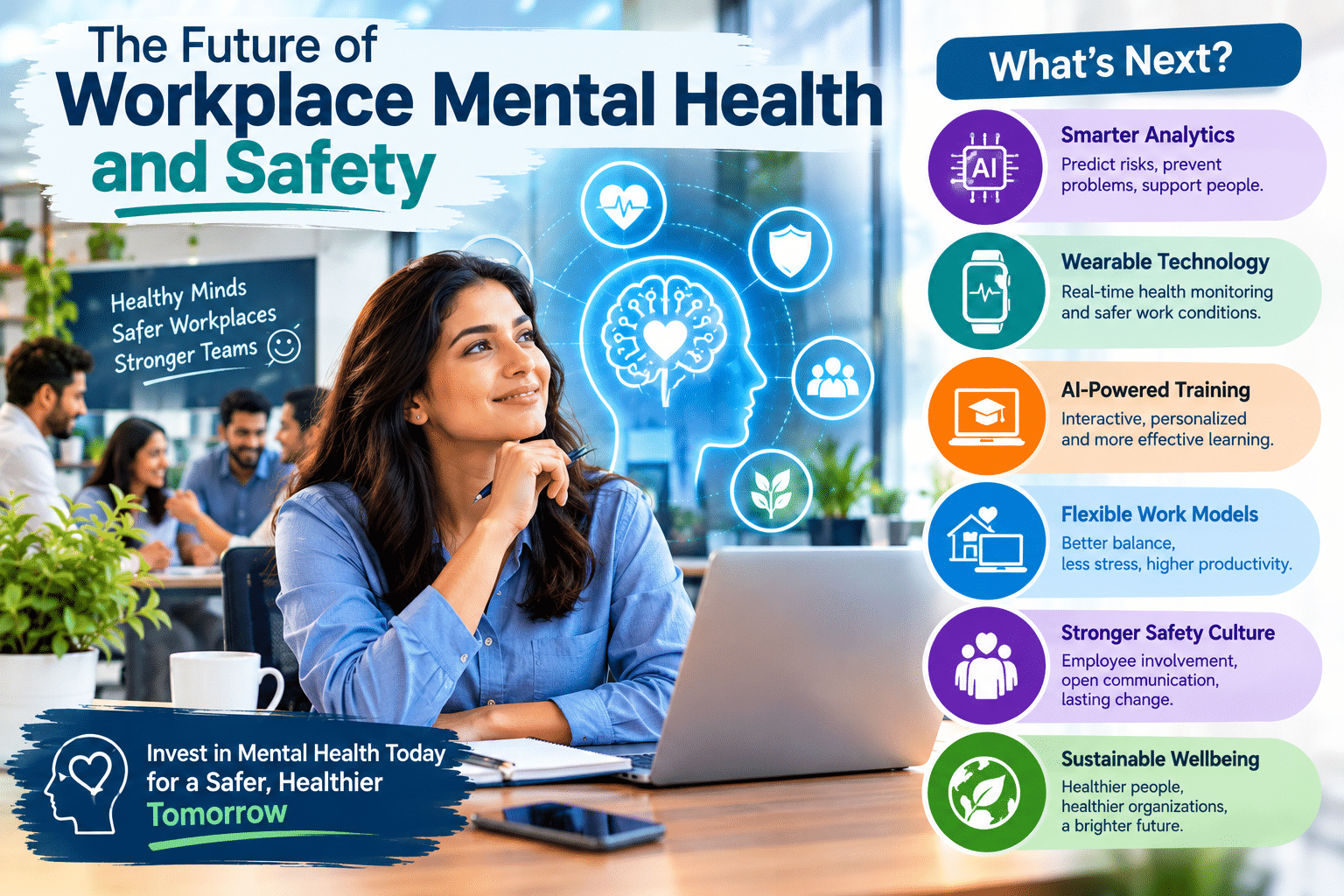
The Future of Workplace Mental Health and Safety
The future of workplace mental health and safety will increasingly focus on prevention, employee participation, and evidence-based management.
Organizations are likely to give greater attention to psychosocial risk assessments, flexible work arrangements, digital well-being, and training for managers. AI-based tools may help identify workload patterns or emerging organizational risks, but they should be used responsibly and with appropriate privacy safeguards.
Employers should avoid relying on employee-monitoring technology to make unsupported assumptions about an individual’s mental health. Human judgment, confidentiality, and meaningful employee participation remain essential.
The ILO’s 2026 report on the psychosocial working environment emphasizes the importance of job design, workload, role clarity, autonomy, and fair organizational processes. These factors will remain central to building safer and more sustainable workplaces.
Organizations that address problems early, listen to employees, and continuously improve working conditions will be better positioned to protect well-being and support long-term performance.