
Introduction:
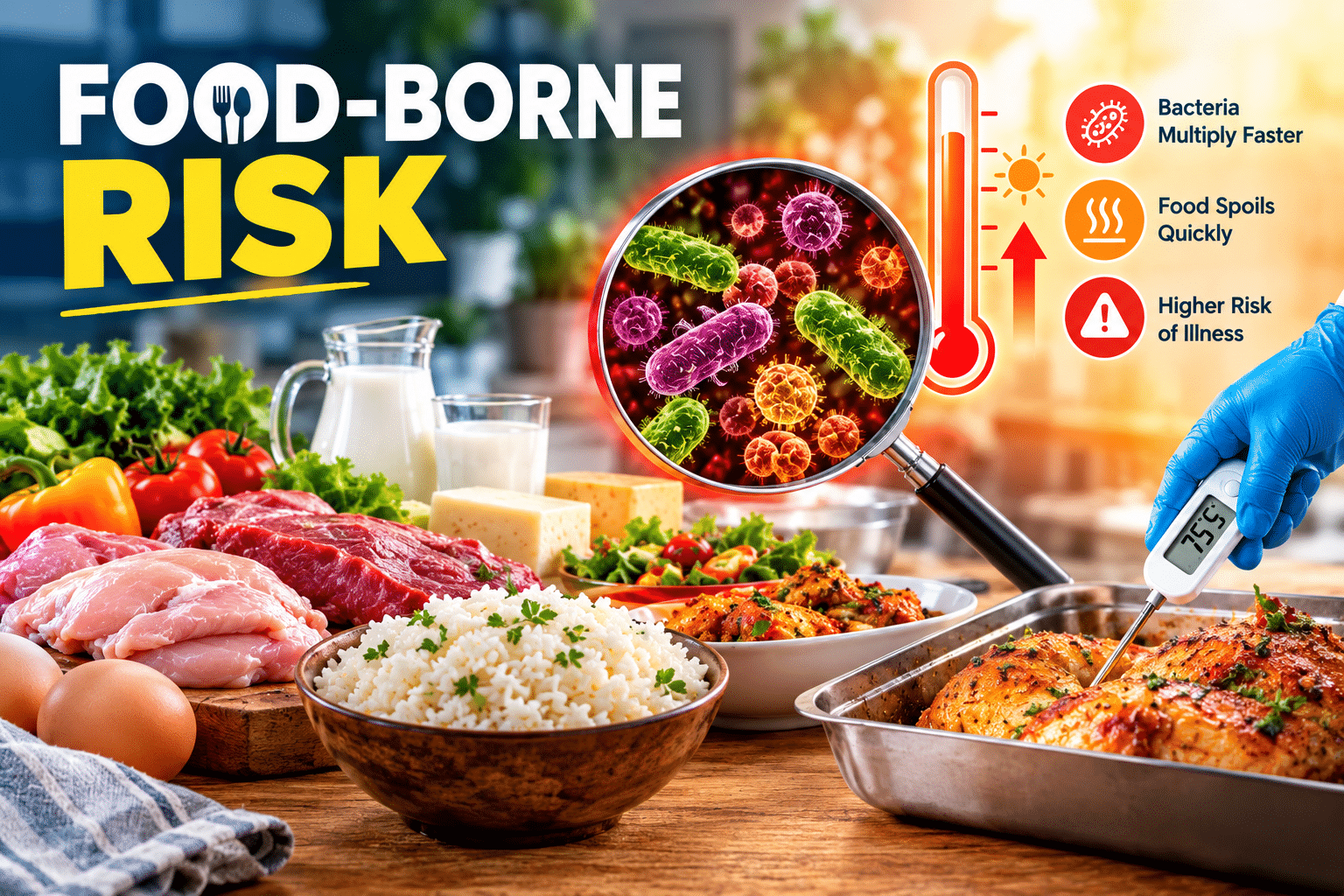
Food safety becomes especially important when temperatures rise. Warm weather can create ideal conditions for bacteria and other microorganisms to multiply rapidly in food. Understanding how high temperatures increase food-borne risks can help households, restaurants, food businesses, and food workers prevent contamination and food-borne illness.
Food-borne illnesses can occur when people consume food contaminated with harmful bacteria, viruses, parasites, toxins, or chemicals. While contamination can happen at any time of the year, higher temperatures can accelerate microbial growth and make improper food storage particularly dangerous.
From outdoor events and picnics to restaurants and home kitchens, controlling temperature is one of the most important parts of safe food handling. This article explains why high temperatures increase food-borne risks, which foods are most vulnerable, how temperature affects bacterial growth, and what consumers and food businesses can do to protect food.
Why High Temperatures Increase Food-borne Risks
One major reason high temperatures increase food-borne risks is that many disease-causing microorganisms grow more quickly in warm conditions. Bacteria require suitable temperatures, moisture, nutrients, and time to reproduce.
Foods such as cooked meat, poultry, seafood, eggs, dairy products, cooked rice, and prepared meals can provide an ideal environment for bacterial multiplication if they are not kept at safe temperatures.
When contaminated food remains warm for an extended period, bacteria can multiply to levels that may cause illness. Some microorganisms can also produce toxins that may remain in food even after the bacteria themselves are destroyed. Therefore, temperature control is an essential component of food safety.
How Temperature Affects Bacterial Growth
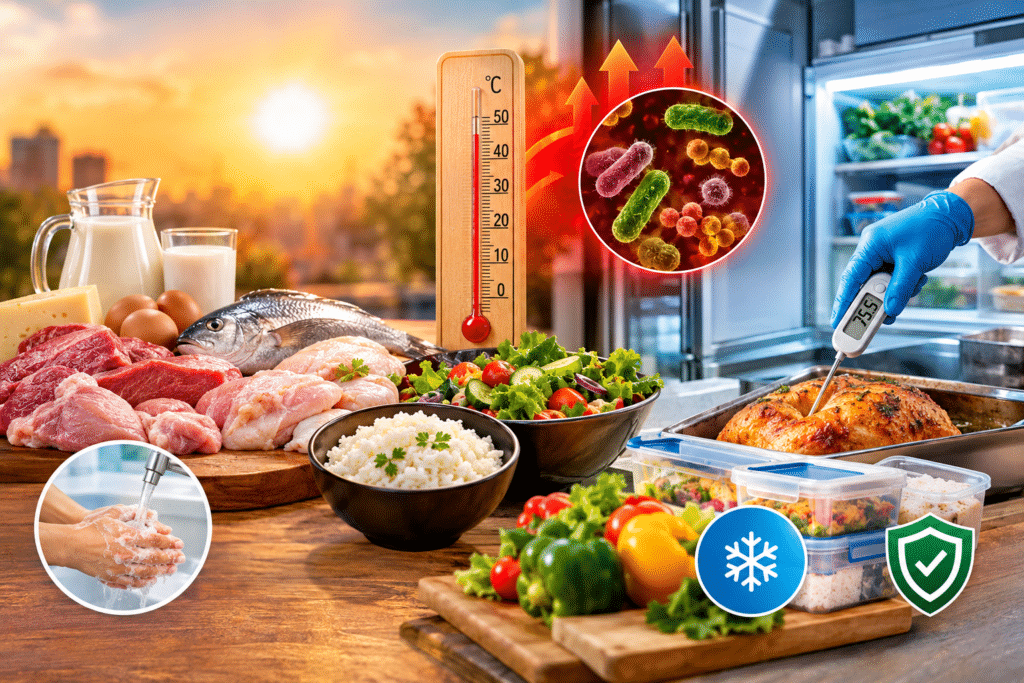
Many food-borne bacteria multiply rapidly when food is kept within the temperature range commonly called the danger zone.
Food safety authorities generally recommend keeping perishable foods either sufficiently cold or sufficiently hot rather than allowing them to remain at moderate temperatures for long periods.
The exact temperature limits and time requirements can vary depending on the food, local regulations, and food-safety system being used. However, the basic principle is consistent:
Keep cold foods cold and hot foods hot, and minimize the amount of time food spends at temperatures that support bacterial growth.
This becomes particularly important during hot weather because food can reach unsafe temperatures much faster.
Foods Most Affected by High Temperatures
Some foods are more vulnerable than others because they contain moisture and nutrients that microorganisms need for growth.
1. Meat and Poultry
Raw and cooked meat and poultry can support bacterial growth when handled or stored incorrectly. Chicken, beef, mutton, and other meats should be refrigerated promptly and cooked to an appropriate internal temperature. During summer, leaving meat outside the refrigerator for an extended period can significantly increase the risk of bacterial multiplication.
2. Seafood
Fish and shellfish are highly perishable foods. High temperatures can accelerate spoilage and microbial growth. Seafood should be kept properly chilled during transportation, storage, preparation, and serving.
3. Dairy Products
Milk, cream, cheese, yogurt, and other dairy products can become unsafe when temperature control is inadequate. A refrigerator that is too warm or frequent opening of the refrigerator door during hot weather can affect food temperatures.
4. Eggs
Eggs and dishes containing eggs require careful temperature control. Prepared egg dishes should not be left at room temperature for prolonged periods.
5. Cooked Rice and Pasta
Cooked rice and pasta are sometimes overlooked when considering food safety. If cooked foods are cooled slowly and left at moderate temperatures, certain bacteria can multiply and potentially produce toxins. This is particularly important for restaurants, catering businesses, and large family gatherings.
6. Ready-to-Eat Foods
Sandwiches, salads, cooked meals, desserts containing cream, and other ready-to-eat products can become contaminated when temperature control is poor. Because these foods may be consumed without additional cooking, preventing contamination is especially important.
High Temperatures and Food Spoilage
High temperatures increase food-borne risks not only because bacteria can multiply faster but also because heat can accelerate food deterioration. Spoilage may cause changes in:
- Smell
- Taste
- Texture
- Color
- Appearance
However, an important food-safety point is that harmful bacteria do not always produce obvious changes in food. A food may look and smell normal while still containing dangerous microorganisms. Therefore, consumers should not rely solely on smell or appearance to determine whether a perishable food is safe.
The Importance of the Cold Chain
The cold chain refers to maintaining appropriate temperatures during the storage and transportation of temperature-sensitive food. It can include:
- Refrigerated warehouses
- Refrigerated trucks
- Cold storage rooms
- Supermarket refrigerators
- Restaurant refrigerators
- Household refrigerators
When the cold chain breaks, food temperatures can rise and microorganisms may multiply. During hot weather, maintaining the cold chain becomes more challenging. Food businesses should regularly monitor refrigerator and freezer temperatures and avoid unnecessary exposure of food to ambient temperatures.
High Temperatures and Outdoor Food Safety
Summer picnics, weddings, festivals, markets, and outdoor gatherings can create additional food-safety challenges. Food may be transported without adequate cooling, placed under direct sunlight, or left on tables for long periods. Some practical precautions include:
- Use insulated coolers for chilled foods.
- Keep raw and cooked foods separate.
- Use ice or appropriate cooling equipment.
- Keep food protected from direct sunlight.
- Serve smaller quantities and replenish them as needed.
- Avoid leaving perishable food at room temperature for extended periods.
- Keep utensils and serving equipment clean.
Cross-Contamination Becomes More Dangerous
High temperatures are not the only concern. Cross-contamination can introduce harmful microorganisms into foods that were previously safe.
- Salads
- Bread
- Cooked rice
- Fruits
- Ready-to-eat meals
- Kitchen surfaces
If the contaminated food is then kept warm, bacteria may multiply rapidly. To prevent cross-contamination, food handlers should use separate utensils and cutting boards for raw and ready-to-eat foods when possible. Hands, equipment, and surfaces should also be cleaned appropriately.
Safe Cooking Is Essential
Proper cooking can destroy many harmful microorganisms. However, cooking does not compensate for poor storage and handling. For example, if cooked food becomes contaminated after cooking and is then held at an unsafe temperature, bacteria can multiply again. Food should therefore be:
- Cooked thoroughly.
- Served safely.
- Kept at appropriate holding temperatures.
- Protected from contamination.
- Refrigerated promptly when it is not being served.
Using a food thermometer can provide a more reliable indication of cooking temperature than judging food by color alone.
Refrigeration During Hot Weather
A refrigerator should be maintained at a temperature appropriate for safe food storage. Consumers should avoid overloading it because excessive contents can interfere with air circulation. It is also important to:
- Keep refrigerator doors closed as much as possible.
- Check refrigerator temperature regularly.
- Store raw meat separately from ready-to-eat food.
- Clean spills promptly.
- Avoid storing food for longer than recommended.
- Follow package storage instructions.
These simple actions can reduce the ways high temperatures increase food-borne risks in the home.
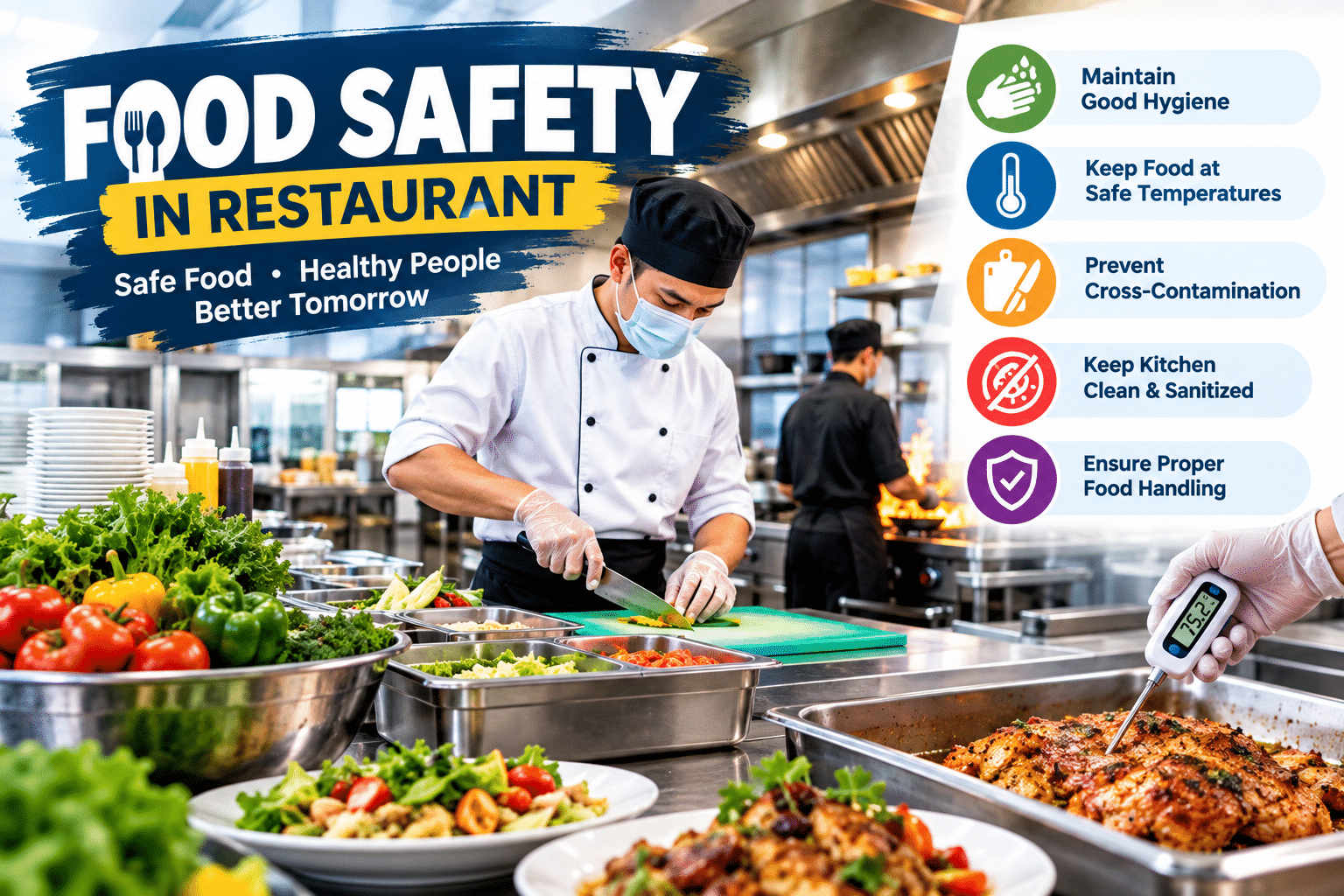
Food Safety Tips for Restaurants and Food Businesses
Restaurants and food businesses have additional responsibilities because they handle large quantities of food. A strong food-safety program should include:
Temperature Monitoring
Use calibrated thermometers to monitor refrigerators, freezers, cooking equipment, and hot-holding units.
Employee Training
Food workers should understand personal hygiene, cross-contamination prevention, cooking, cooling, storage, and temperature control.
Proper Storage
Raw foods should be stored appropriately and separated from ready-to-eat foods.
Equipment Maintenance
Refrigerators, freezers, cold rooms, and other temperature-control equipment should be maintained regularly.
Documentation
Temperature monitoring records can help businesses identify problems before unsafe food reaches consumers.
The Role of Food Safety Education
Education is one of the most effective ways to reduce food-borne illness. Consumers should understand that high temperatures increase food-borne risks and that safe food handling must continue throughout the food chain. Schools, restaurants, food manufacturers, retailers, health authorities, and community organizations can help spread practical food-safety information. Food safety education is particularly important before and during hot seasons when temperature-related risks may become more significant.
Climate Change and Food Safety
Longer and more frequent periods of extreme heat may create additional challenges for food systems. Higher ambient temperatures can increase pressure on refrigeration, transportation, food storage, and outdoor food handling. This does not mean that every hot day will result in food-borne illness. Instead, changing temperature conditions highlight the importance of resilient food-safety systems.
Businesses may need reliable refrigeration, backup power arrangements, improved temperature monitoring, and stronger food-safety procedures to protect temperature-sensitive products.
Technology Can Help Control Temperature Risks
Modern technology is increasingly being used to improve food safety.
Examples include:
- Digital temperature sensors
- Internet-connected monitoring systems
- Automated alerts
- Data loggers
- Smart refrigerators
- Cold-chain tracking systems
These technologies can notify food businesses when temperatures move outside acceptable limits. For large food operations, continuous monitoring can provide better information than occasional manual temperature checks.
What Consumers Should Do
Consumers can reduce food-borne risks by following a few basic principles:
Clean: Wash hands, utensils, and food-contact surfaces.
Separate: Keep raw foods away from cooked and ready-to-eat foods.
Chill: Refrigerate perishable foods promptly.
Monitor time and temperature: Avoid leaving perishable food in conditions that support bacterial growth.
During hot weather, these principles become particularly important because high temperatures increase food-borne risks by creating favorable conditions for microbial growth.