
Introduction
Food safety begins long before food reaches a processing facility, supermarket, restaurant, or kitchen. Contamination can occur at almost every stage of the food supply chain, including cultivation, irrigation, harvesting, storage, transportation, and processing. Modern agriculture is therefore moving toward technology-driven systems that can identify risks earlier and support better decision-making.
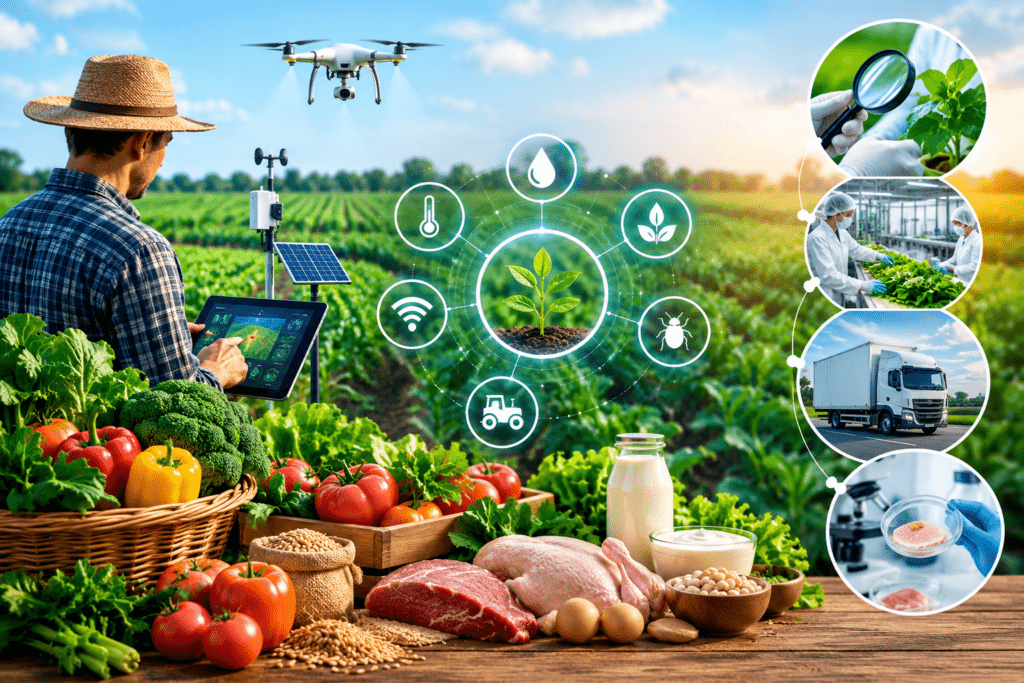
Smart farming and food safety are increasingly connected because digital technologies can help farmers monitor crops, soil, water, weather, livestock, and agricultural inputs in real time. Sensors, drones, satellite imagery, artificial intelligence (AI), Internet of Things (IoT) devices, automated systems, and data analytics can provide information that was previously difficult or expensive to collect.
The goal of smart farming and food safety is not simply to increase agricultural production. It is also to reduce contamination risks and improve traceability, hygiene, resource management, and quality throughout the food chain.
What Is Smart Farming?
Smart farming, also called precision agriculture, uses digital technologies to collect and analyze information about agricultural operations. Farmers can use this information to make more accurate decisions about irrigation, fertilizers, pesticides, crop health, harvesting, and environmental conditions. Technologies commonly used in smart farming include:
- IoT sensors
- Soil moisture sensors
- Weather monitoring systems
- Drones
- Satellite imagery
- GPS technology
- Artificial intelligence
- Machine learning
- Automated irrigation
- Digital farm management platforms
- Block-chainand traceability systems
These technologies can support smart farming and food safety by identifying conditions that may contribute to microbial, chemical, or physical contamination.
Why Food Contamination Is a Concern in Agriculture
Food contamination can involve biological, chemical, or physical hazards.
1. Biological Contamination
Contaminated irrigation water, animal manure, poor worker hygiene, and contact with contaminated surfaces can introduce pathogens into food production.
Examples include pathogens such as Salmonella, E. coli, Listeria, and certain viruses.
2. Chemical Contamination
Chemical hazards can result from:
- Incorrect pesticide application
- Excessive fertilizer use
- Contaminated water
- Heavy metals in soil
- Improper use of agricultural chemicals
- Residues from nearby industrial activities
3. Physical Contamination
Physical hazards may include:
- Stones
- Glass
- Metal fragments
- Plastic
- Broken equipment parts
- Other foreign materials
Effective smart farming and food safety programs can help farmers detect conditions associated with these hazards before they become larger problems.
How Smart Farming and Food Safety Technology Prevent Contamination
1. Smart Sensors Monitor Soil Conditions
Soil plays an important role in crop health and food safety. Smart sensors can measure parameters such as moisture, temperature, pH, and other environmental conditions.
Excessive moisture, for example, can contribute to fungal growth and certain crop diseases. Real-time monitoring allows farmers to identify unusual conditions and adjust irrigation or other farming practices.
Better soil monitoring can therefore contribute to smart farming and food safety by reducing unnecessary irrigation and helping maintain healthier growing conditions.
2. IoT Technology Enables Real-Time Monitoring
The Internet of Things connects physical devices to digital systems so that information can be collected and analyzed automatically. In agriculture, IoT devices can monitor:
- Temperature
- Humidity
- Soil moisture
- Water quality
- Storage conditions
- Equipment status
- Livestock environments
Farmers can receive alerts when measurements move outside predefined limits.
For example, if the temperature inside a storage facility becomes too high, an automated alert can notify the responsible person. Early intervention may prevent quality deterioration and reduce food safety risks.
This real-time monitoring is an important component of smart farming and food safety.
3. Smart Irrigation Helps Reduce Water-Related Risks
Water used for irrigation can become a source of contamination if it contains harmful microorganisms or chemical pollutants. Smart irrigation systems use sensors, weather information, and automated controls to apply water according to crop requirements.
Although technology cannot automatically make contaminated water safe, monitoring systems can help farmers identify unusual water conditions and reduce unnecessary water application. Water-quality testing combined with digital monitoring can strengthen smart farming and food safety practices.
4. Drones Can Identify Crop Problems Early
Agricultural drones equipped with cameras and specialized sensors can examine large areas of farmland. They can help identify:
- Crop stress
- Disease symptoms
- Irrigation problems
- Pest damage
- Areas with poor plant growth
- Changes in vegetation
Early detection allows farmers to investigate affected areas before problems spread. Instead of applying chemicals uniformly across an entire field, precision agriculture can support targeted interventions where appropriate. This may reduce unnecessary chemical application and support better smart farming and food safety management.
5. Artificial Intelligence Supports Risk Detection
Artificial intelligence can analyze large quantities of agricultural data much faster than manual methods. AI systems can identify patterns in:
- Weather data
- Crop images
- Soil measurements
- Pest activity
- Disease indicators
- Irrigation records
- Production history
Machine-learning models may help predict disease outbreaks or identify unusual crop conditions. However, AI should support not replace qualified agricultural and food safety professionals. Predictions should be validated before important decisions are made.
6. Smart Pest Management Can Reduce Chemical Risks
Pests can damage crops and create pressure to use pesticides. Smart farming technologies can help farmers monitor pest populations and determine where intervention may be necessary.
Digital pest monitoring can include sensors, cameras, field observations, and predictive models. Targeted pest management can potentially reduce unnecessary pesticide applications. Following approved pesticide labels, application intervals, and residue requirements remains essential. This combination of technology and proper agricultural practice strengthens smart farming and food safety.
7. Automated Weather Stations Improve Decision-Making
Weather conditions influence crop diseases, pest activity, irrigation requirements, and chemical applications. Smart weather stations can continuously monitor:
- Temperature
- Rainfall
- Humidity
- Wind speed
- Wind direction
- Leaf wetness
8. Cold Chain Technology Protects Perishable Foods
Food safety risks do not disappear after harvesting. Fruits, vegetables, meat, dairy products, and other perishables require appropriate storage and transportation. Smart temperature sensors can continuously monitor cold storage and transportation conditions. If temperatures exceed predefined limits, the system can generate an alert.
This is especially useful because temperature abuse may not always be visible. Digital records can also help businesses investigate where and when a temperature problem occurred. Cold-chain monitoring is therefore a major area where smart farming and food safety technologies can extend beyond the farm.
Digital Traceability and Food Safety
Traceability allows businesses to track food products through different stages of the supply chain. A digital traceability system can record information such as:
- Farm identification
- Crop or product type
- Harvest date
- Batch number
- Processing information
- Storage conditions
- Transportation records
- Distribution information
If contamination is discovered, traceability can help organizations identify affected batches more quickly. Block-chain is one technology that can be used to create tamper-resistant records, although block-chain alone does not guarantee that the information entered into the system is accurate.
Strong data collection and verification remain essential to effective smart farming and food safety systems.
Smart Farming and Food Safety in Livestock Production
Technology is also changing livestock farming. Sensors and monitoring systems can track:
- Animal movement
- Temperature
- Feeding behavior
- Water consumption
- Environmental conditions
- Health indicators
Unusual behavior can sometimes indicate illness or environmental stress. Early identification can allow farmers and veterinarians to investigate animals before a potential health problem becomes widespread.
Technology can also help monitor cleaning schedules, feed management, water systems, and environmental conditions in livestock facilities.
Technology for Detecting Contamination
Some advanced technologies can assist with contamination detection and food quality assessment. Examples include:
Biosensors
Biosensors can be designed to detect specific biological or chemical targets. In food systems, they may support rapid testing for particular hazards.
Near-Infrared Technology
Near-infrared spectroscopy can provide information about certain characteristics of agricultural products without destroying the sample.
Machine Vision
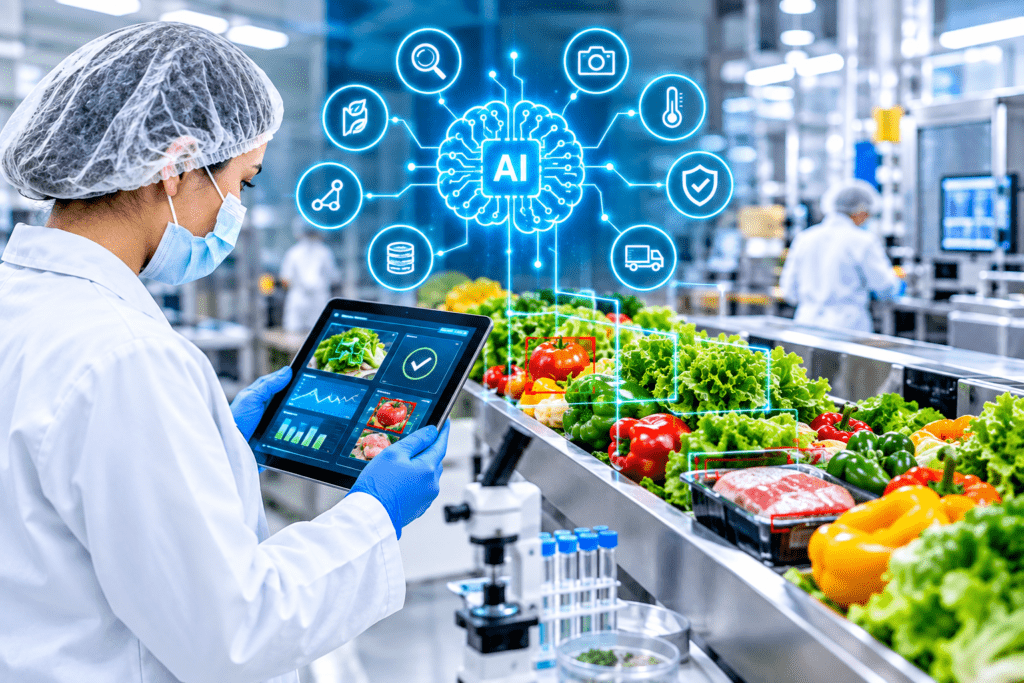
Cameras and computer vision systems can identify visible defects, foreign materials, color changes, and other abnormalities.
Rapid Testing Technologies
Modern rapid testing methods can help food businesses detect specific microorganisms or contaminants more efficiently than some traditional approaches.
These technologies can complement laboratory testing and established food safety programs.
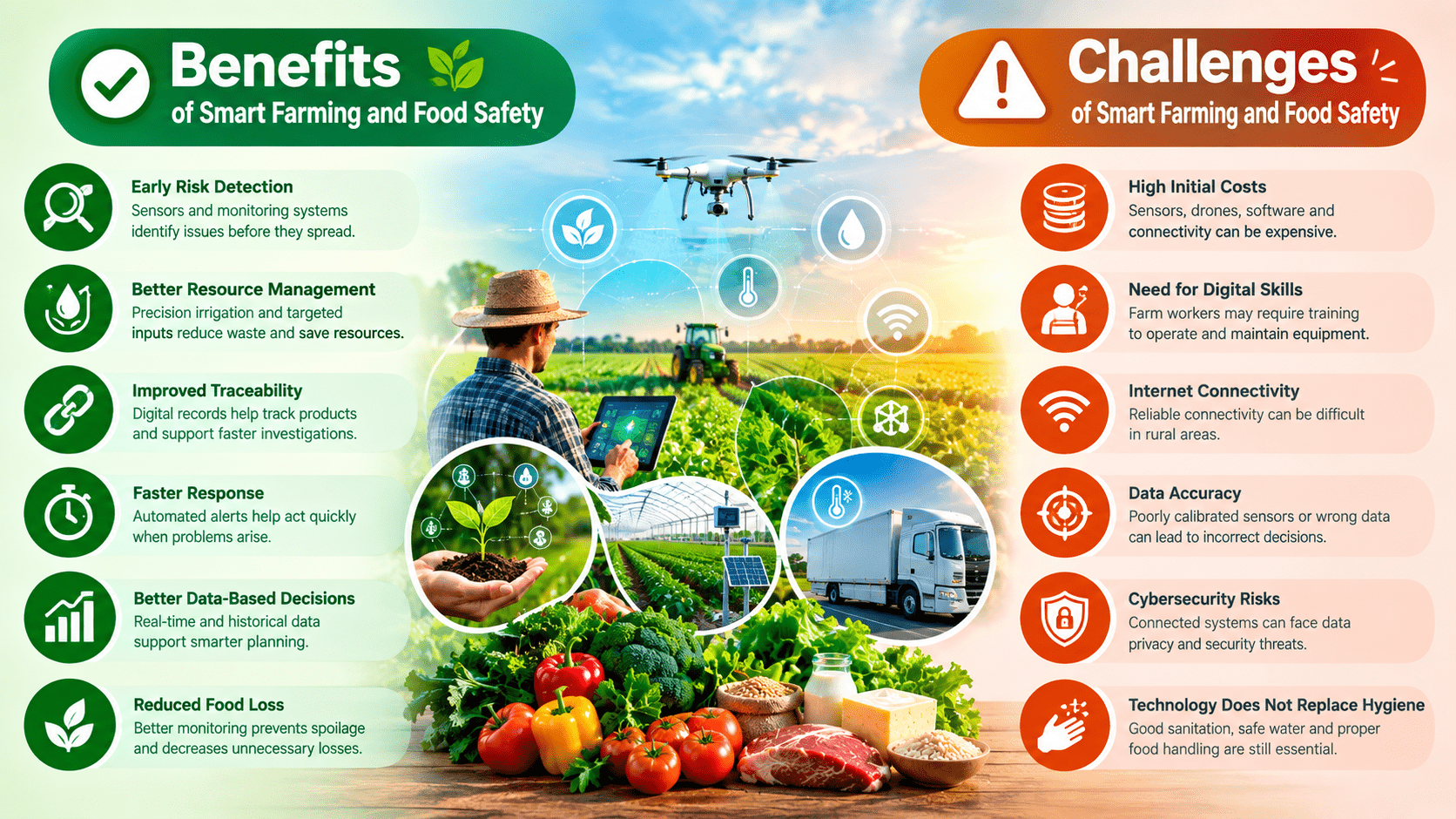
Benefits of Smart Farming and Food Safety Technology
The integration of technology into agriculture can provide several potential benefits.
Early Risk Detection
Sensors and monitoring systems can identify abnormal conditions earlier than occasional manual inspections.
Better Resource Management
Precision irrigation and targeted agricultural practices can help reduce unnecessary use of water and agricultural inputs.
Improved Traceability
Digital records can make it easier to track products and investigate food safety incidents.
Faster Response
Automated alerts can help responsible personnel respond to problems quickly.
Better Data-Based Decisions
Farmers and food businesses can use historical and real-time data to support operational decisions.
Reduced Food Loss
Better monitoring of crops and storage conditions may help prevent avoidable spoilage and losses.
Challenges of Smart Farming and Food Safety
High Initial Costs
Sensors, drones, software, automated systems, and connectivity can be expensive, particularly for small farms.
Digital Skills
Farm workers may require training to operate devices, interpret data, and maintain equipment.
Internet Connectivity
Reliable connectivity can be difficult in rural areas.
Data Accuracy
Poorly calibrated sensors or incorrect data can lead to inappropriate decisions.
Cybersecurity
Connected agricultural systems can create cybersecurity and data privacy concerns.
Technology Does Not Replace Hygiene
Even advanced technology cannot compensate for poor hand hygiene, inadequate sanitation, unsafe water, improper food handling, or failure to follow established food safety procedures.
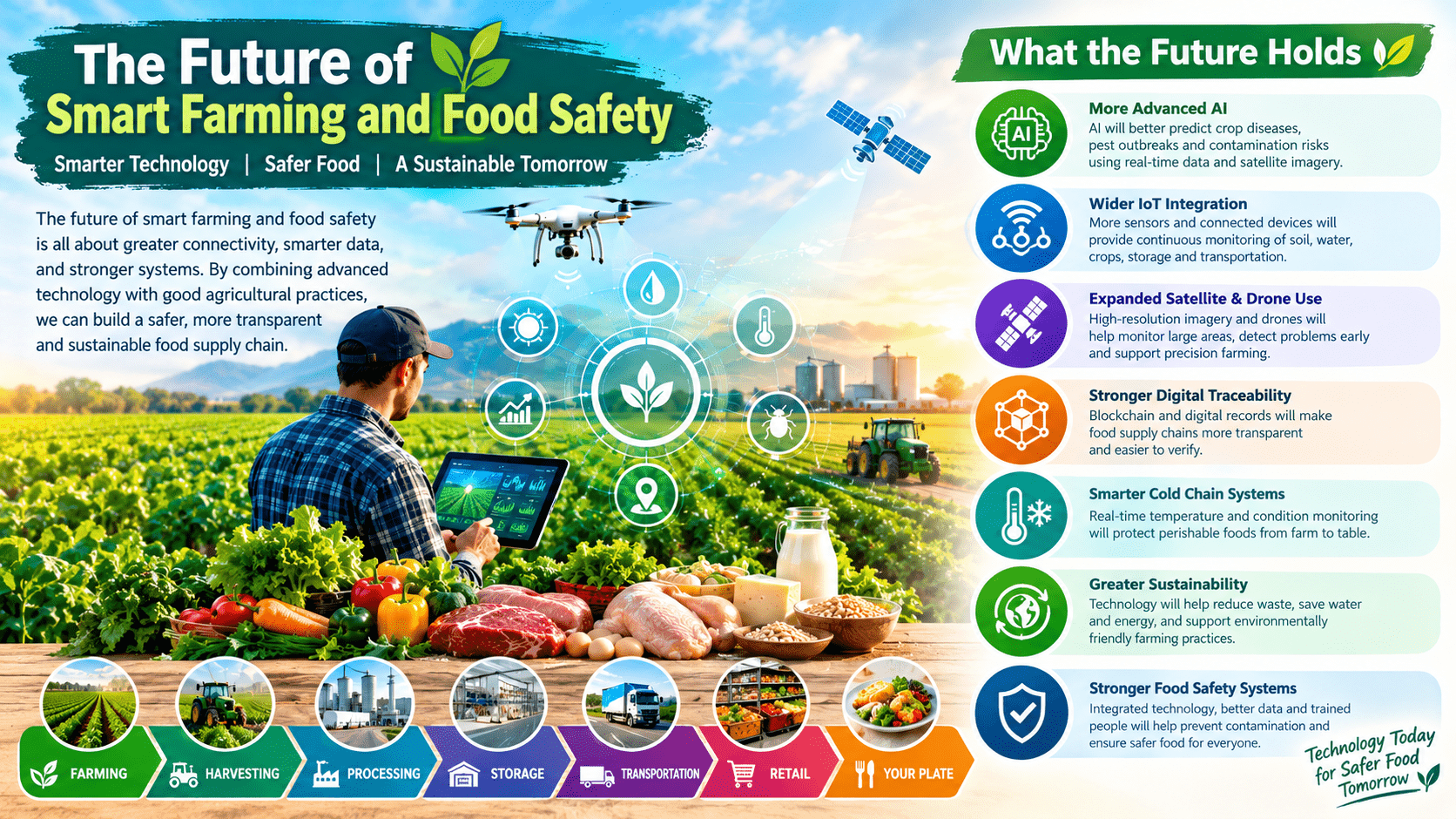
The Future of Smart Farming and Food Safety
The future of agriculture is likely to involve greater integration between farms, food processors, laboratories, distributors, regulators, and retailers.
Artificial intelligence may become more capable of identifying patterns associated with crop diseases and environmental risks. IoT systems may provide continuous monitoring, while digital traceability may make supply chains more transparent.
Satellite imagery and drones could support large-scale agricultural monitoring, while automated systems may help farmers respond to changing environmental conditions.
However, successful smart farming and food safety will depend on combining technology with science-based food safety systems, trained personnel, appropriate regulations, and responsible agricultural practices.
Technology should be viewed as a tool that strengthens food safety not as a replacement for professional judgment and established preventive controls.