





Introduction
The Future of Environmental Protection is entering an important new phase as governments, businesses, scientists, and communities look for practical solutions to climate change, pollution, biodiversity loss, and resource depletion. Environmental protection is no longer limited to traditional conservation. It increasingly involves digital technology, clean energy, sustainable production, better environmental data, and stronger policies.
UNEP’s 2026–2029 strategy places climate stability, nature protection, pollution reduction, science, digital transformation, and sustainable production among its major priorities.
As we move toward 2027, several major trends are expected to influence the Future of Environmental Protection.
1. Artificial Intelligence for Environmental Monitoring
Artificial intelligence (AI) is becoming an increasingly useful tool for environmental management. Advanced digital systems can process large amounts of information from satellites, sensors, weather stations, and environmental monitoring networks.
AI can support pollution detection, identify changes in ecosystems, analyze climate data, and help decision-makers respond to environmental problems more efficiently. UNEP’s current strategy specifically highlights environmental science and digital solutions, including AI, as part of its approach to environmental decision-making.
This makes digital transformation an important part of the Future of Environmental Protection.
2. Rapid Growth of Renewable Energy
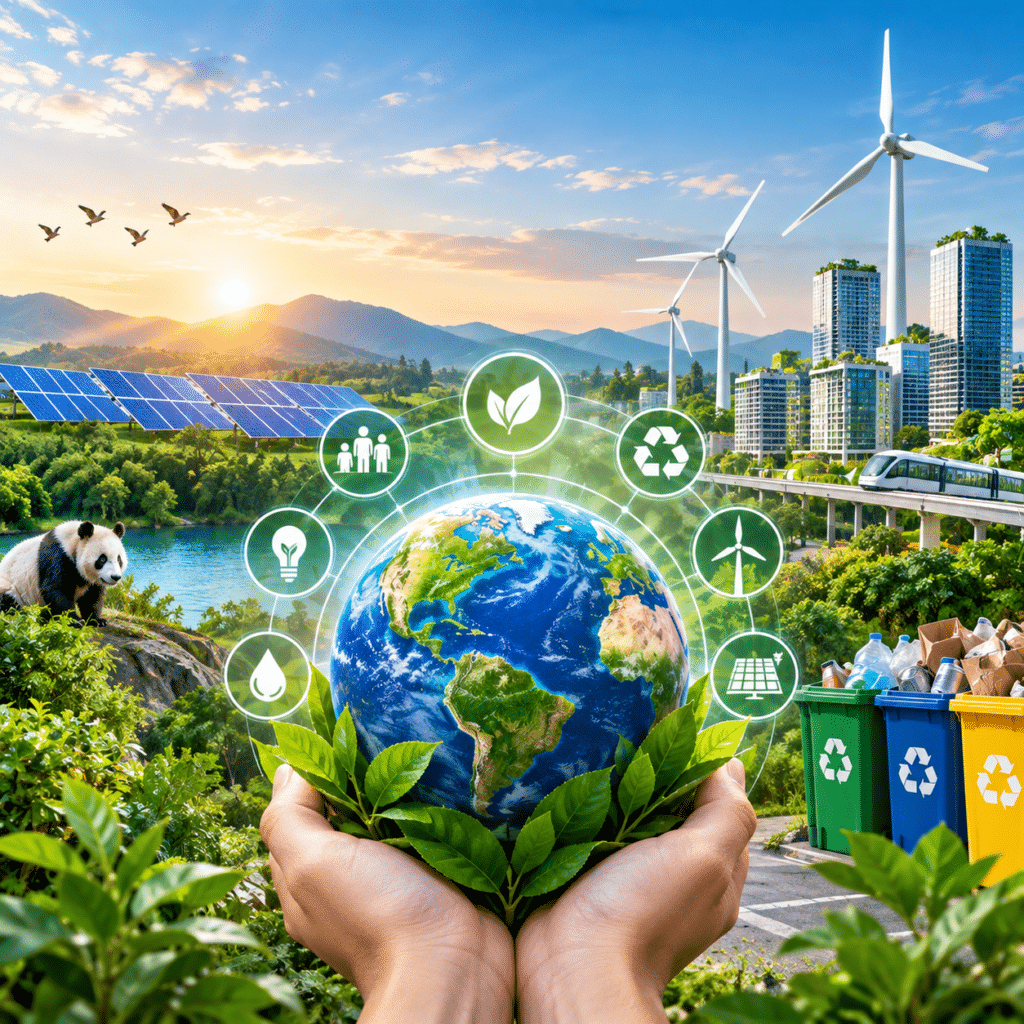
Renewable energy will remain central to environmental protection in 2027. Solar power, wind energy, batteries, and other low-emission technologies are expanding across many markets.
The International Energy Agency reports that clean-energy technology markets have grown rapidly, with solar PV and wind becoming increasingly cost-competitive. The IEA also reports that battery storage was the fastest-growing power technology in 2025, with global additions reaching about 108 GW.
Greater use of renewable electricity can reduce dependence on fossil fuels and support efforts to lower greenhouse-gas emissions.
3. Circular Economy and Less Waste
The traditional “take, make, use, dispose” model creates pressure on natural resources and contributes to waste and pollution. A circular economy offers another approach by emphasizing reuse, repair, recycling, resource efficiency, and longer product lifespans.
In the coming years, companies are likely to focus more on designing products that use fewer resources and generate less waste. UNEP’s 2026–2029 strategy also emphasizes sustainable consumption and production and circular-economy approaches.
The circular economy will therefore be a major part of the Future of Environmental Protection.
4. Stronger Biodiversity and Ecosystem Conservation
Environmental protection is not only about reducing carbon emissions. Forests, wetlands, oceans, rivers, soil, and other ecosystems are essential for maintaining biodiversity and supporting human societies.
Future conservation strategies are expected to focus more on restoring damaged ecosystems and protecting natural habitats. UNEP has identified nature action, land, ocean, freshwater systems, and biodiversity as interconnected priorities for the coming years.
Protecting ecosystems can also improve resilience against floods, droughts, extreme heat, and other environmental pressures.
5. Climate Adaptation and Resilient Communities
Climate change is creating a greater need not only to reduce emissions but also to prepare communities for environmental impacts that are already occurring.
Climate adaptation can include better drainage systems, heat-management strategies, drought-resistant agriculture, improved water management, resilient infrastructure, and disaster preparedness.
By 2027, environmental policies are likely to place greater emphasis on combining climate mitigation with adaptation and resilience. UNEP’s current strategy explicitly includes strengthening resilience and adaptation to climate impacts.
6. Smart Cities and Green Infrastructure
Cities consume large amounts of energy and resources, making urban environmental management increasingly important. Smart-city technologies can help monitor traffic, electricity use, air quality, waste collection, and water consumption.
Green infrastructure, including urban trees, parks, green roofs, and sustainable drainage systems, can complement digital technologies by improving urban environments.
The Future of Environmental Protection will increasingly connect technology with practical city planning and public services.
7. Sustainable Business and Environmental Responsibility
Businesses are also becoming an important part of environmental protection. Companies are increasingly expected to use resources efficiently, reduce waste, improve energy performance, and understand their environmental impact.
Better environmental reporting and data can help businesses identify inefficiencies and develop more sustainable operations. Financial institutions and consumers may also place greater importance on environmental performance.
Challenges Ahead
Despite rapid innovation, environmental protection faces major challenges. New technologies can require significant investment, while poorer communities and developing countries may have limited access to funding and infrastructure.
There are also challenges involving unreliable data, weak enforcement, electronic waste, greenwashing, and differences between national environmental policies.
For the Future of Environmental Protection to succeed, technological innovation must be combined with effective laws, scientific evidence, public participation, education, and long-term investment.
Conclusion
The Future of Environmental Protection in 2027 will be shaped by technology, clean energy, circular economies, biodiversity conservation, climate adaptation, and sustainable business practices. Current international strategies already point toward more integrated approaches that connect climate, nature, pollution, digital transformation, and sustainable development.
The transition will not happen through one technology or one organization. Governments, businesses, communities, and individuals will all have a role to play. By combining innovation with responsible resource use and strong environmental policies, the world can move toward a cleaner, healthier, and more resilient future.