


Introduction
Food Fraud remains an important food safety and consumer protection issue in 2026. As food supply chains become more complex and products move through multiple countries, suppliers, processors, distributors, and retailers, consumers may find it difficult to know exactly what is inside the food they purchase.
Food fraud occurs when food is deliberately altered, substituted, misrepresented, or mislabeled for economic gain. It can range from adding cheaper ingredients to expensive products to selling counterfeit foods or falsely claiming a product has a particular origin, quality, or certification.
Modern technology has created new opportunities for food businesses to improve traceability and authenticity. At the same time, online marketplaces, sophisticated packaging, digital advertising, and global supply chains can create additional opportunities for fraudulent products to reach consumers.
Understanding Food Fraud can help consumers make safer purchasing decisions. By checking labels, buying from reliable sources, understanding product prices, and recognizing unusual packaging or quality changes, consumers can reduce their risk.
What Is Food Fraud?
Food Fraud is the intentional deception of consumers about food products for financial or economic benefit. Unlike accidental contamination, food fraud is generally deliberate.
A fraudulent food product may contain a cheaper substitute, have incorrect information on its label, or be presented as something it is not.
For example, a product sold as premium honey could contain cheaper sweeteners. Olive oil may be diluted with less expensive oils, while spices may be mixed with cheaper materials.
Food fraud is not always immediately dangerous, but some fraudulent practices can create serious health risks. If an undeclared ingredient is an allergen, for example, it may cause a severe allergic reaction.
Why Food Fraud Is a Concern in 2026
Several factors make Food Fraud an ongoing concern in 2026.
1. Complex Global Supply Chains
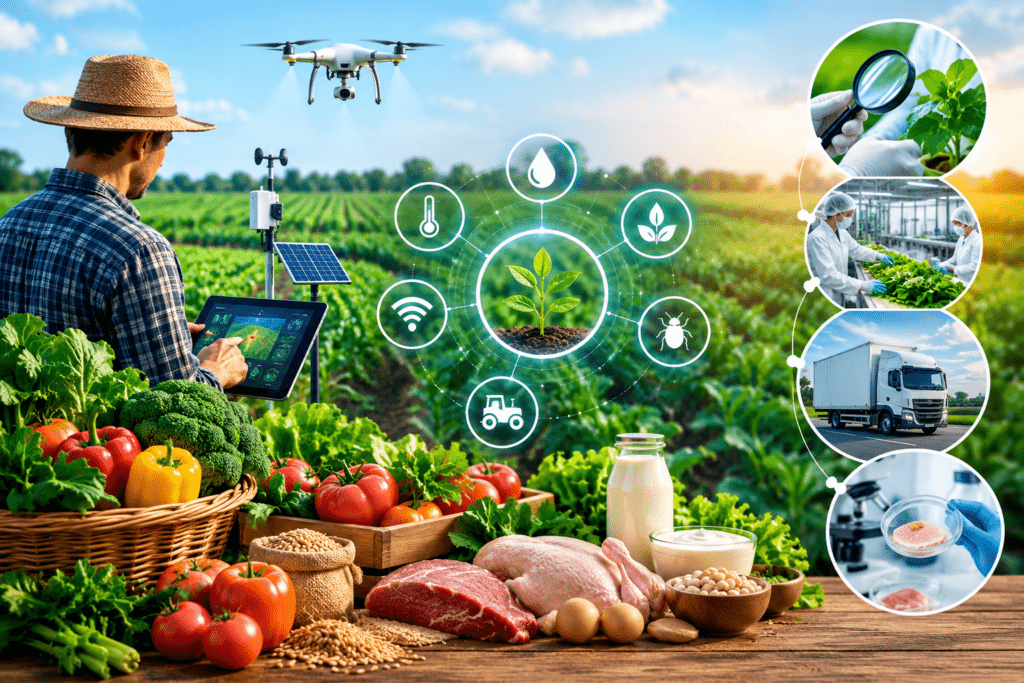
Food products often pass through several stages before reaching consumers. Raw materials may come from one country, processing may occur in another, and packaging may happen somewhere else. Each additional step can make it more difficult to verify authenticity.
2. Rising Food Prices
When the prices of valuable food ingredients increase, there may be greater financial incentives for dishonest businesses to substitute expensive ingredients with cheaper alternatives.
3. Online Food Shopping
Online marketplaces allow consumers to purchase products from sellers they may not know. Although online shopping provides convenience, it can sometimes make it harder to verify the original manufacturer or supplier.
4. Advanced Counterfeiting
Packaging technology has become increasingly sophisticated. Fake labels, logos, certificates, and packaging can make counterfeit products appear legitimate.
5. Consumer Demand for Premium Products
Organic, natural, imported, traditional, and premium foods can command higher prices. These price differences may create opportunities for fraudulent claims.
Common Types of Food Fraud
Understanding the different forms of Food Fraud can help consumers identify potential warning signs.
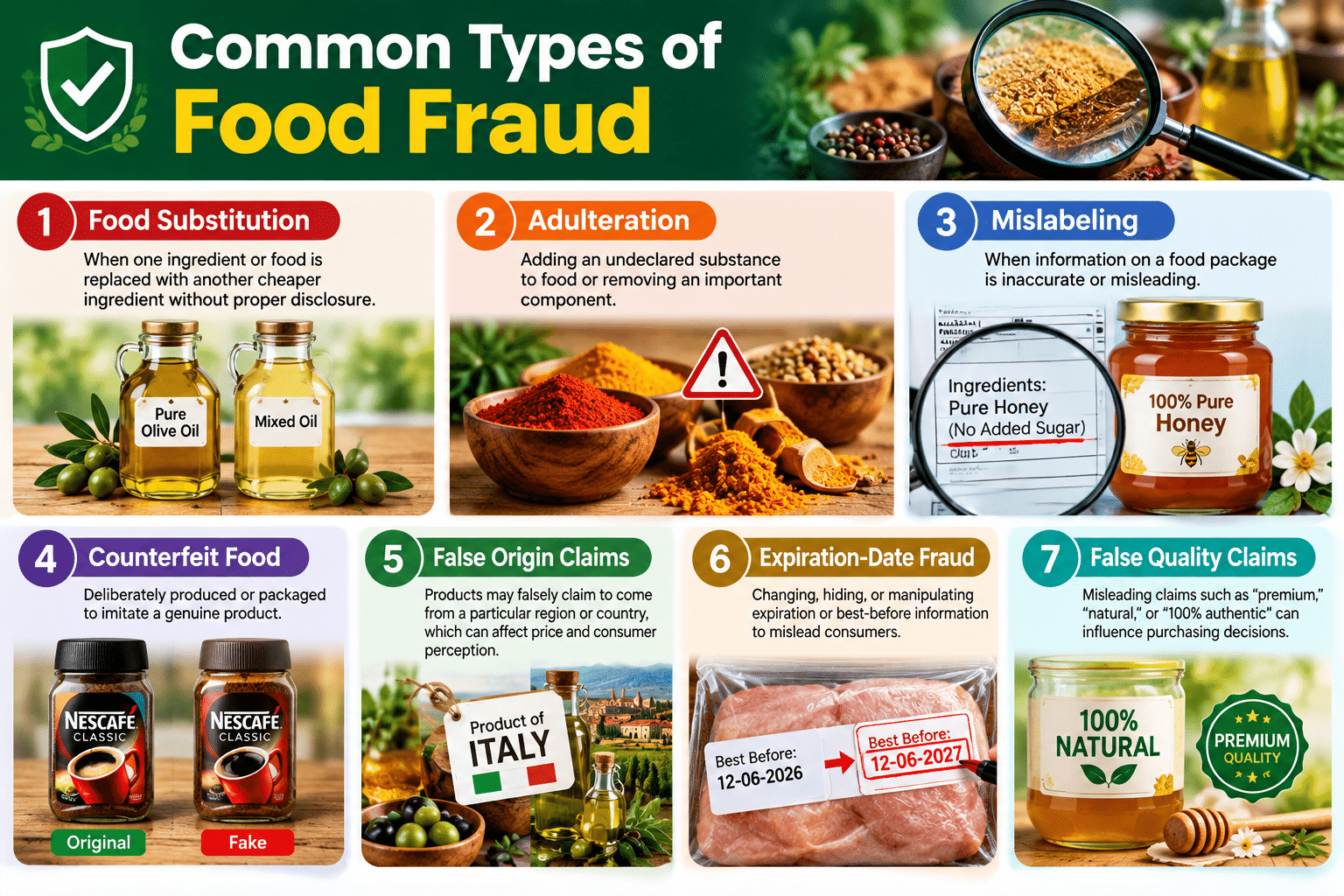
1. Food Substitution
Food substitution happens when one ingredient or food is replaced with another cheaper ingredient.
For example, an expensive edible oil may be mixed with a cheaper oil without proper disclosure.
2. Adulteration
Adulteration involves adding an undeclared substance to food or removing an important component.
Examples can include dilution of liquids, addition of unauthorized ingredients, or mixing cheaper materials into valuable products.
3. Mislabeling
Mislabeling occurs when information on a food package is inaccurate or misleading.
This could involve incorrect ingredient information, false nutritional claims, inaccurate weight, or misleading product descriptions.
4. Counterfeit Food
Counterfeit food is deliberately produced or packaged to imitate a genuine product.
Consumers may encounter fake versions of well-known brands, specialty foods, beverages, spices, or other products.
5. False Origin Claims
Some products may falsely claim to come from a particular region or country.
Food origin can influence price and consumer perception, making geographical claims a potential target for fraud.
6. Expiration-Date Fraud
Changing, hiding, or manipulating expiration or best-before information can mislead consumers about product freshness.
Consumers should always check dates carefully before purchasing packaged food.
7. False Quality Claims
Words such as “premium,” “pure,” “natural,” or “100% authentic” can influence purchasing decisions.
Consumers should examine whether such claims are supported by clear labeling and credible certification.
Foods That May Be Vulnerable to Food Fraud
Certain foods may be more attractive targets because they have relatively high prices, complex supply chains, or valuable ingredients. Examples include:
- Honey
- Olive oil
- Spices
- Coffee
- Tea
- Seafood
- Meat
- Dairy products
- Fruit juices
- Herbal products
- Organic foods
- Premium chocolate
- Imported specialty foods
This does not mean these foods are automatically fraudulent. Instead, their value and characteristics can create opportunities for economically motivated deception.
How Consumers Can Identify Possible Food Fraud
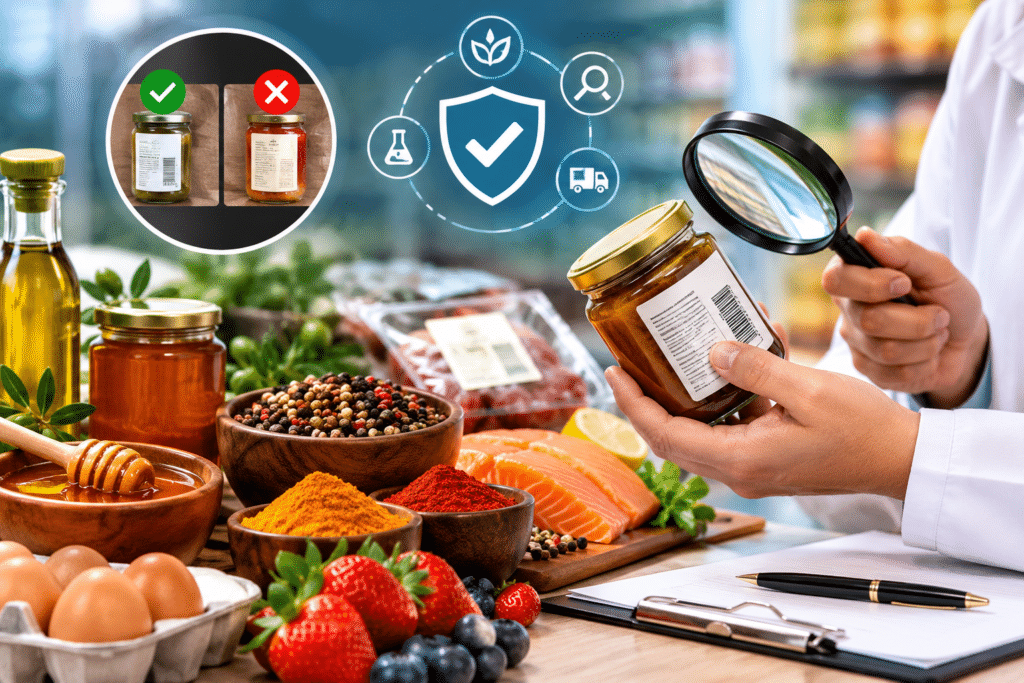
Consumers cannot identify every fraudulent product by appearance alone. However, several warning signs can help.
1. Check the Label Carefully
Look for:
- Product name
- Ingredient list
- Manufacturing information
- Expiration or best-before date
- Net weight
- Batch or lot number
- Manufacturer information
- Storage instructions
- Country of origin where applicable
Missing, unclear, or inconsistent information should encourage consumers to investigate further.
2. Be Careful With Extremely Low Prices
An unusually low price does not automatically mean a product is fraudulent. However, if a premium product is being sold significantly below its normal market price, consumers should be cautious. Compare prices from several reputable sellers before purchasing.
3. Examine Packaging
Look for unusual spelling, poor printing quality, broken seals, incorrect logos, or packaging that differs from the manufacturer’s normal design. A damaged package does not necessarily indicate fraud, but consumers should avoid products with broken seals or suspicious packaging.
4. Purchase From Reliable Sellers
Buying from established retailers, authorized distributors, and reputable food businesses can reduce the risk of purchasing counterfeit products. For online purchases, check seller information, reviews, product photographs, and return policies.
5. Verify Certification Claims
If a product claims to be organic, halal, fair trade, or certified under another recognized standard, consumers should look for appropriate certification information.
Where possible, certification claims should be checked through the relevant certification organization’s official resources.
The Role of Technology in Fighting Food Fraud
Technology is becoming an important tool in detecting and preventing Food Fraud.
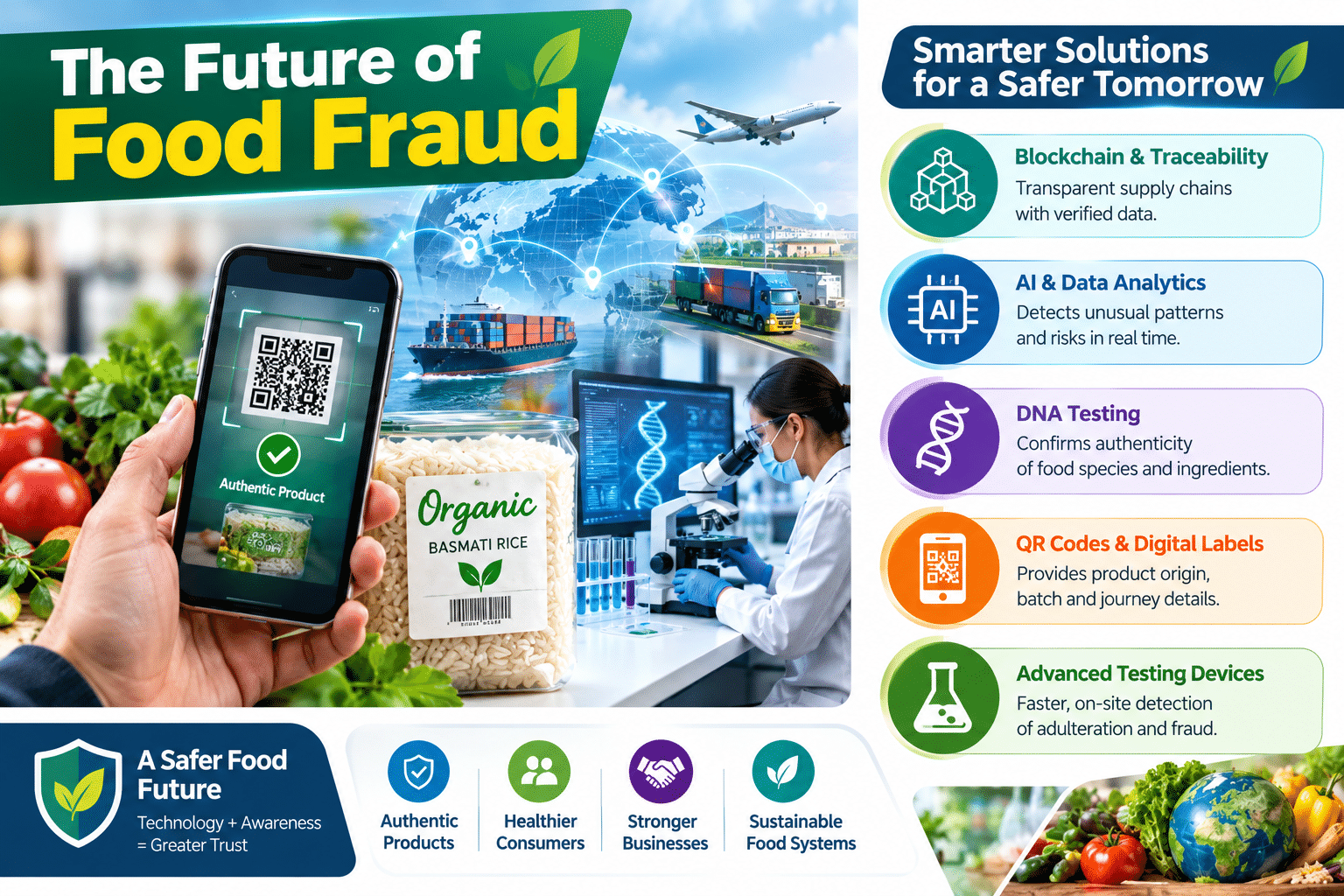
ü Blockchain and Digital Traceability
Digital traceability systems can record information about food as it moves through the supply chain. Depending on implementation, these systems can make it easier for businesses to identify where a product originated and where it was processed.
ü QR Codes
Some food companies use QR codes to provide additional information about a product’s origin, production process, batch, or supply chain.
Consumers should remember that a QR code by itself does not prove authenticity. The information behind it must also come from a credible source.
ü DNA Testing
DNA-based testing can help laboratories identify whether food contains the species claimed on its label. This can be particularly useful for meat and seafood authentication.
ü Artificial Intelligence
Artificial intelligence can analyze large amounts of supply-chain, laboratory, pricing, and inspection data. AI systems may help identify unusual patterns that could indicate potential fraudulent activity.
ü Portable Testing Devices
Advances in food testing technology are making it increasingly possible to conduct rapid screening for certain types of adulteration. These tools can support official laboratories, food companies, and inspectors.
How Food Businesses Can Help Consumers
Preventing Food Fraud is not only the responsibility of consumers. Food manufacturers, suppliers, retailers, regulators, and laboratories all have important roles. Businesses can strengthen food authenticity by:
- Auditing suppliers
- Maintaining accurate records
- Testing high-risk ingredients
- Using secure packaging
- Improving traceability
- Monitoring unusual price changes
- Training employees
- Investigating consumer complaints
- Verifying certification claims
- Conducting regular internal inspections
A strong food safety management system should consider both accidental hazards and intentional food fraud.
Food Fraud and Food Allergies
One of the most serious consumer concerns is the connection between fraudulent ingredients and food allergies. If a cheaper ingredient containing an allergen is added without being declared on the label, sensitive consumers may unknowingly consume it.
For example, undeclared milk, nuts, peanuts, eggs, soy, wheat, or other allergens can create serious health risks. Consumers with food allergies should be particularly careful with products that have unclear ingredient information.
What Consumers Should Do If They Suspect Food Fraud
If you suspect that a food product is fraudulent, avoid consuming it until the concern has been investigated.
Keep the:
- Product packaging
- Receipt
- Batch or lot number
- Photographs
- Expiration information
Consumers can report suspected problems to the relevant food safety authority or consumer protection organization in their country. In Pakistan, consumers may also contact the relevant provincial food authority depending on where the product was purchased. Providing accurate information can help authorities investigate potentially unsafe or fraudulent products.
10 Simple Ways to Protect Yourself From Food Fraud
Consumers can reduce their exposure to Food Fraud by following these practical steps:
- Buy food from reputable sellers.
- Check labels before purchasing.
- Examine packaging and seals.
- Compare prices with other sellers.
- Check expiration and batch information.
- Be cautious of unrealistic health or quality claims.
- Verify certification claims when possible.
- Avoid products with unclear manufacturer information.
- Keep receipts for expensive or specialty foods.
- Report suspicious products to the appropriate authorities.
Food Fraud Prevention in the Future
The future of Food Fraud prevention will increasingly depend on collaboration between technology, food businesses, regulators, laboratories, and consumers. Digital traceability may provide better visibility across supply chains. AI-based monitoring could help identify unusual patterns, while laboratory testing can verify the authenticity of products.
Consumers will also play an important role. Better food literacy can help people understand labels, recognize suspicious claims, and make informed purchasing decisions. However, technology should support not replace effective inspections, laboratory testing, regulatory enforcement, and responsible business practices.