










Introduction
Extreme weather and rising temperatures have become major concerns for workplaces worldwide. Employees working outdoors, in factories, warehouses, kitchens, construction sites, and other hot environments may face serious health risks when temperatures rise. Without proper safety measures, heat exposure can lead to dehydration, heat exhaustion, and potentially life-threatening heatstroke.
Workplace Heat Stress Prevention is an essential part of an effective occupational health and safety program. It involves identifying heat hazards, providing drinking water, scheduling regular rest breaks, improving ventilation, and educating workers about early warning signs.
Employers and workers must work together to reduce heat-related risks, especially during summer and heatwaves. A well-planned prevention strategy protects employee health, improves productivity, and creates a safer working environment.
What Is Workplace Heat Stress?
Workplace heat stress occurs when the body struggles to maintain a safe internal temperature while exposed to heat generated by the environment, physical activity, or protective clothing.
The risk depends on several factors, including air temperature, humidity, direct sunlight, physical workload, airflow, and how long a person remains in the heat. Heavy clothing and personal protective equipment can make it harder for the body to release heat.
Employees working near industrial ovens, boilers, commercial cooking equipment, furnaces, or poorly ventilated machinery may also experience dangerous heat exposure.
Effective Workplace Heat Stress Prevention begins by understanding these risks and taking action before employees develop symptoms.
Why Is Heat Stress Prevention Important?
Heat-related illness can affect both employee health and workplace performance. Workers exposed to excessive heat may experience fatigue, dizziness, headaches, muscle cramps, and reduced concentration.
These symptoms can increase the likelihood of workplace accidents, particularly when employees operate heavy machinery, climb ladders, handle tools, or work at heights.
The main reasons to prioritize heat safety include:
Protecting worker health: Reducing the risk of dehydration, heat exhaustion, and heatstroke.
Preventing workplace accidents: Helping employees maintain concentration and coordination.
Improving productivity: Reducing fatigue, mistakes, and heat-related interruptions.
Supporting legal compliance: Helping employers meet applicable occupational safety requirements.
Strengthening employee confidence: Demonstrating that worker safety is a genuine priority.
A proactive approach is more effective than waiting for an employee to become ill.
Common Causes of Workplace Heat Stress
Understanding the causes of heat stress helps employers select suitable control measures.
1. High Environmental Temperatures
Construction workers, agricultural employees, road crews, and outdoor maintenance teams may face prolonged exposure to extreme temperatures.
2. High Humidity
Humidity reduces the effectiveness of sweating because sweat evaporates more slowly. As a result, the body may struggle to cool itself, even when the air temperature does not seem exceptionally high.
3. Heavy Physical Work
Lifting, digging, carrying materials, operating equipment, and performing repetitive tasks generate body heat. Combining strenuous activity with hot weather increases the risk of heat-related illness.
4. Poor Ventilation
Factories, warehouses, kitchens, and enclosed workspaces can trap hot air. Machinery and industrial processes may generate additional heat, creating uncomfortable or dangerous working conditions.
5. Inadequate Hydration and Rest
Workers who cannot access drinking water or take regular breaks may become dehydrated and overheated. Tight deadlines, insufficient staffing, and demanding production targets can make the problem worse.
6. Protective Clothing and Equipment
Certain uniforms, impermeable garments, and personal protective equipment restrict heat loss. Employers should assess whether suitable alternatives, cooling arrangements, or additional rest periods are needed.
Effective Workplace Heat Stress Prevention Strategies
A successful prevention program combines environmental controls, safe work practices, employee training, and emergency planning.
1. Assess Heat Hazards Before Work Begins
Employers should evaluate workplace temperatures, humidity, radiant heat, physical workload, and the clothing workers must wear.
A heat index can provide useful information about how hot conditions feel, but it may not fully represent occupational heat risk. Where appropriate, employers should use a wet-bulb globe temperature (WBGT) monitor or another suitable occupational heat assessment method.
2. Provide Easy Access to Drinking Water
Employers should provide clean, cool drinking water close to work areas and encourage employees to drink regularly.
During prolonged heavy sweating, an appropriate electrolyte replacement drink may be useful, depending on the work conditions and individual needs.
Employers should also ensure that water stations remain clean, accessible, and adequately supplied throughout each shift.
3. Schedule Regular Rest Breaks
During hot conditions, employers should provide shaded or cooled rest areas and adjust work-rest schedules according to the heat risk, workload, clothing, and workers’ acclimatization.
Shorter work periods with more frequent recovery breaks may be necessary during extreme heat. Rest periods should take place in a cooler environment whenever possible.
Workers must be encouraged to report symptoms and stop work when they feel unwell. No production target should take priority over a worker’s immediate safety.
4. Improve Ventilation and Cooling
Indoor employers can reduce heat exposure through ventilation, air conditioning, exhaust systems, insulation, and heat shields.
Industrial equipment that generates heat should be maintained and positioned to minimize unnecessary heat exposure. Fans may improve comfort under some conditions, but their effectiveness depends on air temperature and humidity. They should not be treated as a universal solution in extreme heat.
Outdoor employers should provide shaded rest stations, portable cooling arrangements, and covered areas where employees can recover.
5. Adjust Work Schedules
When possible, strenuous tasks should be scheduled during cooler hours, such as early morning or evening.Flexible scheduling can help construction, agriculture, transport, and maintenance teams reduce heat exposure without abandoning essential operations. Work-rest schedules should be based on actual heat risk rather than using the same timetable for every workplace.
6. Introduce a Heat Acclimatization Program
Employers should gradually increase heat exposure and workload over several days, following applicable occupational health guidance. New or returning workers should receive closer supervision during this period. Hydration, rest, cooling, and monitoring remain necessary.
7. Train Employees and Supervisors
Employees should understand common symptoms, prevention measures, reporting procedures, and emergency contacts.
Supervisors should know how to monitor working conditions, identify employees who appear unwell, arrange rest breaks, and activate emergency procedures.
Training should be delivered in languages and formats workers understand. Refresher sessions before hot seasons can help reinforce safe practices.
8. Use Appropriate Personal Protective Equipment
Personal protective equipment may be necessary to protect workers from chemicals, sparks, biological hazards, or other workplace dangers. However, some protective garments increase heat retention.
Employers should consult qualified safety professionals to identify suitable equipment, cooling garments, and work-rest arrangements. Required protective equipment should never simply be removed if doing so creates another serious hazard.
The goal is to maintain essential protection while reducing the additional burden of heat exposure.
9. Monitor Workers During Extreme Weather
A buddy system can help employees recognize symptoms in themselves and their colleagues. Supervisors should pay particular attention to workers performing strenuous tasks or working in areas with limited cooling.
Monitoring should include awareness of changes in behavior, confusion, unusual fatigue, dizziness, and difficulty completing normal tasks.
Workers must be able to report symptoms without fear of punishment or pressure to continue working.
10. Prepare a Heat Emergency Response Plan
Every workplace should have a clear procedure for responding to suspected heat illness. The plan should identify trained responders, emergency contact numbers, access routes for emergency services, and designated cooling areas.
Workers should know how to summon assistance quickly. Emergency drills and supervisor training can help ensure that everyone understands their responsibilities.
Workplace Heat Stress Prevention is most effective when emergency arrangements are established before extreme weather occurs.
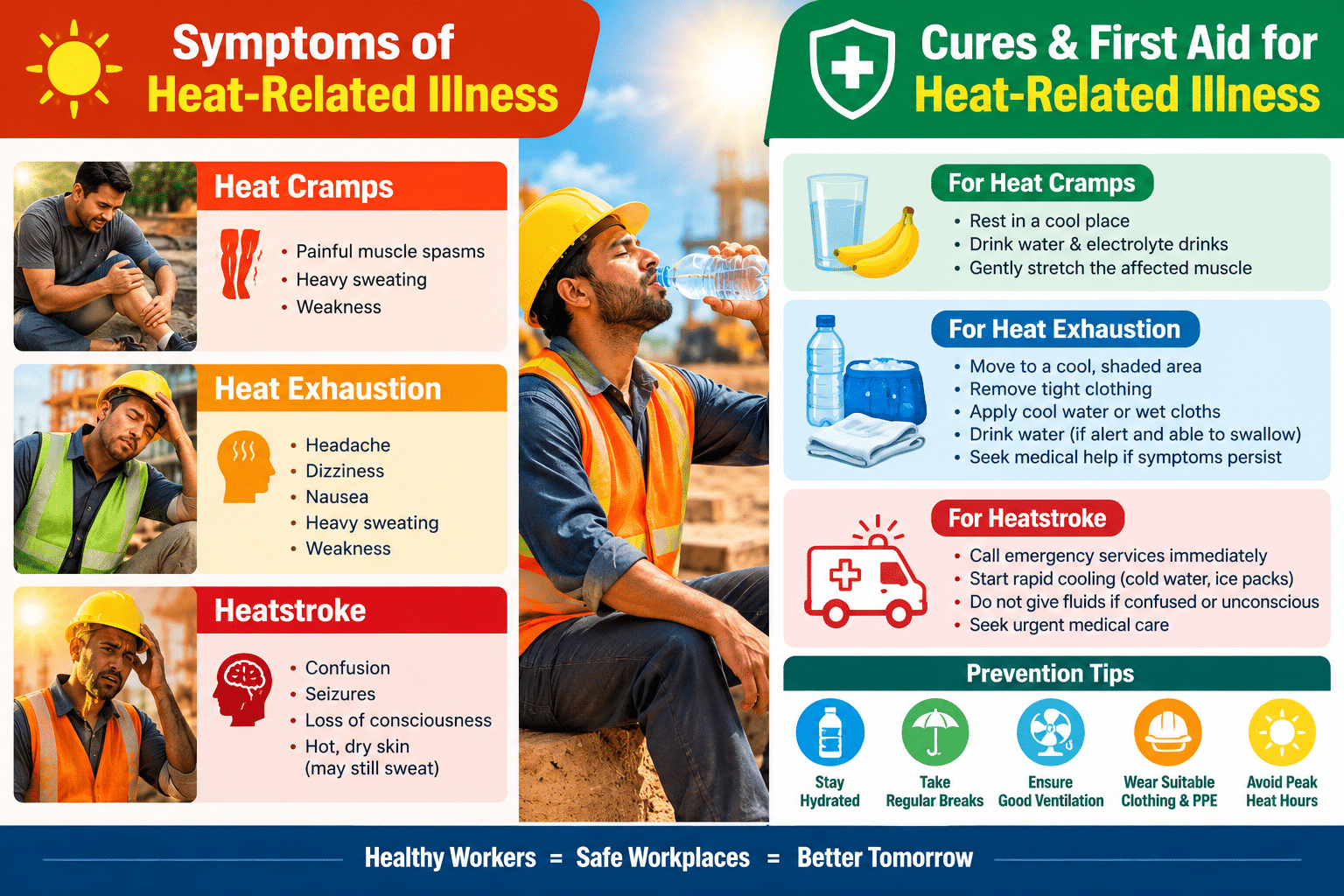
Recognizing the Symptoms of Heat-Related Illness
Recognizing symptoms early can prevent a serious medical emergency. Employees and supervisors should understand the differences between common heat-related conditions.
1. Heat Cramps
Heat cramps are painful muscle spasms that may develop during or after strenuous activity in hot conditions. They can be associated with heavy sweating and fluid or electrolyte loss. Workers should stop strenuous activity, move to a cooler area, and rest.
2. Heat Exhaustion
If heat exhaustion is suspected, stop the activity, move the person to a cool place, remove unnecessary outer clothing, and begin cooling with cool water, wet cloths, or other available methods.
Seek prompt medical advice. If symptoms worsen, the person vomits repeatedly, or recovery is not prompt, obtain emergency medical assistance.
3. Heatstroke
Heatstroke is a life-threatening emergency.
Use cold-water immersion when appropriate and feasible, or apply cold water and wet cloths while following emergency guidance. Prompt recognition and action can save lives.
Workplace Heat Stress Prevention in Pakistan
Pakistan frequently experiences intense summer heat, making occupational heat safety particularly important for outdoor and industrial workers. Construction sites, farms, road projects, transport operations, workshops, and commercial kitchens may face significant heat exposure.
Employers should take additional precautions during heatwaves and follow relevant local occupational safety requirements and official weather or heat-health advisories.
Practical measures include:
- Scheduling demanding outdoor work during cooler hours.
- Providing shaded rest areas and clean drinking water.
- Increasing rest breaks when heat exposure rises.
- Checking on vulnerable or newly assigned workers more frequently.
- Providing first-aid training and clear emergency arrangements.
For workers in Lahore and other hot urban areas, concrete surfaces, rooftops, roads, and industrial buildings can create additional heat exposure. Employers should assess conditions at the actual worksite rather than relying solely on general weather forecasts.
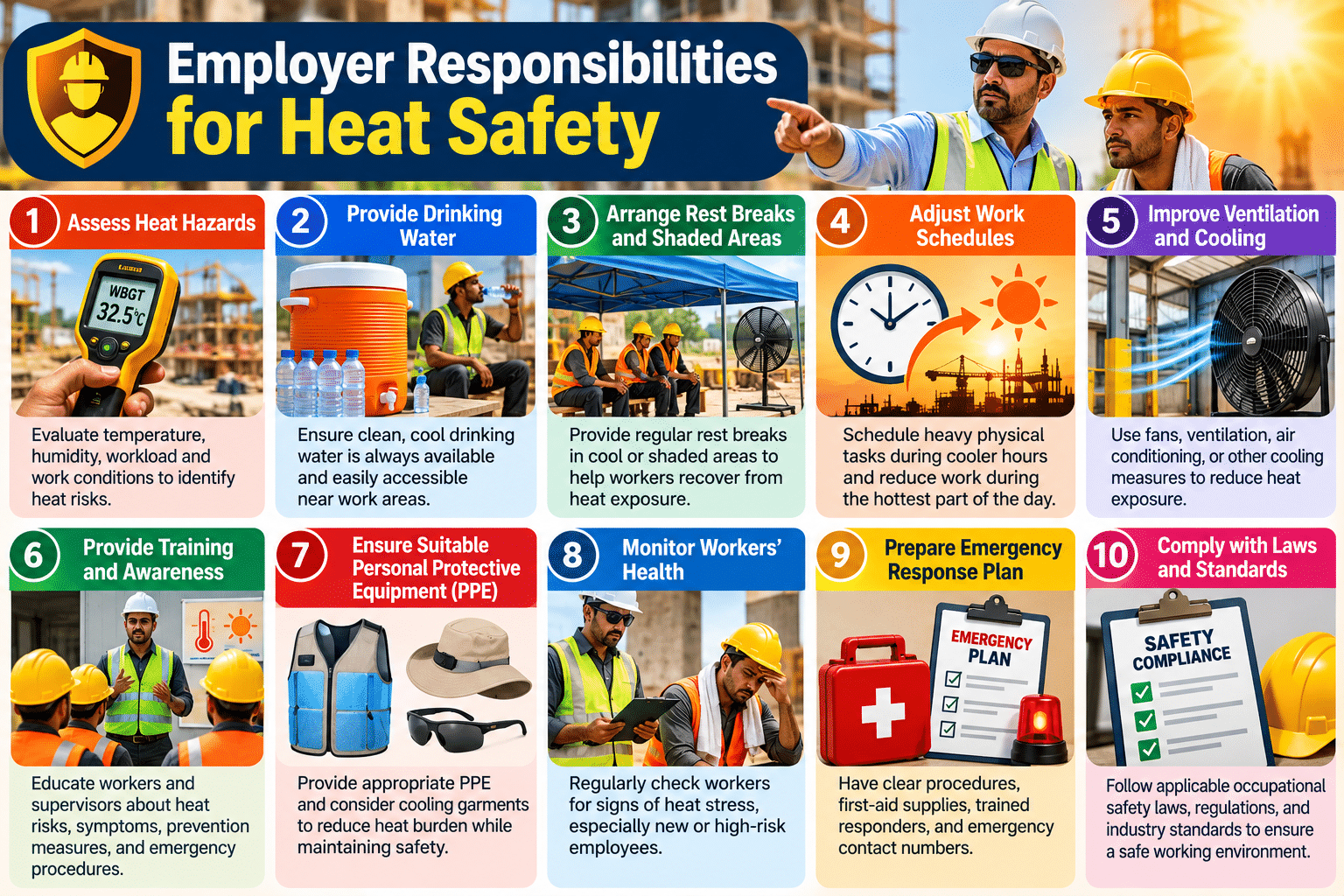
Employer Responsibilities for Heat Safety
Employers play a central role in reducing occupational heat risks. An effective safety program should include written procedures, assigned responsibilities, regular risk assessments, employee training, and suitable resources.
Employers should also maintain records of heat-related incidents, review complaints, and investigate cases of suspected heat illness.
Where required, organizations should comply with applicable workplace safety laws, regulations, and industry-specific standards. They should consult occupational health professionals when developing heat exposure limits and work-rest schedules.
A strong safety culture makes it easier for employees to report concerns and request cooling breaks without fear of retaliation.
How Technology Can Improve Heat Stress Prevention
Technology can help workplaces identify dangerous conditions before they lead to illness.
Wearable Monitoring Devices
Some wearable devices track indicators such as heart rate, activity, or skin temperature. These measurements may help identify concerning changes, but they do not directly diagnose heat illness and should not replace established safety procedures.
Environmental Sensors
Temperature, humidity, and WBGT monitoring equipment can help safety teams identify high-risk areas and respond when conditions change.
Digital Safety Alerts
Mobile alerts and workplace communication systems can warn employees about heatwaves, changing work schedules, hydration reminders, and emergency procedures.
Data-Based Risk Management
Employers can review environmental readings, incident reports, and patterns of worker symptoms to identify recurring hazards and improve prevention strategies.
Technology works best when combined with trained supervisors, employee participation, appropriate cooling, and effective emergency response.
Building a Workplace Heat Safety Checklist
Organizations can use a daily checklist to make heat safety part of routine operations.
- Check weather forecasts and site heat conditions.
- Assess humidity, workload, and other relevant risk factors.
- Confirm that drinking water is available.
- Inspect shaded or cooled rest areas.
- Review work schedules and planned rest breaks.
- Confirm that workers understand heat illness symptoms.
- Check emergency communication and first-aid arrangements.
- Monitor new or returning employees during acclimatization.
- Encourage workers to report symptoms immediately.
- Record incidents and improve controls where necessary.
The checklist should be adapted to the workplace, work activities, and applicable safety requirements.