




Introduction
Water scarcity remains one of the most pressing global challenges in 2026. Rapid population growth, climate change, pollution, and poor resource management have placed tremendous pressure on freshwater supplies. Governments alone cannot solve this crisis.
Community-based water management focuses on local participation, shared responsibility, and decentralized decision-making. Instead of relying solely on central authorities, communities actively manage, conserve, and distribute water resources. This model not only improves efficiency but also ensures long-term sustainability.
Why Community-Based Water Management Matters in 2026
Climate change has intensified droughts, floods, and irregular rainfall patterns. Many rural and urban communities face water shortages, declining groundwater levels, and contamination issues. Traditional top-down water management systems often fail to address local needs effectively.
“Community-Based Water Management Solutions in 2026” offer several advantages:
- Local knowledge improves resource planning
- Greater accountability and transparency
- Faster problem-solving
- Cost-effective maintenance
- Stronger environmental awareness
Communities that manage their own water systems tend to protect them more carefully.
Key Drivers of Community Water Management in 2026
- Climate Adaptation Needs
Extreme weather events require flexible and localized water strategies. Community systems can quickly respond to droughts and floods.
- Technological Advancements
Smart water meters, mobile monitoring apps, and low-cost filtration systems empower communities to track usage and detect leaks efficiently.
- Policy Support
Governments and international organizations now promote decentralized water governance models.
- Sustainable Development Goals (SDGs)
Goal 6 (Clean Water and Sanitation) encourages inclusive water management practices.
Practical Community-Based Water Management Solutions in 2026
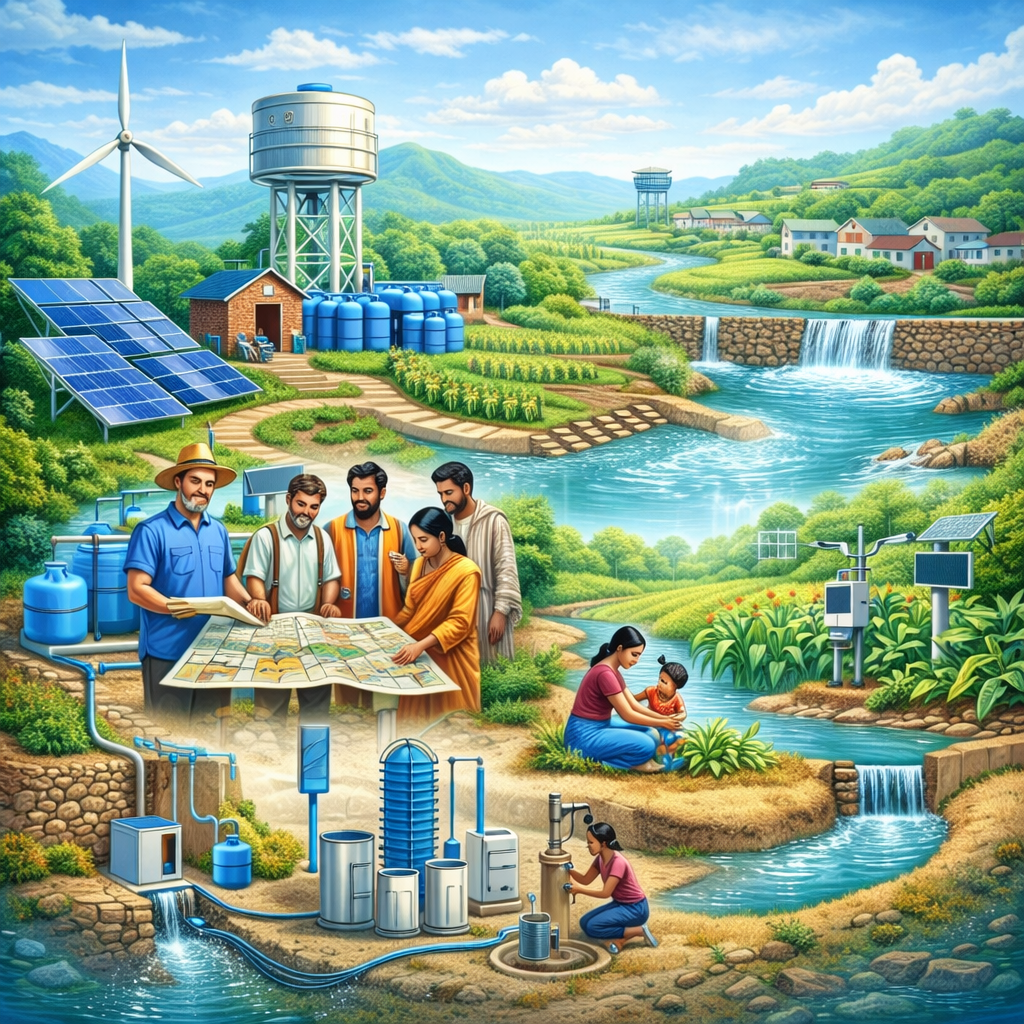
- Rainwater Harvesting Systems
Rainwater harvesting remains one of the most effective community-level solutions. Schools, homes, and public buildings install rooftop collection systems to store rainwater for domestic and agricultural use.
Benefits include:
- Reduced dependence on groundwater
- Lower water bills
- Increased water availability during dry seasons
- Community-Managed Boreholes and Wells
Local committees oversee boreholes and shared wells. They collect small maintenance fees and ensure proper usage guidelines are followed.
This prevents over-extraction and ensures sustainable groundwater management.
- Water User Associations
Water User Associations allow farmers and residents to collectively manage irrigation systems. They create fair distribution schedules and maintain canals.
In 2026, digital tools help these associations track water flow and prevent wastage.
- Grey-water Recycling Projects
Communities are reusing household wastewater from sinks and showers for irrigation and landscaping. This reduces freshwater demand and supports urban sustainability.
- Smart Monitoring and Leak Detection
Affordable IoT devices help communities detect leaks early. Real-time monitoring reduces water loss and improves efficiency.
- Watershed Protection Programs
Communities are actively protecting forests, rivers, and wetlands. Tree plantation drives and anti-pollution campaigns improve water quality and recharge groundwater.
Role of Technology in Community-Based Water Management Solutions in 2026
Technology has transformed local water governance. Some innovations include:
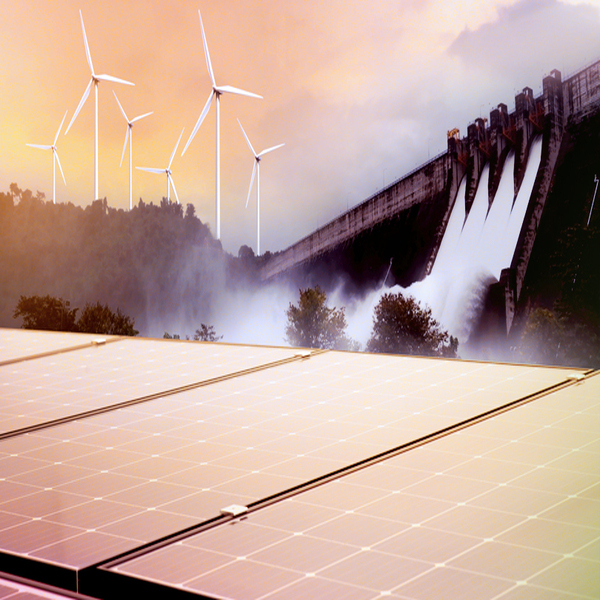
- Solar-powered water pumps
- Mobile-based reporting systems
- GIS mapping for watershed management
- Low-cost water purification systems
- AI-based water demand forecasting
These tools empower communities to make data-driven decisions.
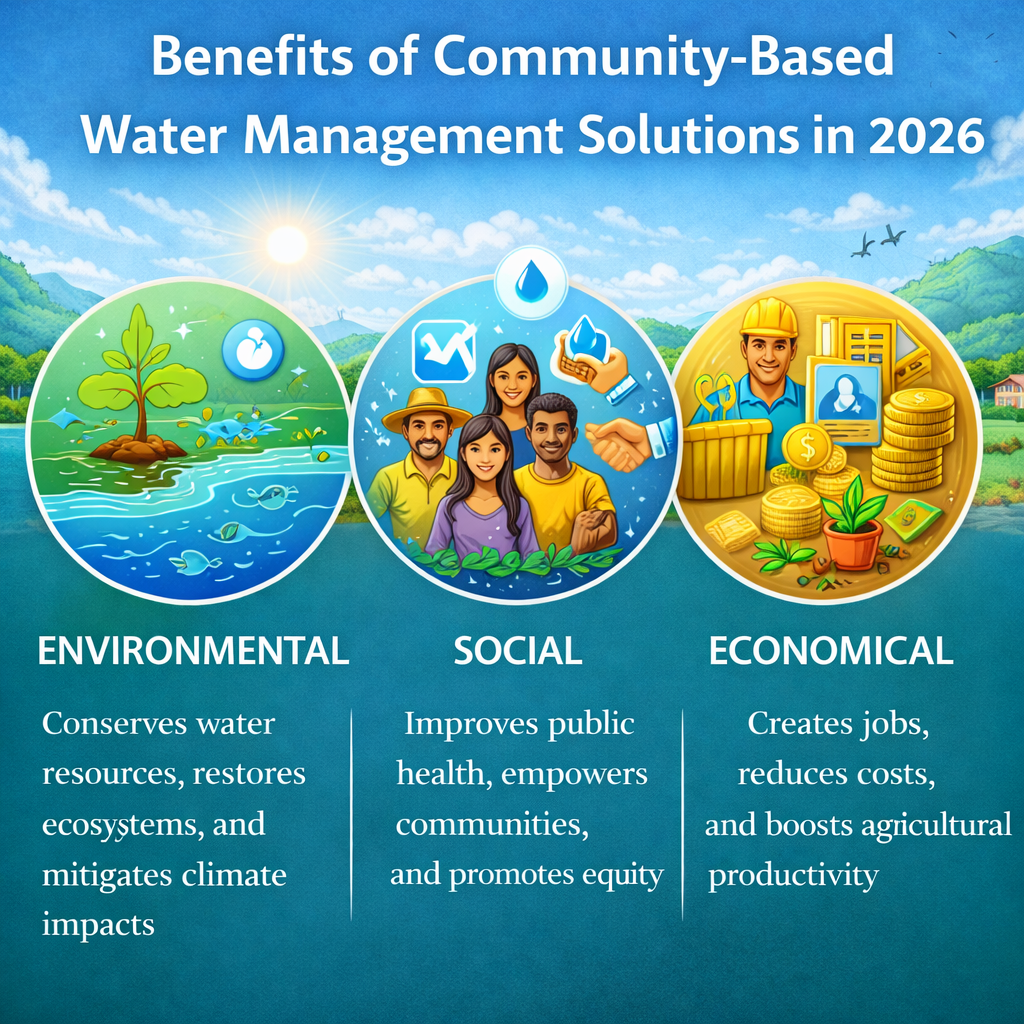
Benefits of Community-Based Water Management Solutions in 2026
- Environmental Benefits
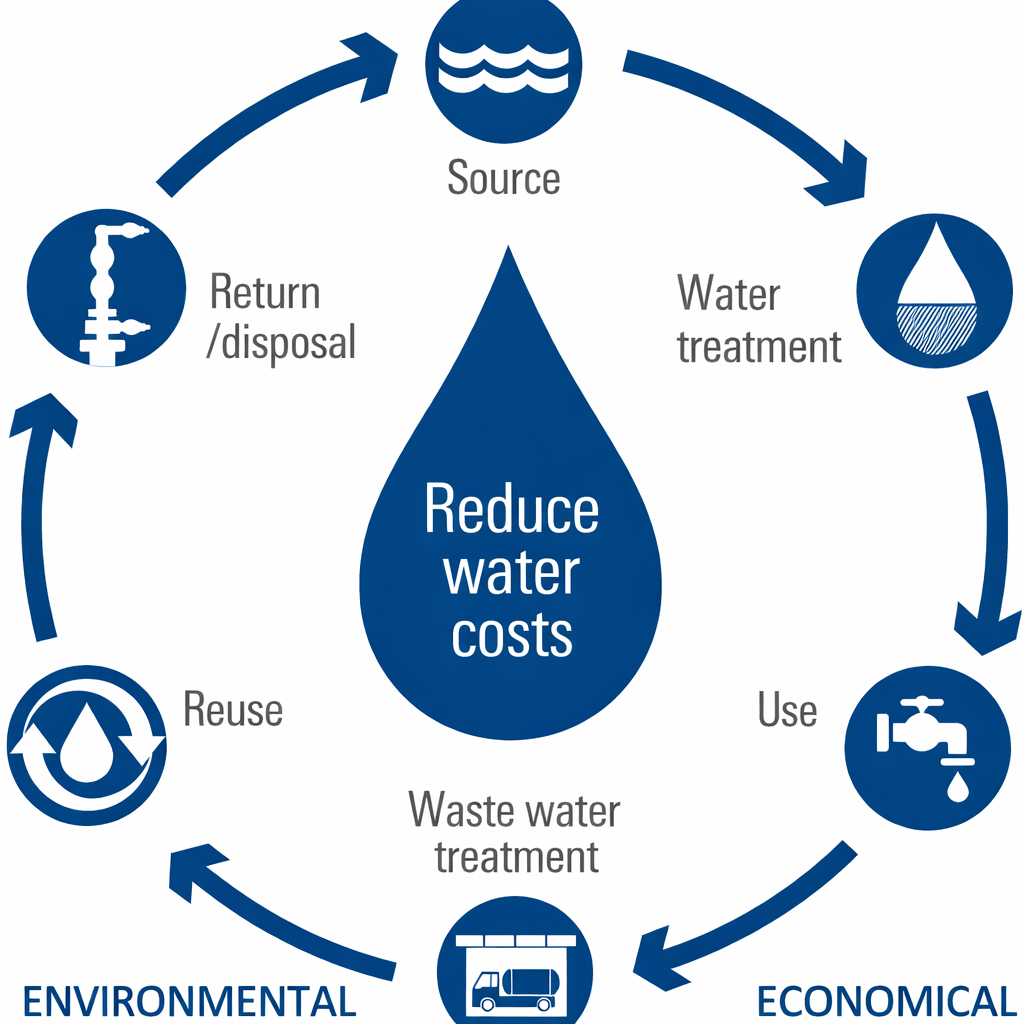
- Reduced water wastage
- Improved groundwater recharge
- Protection of ecosystems
- Lower pollution levels
- Economic Benefits
- Reduced infrastructure costs
- Affordable water access
- Job creation in maintenance and monitoring
- Social Benefits
- Increased community participation
- Improved public health
- Gender empowerment (as women often manage water resources locally)
Case Study Examples from 2026
- Rural Irrigation Cooperatives
Farmers in drought-prone regions collaborate to manage drip irrigation systems, reducing water usage by up to 40%.
- Urban Neighborhood Rainwater Networks
City communities collect rainwater for shared use, decreasing municipal water dependency.
- Coastal Area Water Protection
Communities near coastal zones monitor saltwater intrusion to protect freshwater supplies.
Challenges Facing Community-Based Water Management in 2026
Despite its success, some challenges remain:
- Limited funding
- Technical knowledge gaps
- Climate unpredictability
- Political interference
- Maintenance issues
To overcome these, training programs and partnerships with NGOs and government agencies are essential.
Government and NGO Support
Governments are supporting “Community-Based Water Management Solutions in 2026” through:
- Micro-financing programs
- Capacity-building workshops
- Technical support teams
- Public-private partnerships
- Legal frameworks recognizing community water rights
International organizations also provide grants and training resources.
The Role of Education and Awareness
Awareness campaigns encourage responsible water usage. Schools include water conservation topics in their curriculum. Community meetings and workshops help residents understand:
- Water budgeting
- Conservation techniques
- Sanitation practices
- Climate adaptation strategies
Education ensures long-term sustainability.
Community-Based Water Management and Climate Resilience
Local water management improves climate resilience by:
- Storing excess rainwater
- Protecting natural recharge zones
- Diversifying water sources
- Promoting drought-resistant agriculture
Communities become less vulnerable to extreme weather events.
Future Outlook Beyond 2026
The future of “Community-Based Water Management Solutions in 2026” looks promising. Trends indicate:
- Greater use of AI and digital water tracking
- Expansion of solar-powered desalination
- Integration of smart city water systems
- Stronger global cooperation on water governance
As water becomes increasingly scarce, decentralized management models will become essential worldwide.