






Introduction
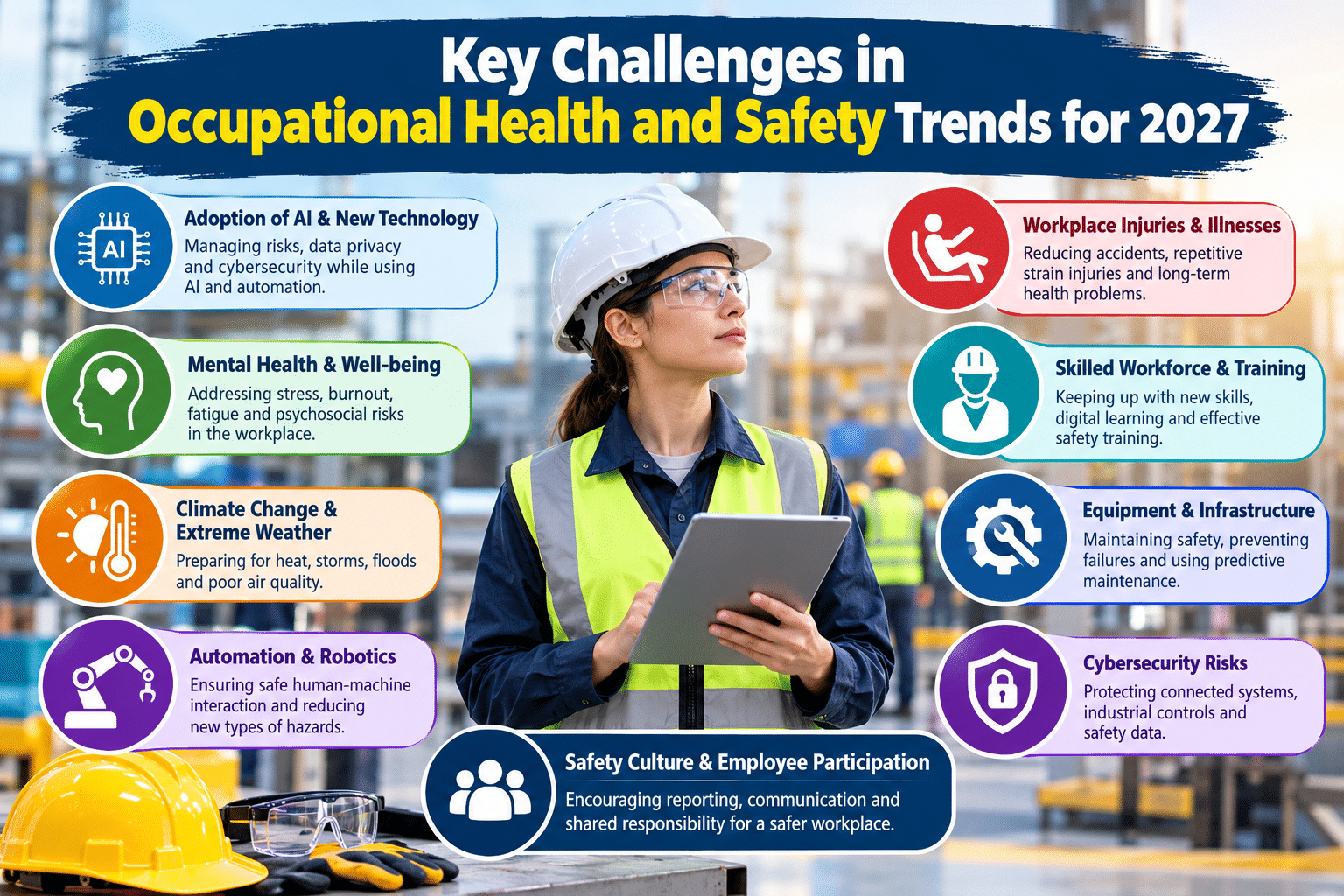
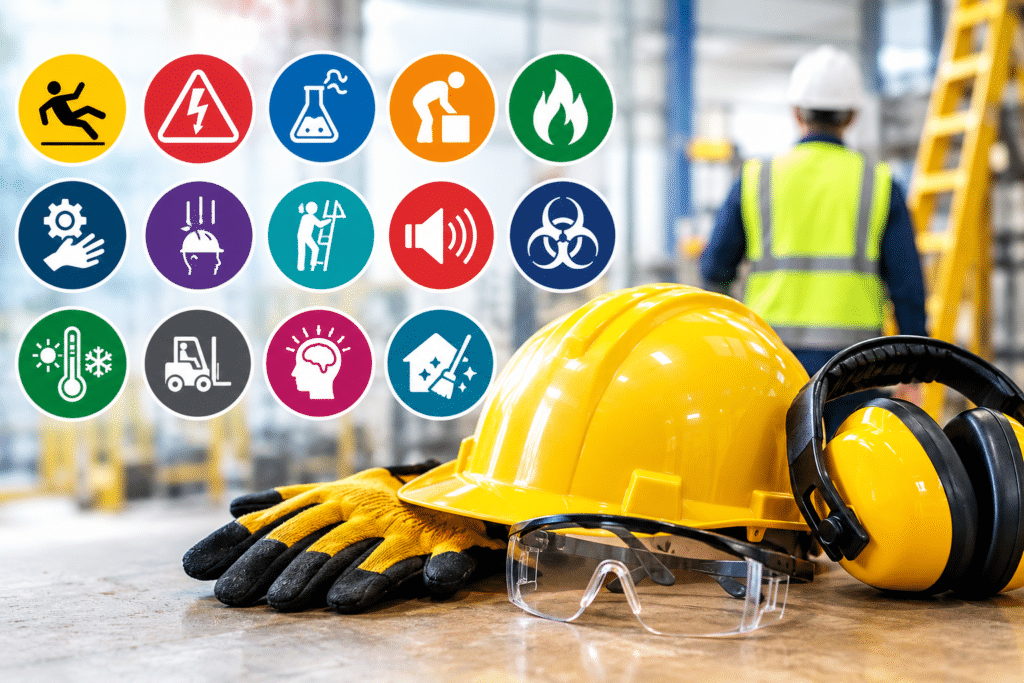
Workplace safety is evolving as businesses face new technologies, environmental challenges, changing employee expectations, and emerging occupational risks. Traditional safety procedures remain essential, but organizations must also prepare for new hazards associated with artificial intelligence (AI), automation, extreme weather, remote working, and employee mental health.
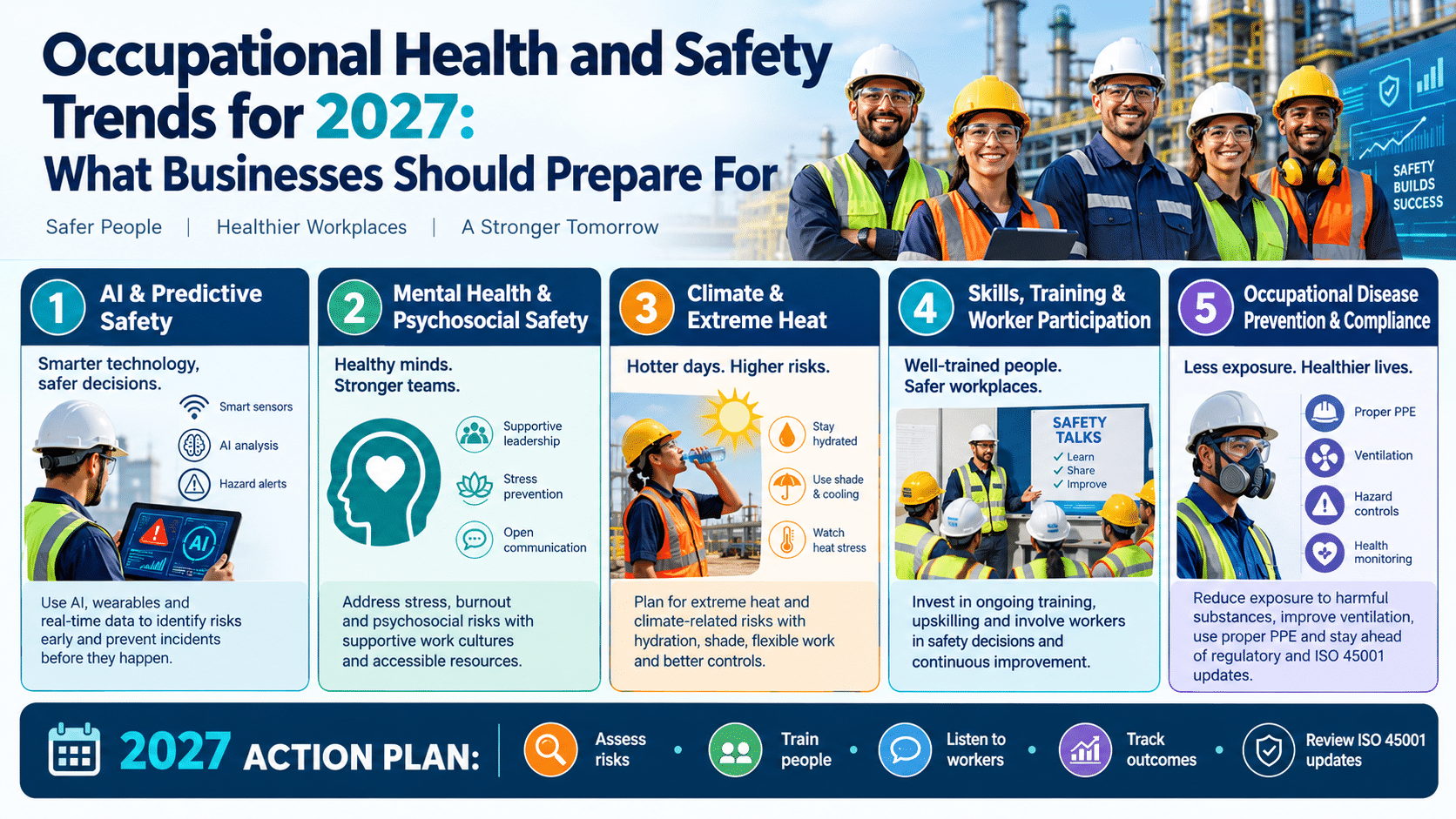
Understanding Occupational Health and Safety Trends for 2027 can help businesses develop stronger safety programs, reduce workplace injuries, improve employee well-being, and maintain productivity. Employers who identify risks early are better positioned to protect their workforce and respond to changing workplace conditions.
In 2027, successful workplace safety strategies will increasingly combine technology, employee participation, preventive maintenance, practical training, and data-driven decision-making. However, technology alone cannot guarantee a safe workplace. Strong leadership, effective communication, and a commitment to continuous improvement will remain equally important.
This article explores the major Occupational Health and Safety Trends for 2027 and explains how businesses can prepare for a safer and healthier future.
1. Artificial Intelligence in Workplace Safety
Artificial intelligence is becoming an important tool for identifying workplace hazards and supporting preventive safety management. AI-powered systems can analyze information from workplace inspections, incident reports, equipment sensors, and operational records to identify patterns that may indicate increased risk.
For example, an AI-enabled monitoring system may identify repeated safety violations in a warehouse or detect unusual equipment behavior that requires inspection.
How AI Can Improve Workplace Safety
Businesses can use artificial intelligence to:
- Identify recurring workplace hazards.
- Analyze accident and near-miss reports.
- Predict equipment maintenance requirements.
- Improve emergency planning.
- Support safety inspections and risk assessments.
- Identify patterns in incidents and unsafe working conditions.
AI may also help safety managers prioritize high-risk activities and allocate resources more effectively. However, businesses must consider privacy, accuracy, cybersecurity, and the possibility of biased or incorrect recommendations. AI-generated findings should be reviewed by qualified personnel rather than treated as unquestionable decisions.
How Businesses Should Prepare
Organizations should identify suitable safety applications, train employees, establish clear data protection rules, and test AI systems before relying on them for important decisions. AI should support professional judgment, not replace qualified safety officers or essential physical safeguards.
2. Greater Focus on Workplace Mental Health
Mental health is becoming an increasingly important part of occupational health and safety. Workplace stress, excessive workloads, bullying, long working hours, job insecurity, and poor communication can affect employees’ physical health, concentration, and performance.
In 2027, organizations should consider psychological risks alongside physical hazards when developing workplace safety programs.
Common Workplace Mental Health Risks
Employees may experience:
- Chronic stress and burnout.
- Anxiety related to unrealistic deadlines.
- Fatigue caused by excessive working hours.
- Workplace harassment or bullying.
- Poor work-life balance.
- Emotional strain following traumatic incidents.
These problems can contribute to mistakes, absenteeism, reduced productivity, and workplace accidents.
Practical Prevention Strategies
Employers should review workloads, provide clear responsibilities, encourage respectful communication, and establish confidential channels for reporting concerns.
Managers should receive training to recognize signs of excessive stress and respond appropriately. Access to counseling, employee assistance programs, and reasonable workload adjustments can also support workers.
A healthy workplace is not simply one without physical injuries. It is an environment where employees can raise concerns, receive appropriate support, and perform their duties without unnecessary psychological harm.
3. Wearable Technology and Real-Time Safety Monitoring
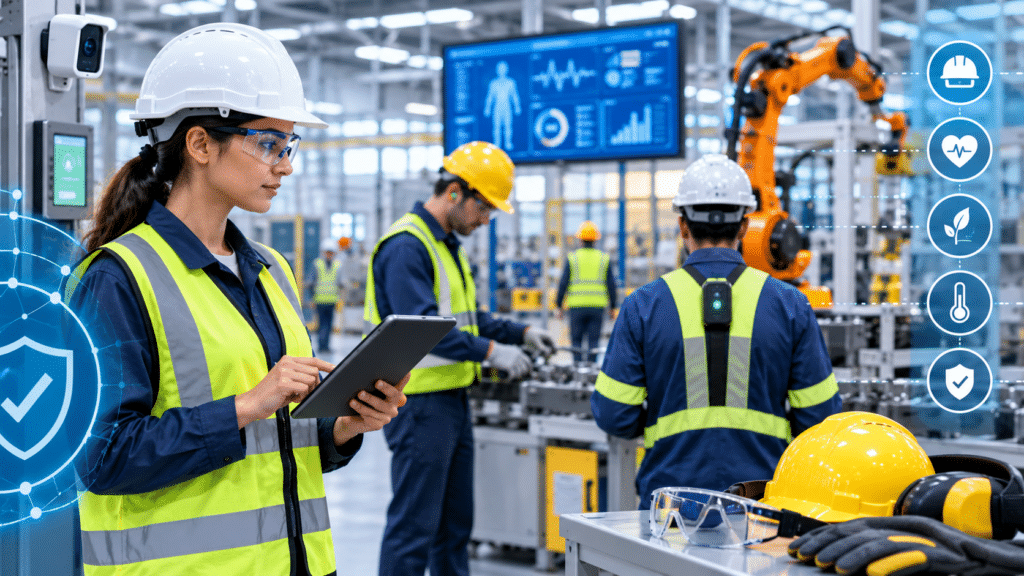
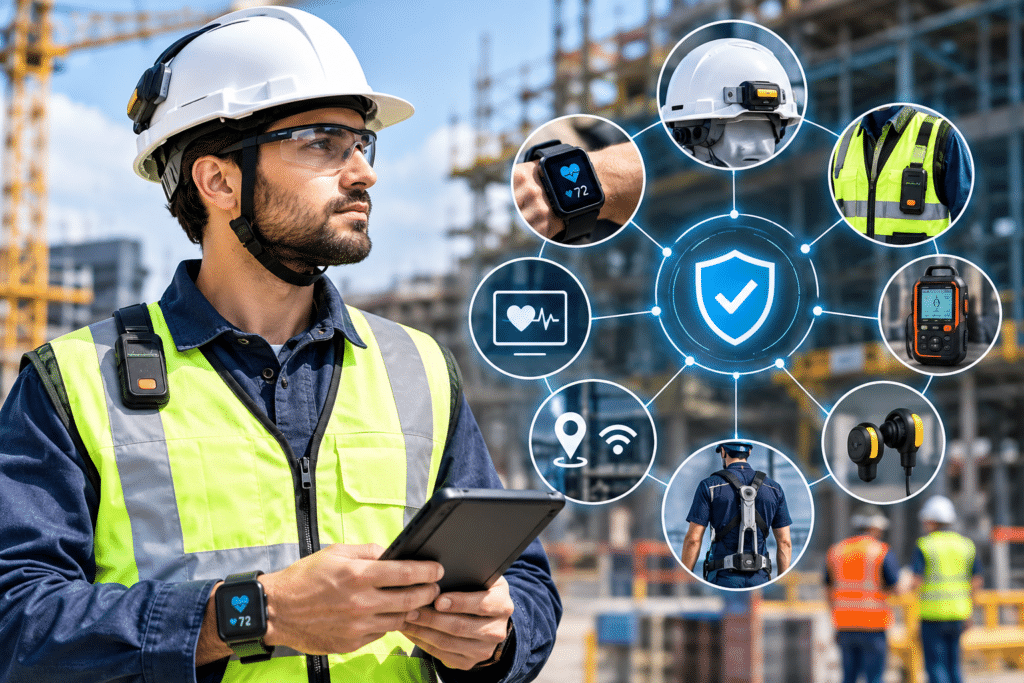
Wearable technology is another important development in Occupational Health and Safety Trends for 2027. Depending on the device and workplace, wearables can monitor environmental conditions, worker location, physical strain, or signs of fatigue.
Examples include smart helmets, connected safety vests, location tags, environmental sensors, and wearable devices that provide alerts when dangerous conditions are detected.
Benefits of Wearable Safety Devices
Wearable devices may help organizations:
- Alert workers to hazardous environmental conditions.
- Improve emergency response and worker location.
- Monitor exposure to certain workplace hazards.
- Identify excessive heat exposure.
- Support lone-worker protection.
- Improve situational awareness in high-risk environments.
For example, a wearable heat-stress monitoring system may alert a worker or supervisor when conditions require rest, hydration, or further assessment.
Challenges and Limitations
Wearable devices may be expensive, uncomfortable, or unsuitable for certain tasks. Sensors can also produce inaccurate readings or fail because of battery or connectivity problems.
Employee privacy is another major consideration. Employers should explain what information is collected, why it is needed, who can access it, and how long it will be retained. Wearables should complement engineering controls, safe work procedures, and personal protective equipment rather than replace them.
4. Climate Change and Extreme Weather Protection
Climate-related workplace hazards are becoming increasingly important for outdoor workers and industries that depend on physical labor.
Extreme heat, severe storms, flooding, poor air quality, and changing weather patterns can create dangerous working conditions. Construction workers, agricultural employees, delivery personnel, and utility workers may face particularly significant exposure.
In countries such as Pakistan, extreme summer temperatures can make heat-stress prevention a critical workplace safety priority.
Major Climate-Related Workplace Risks
Businesses should prepare for:
- Heat exhaustion and heatstroke.
- Dehydration and excessive physical fatigue.
- Slippery surfaces following heavy rain.
- Flooding around industrial facilities.
- Reduced visibility during severe weather.
- Exposure to smoke, dust, and airborne pollutants.
Extreme temperatures can also affect machinery, electrical systems, protective equipment, and transportation operations.
How Businesses Can Reduce Climate Risks
Employers should establish heat-stress prevention plans, provide suitable drinking water, schedule rest breaks, and arrange shaded or cooled recovery areas where appropriate.
Outdoor work may need to be adjusted according to weather conditions. Supervisors should receive training in recognizing heat-related illness and responding to emergencies.
Businesses should also develop severe-weather procedures, identify evacuation routes, and assess whether their facilities are vulnerable to flooding or other environmental hazards. Climate preparedness should become part of routine risk assessments rather than an occasional seasonal activity.
5. Automation, Robotics, and Human-Machine Safety
Automation is changing manufacturing, warehousing, logistics, and other industrial operations. Robots and automated equipment can reduce workers’ exposure to repetitive, physically demanding, or hazardous tasks.
However, automation also introduces risks that require careful assessment.
Safety Challenges Associated With Automation
Potential hazards include:
- Collisions between workers and mobile robots.
- Crushing or entrapment around automated machinery.
- Unexpected equipment startup.
- Electrical and mechanical failures.
- Unsafe maintenance activities.
- Confusion about responsibilities when systems malfunction.
Poorly designed human-machine interactions can create additional risks, especially when workers are unfamiliar with automated processes.
Preparing for Safer Automation
Businesses should conduct risk assessments before introducing new machinery or robotics. Appropriate machine guarding, emergency stops, restricted access zones, and energy-isolation procedures should be established.
Workers must receive practical training on normal operations, emergency shutdowns, and maintenance requirements.
Automated systems should be inspected regularly, and safety procedures should be updated whenever equipment, software, or production processes change.
Automation should reduce risk rather than transfer it to workers who lack the necessary training or protection.
6. Predictive Maintenance and Data-Driven Risk Management
Traditional maintenance often depends on fixed schedules or repairs after equipment fails. Predictive maintenance uses equipment condition data to help identify possible failures before they cause serious problems.
Sensors and monitoring systems can track vibration, temperature, pressure, and other indicators of equipment performance.
Why Predictive Maintenance Matters
Equipment failure can cause injuries, production interruptions, fires, chemical releases, and other emergencies. Predictive maintenance can help businesses identify warning signs and arrange inspections before a problem becomes more serious.
For example, unusual vibration in an industrial motor may indicate a developing mechanical fault that requires investigation.
Steps for Implementation
Businesses should identify critical equipment, establish inspection standards, collect reliable condition data, and define clear procedures for responding to alerts.
Maintenance teams should document repairs and investigate recurring failures. Employees must also be trained to report unusual noises, overheating, leaks, and other warning signs.
Technology can support maintenance decisions, but physical inspections and competent engineering assessments remain necessary.
7. Stronger Safety Training Through Digital Learning
Workplace safety training is essential, but traditional presentations and written instructions do not always prepare workers for real-life emergencies.
Digital learning tools, interactive simulations, mobile training platforms, and virtual reality can make safety education more practical and engaging.
Emerging Approaches to Safety Training
Businesses may use digital tools to teach employees about:
- Fire prevention and evacuation.
- Machinery operation and isolation.
- Chemical handling and spill response.
- Working at heights.
- Emergency communication.
- Hazard identification and incident reporting.
Virtual reality simulations can allow employees to practise selected emergency scenarios without being exposed to the actual hazards. Mobile learning can also help workers review procedures and complete refresher training when required.
Making Training Effective
Employers should tailor training to job responsibilities, literacy levels, languages, and workplace conditions.
Practical demonstrations and competency assessments should accompany digital learning where appropriate. Training records should be maintained, and refresher sessions should be provided when tasks, equipment, or hazards change.
The objective is not simply to complete a training course. It is to ensure that workers understand the risks and can perform their duties safely.
8. Ergonomics and Musculoskeletal Injury Prevention
Musculoskeletal problems can develop when employees repeatedly lift heavy objects, maintain awkward postures, perform repetitive movements, or work for long periods at poorly designed workstations.
Office workers, warehouse employees, production workers, drivers, and healthcare personnel may all experience ergonomic risks.
Common Ergonomic Hazards
These include:
- Repetitive hand and arm movements.
- Incorrect lifting techniques.
- Poor workstation design.
- Prolonged sitting or standing.
- Repeated bending and twisting.
- Tasks that require excessive physical force.
Such hazards may contribute to back pain, neck discomfort, shoulder injuries, and other musculoskeletal conditions.
Practical Ergonomic Improvements
Businesses should review workstation layouts, provide suitable adjustable equipment, and redesign tasks where possible.
Mechanical lifting aids can reduce the need to handle heavy loads manually. Job rotation may help reduce repetitive exposure when properly planned, although it does not eliminate the underlying hazard.
Employees should be encouraged to report discomfort early so that risks can be investigated before symptoms become more serious. Ergonomic improvements should be based on the actual work being performed rather than relying on general advice alone.
9. Environmental Monitoring and Occupational Hygiene
Occupational hygiene focuses on identifying, evaluating, and controlling workplace exposures that may affect workers’ health.
Airborne dust, chemical vapors, excessive noise, heat, biological hazards, and inadequate ventilation can create risks that are not always immediately visible.
Businesses are increasingly able to use monitoring instruments and connected sensors to understand environmental conditions more effectively.
Key Areas of Environmental Monitoring
Workplaces may need to monitor:
- Airborne dust and hazardous substances.
- Noise levels.
- Indoor air quality.
- Temperature and humidity.
- Ventilation performance.
- Potential biological exposures.
Monitoring requirements depend on the industry, materials used, legal obligations, and the results of the workplace risk assessment.
Preventing Occupational Exposure
Employers should prioritize eliminating hazardous substances where possible or substituting them with safer alternatives.
Engineering controls, such as local exhaust ventilation and physical barriers, can reduce exposure at its source. Administrative controls and suitable personal protective equipment may also be required.
Monitoring results should be reviewed by competent personnel, and corrective action should be taken when exposure levels indicate a problem.
10. Stronger Cybersecurity for Connected Safety Systems
Modern workplaces increasingly depend on connected machinery, building management systems, digital access controls, and safety monitoring platforms.
These systems can improve efficiency, but cybersecurity weaknesses may interfere with important safety functions.
For example, unauthorized access to an industrial control system could disrupt operations or create hazardous equipment conditions.
Why Cybersecurity Is a Safety Issue
Cybersecurity incidents may affect:
- Industrial control systems.
- Automated production equipment.
- Emergency communication systems.
- Digital access controls.
- Safety monitoring devices.
- Critical maintenance information.
A cyber incident can become a physical safety problem when it compromises the operation or availability of essential equipment.
Preparing for Cyber-Related Safety Risks
Organizations should restrict system access, apply security updates, maintain secure backups, and monitor connected devices. They should also establish procedures for responding to system failures and cybersecurity incidents.
Safety and IT teams should cooperate when assessing risks to operational technology. Emergency plans should explain how employees can maintain safe operations if digital systems become unavailable.
Cybersecurity measures must be integrated with physical safety planning rather than managed as an entirely separate concern.
11. More Effective Safety Culture and Employee Participation
Technology and written procedures cannot prevent every accident if workers are afraid to report hazards or managers ignore safety concerns. A strong safety culture encourages employees to participate in identifying risks, reporting near misses, and recommending improvements.
Characteristics of a Positive Safety Culture
An effective safety culture includes:
- Visible management commitment.
- Clear responsibilities and procedures.
- Open communication about hazards.
- Timely investigation of incidents.
- Fair treatment of employees who report concerns.
- Regular safety meetings and inspections.
- Continuous improvement based on evidence.
Near-miss reporting is particularly valuable because it allows organizations to investigate warning signs before an injury occurs. Employees should not be discouraged from reporting problems through blame, intimidation, or unrealistic production targets.
How Businesses Can Improve Participation
Employers can introduce toolbox talks, safety committees, anonymous reporting channels, and regular workplace consultations.
Workers should be involved when developing procedures that affect their daily tasks. Supervisors must respond to reported hazards and communicate what action has been taken. A safety culture becomes stronger when employees can see that their concerns lead to meaningful improvements.
12. Personal Protective Equipment and Smart Safety Equipment
Personal protective equipment (PPE) remains an essential part of workplace risk control when hazards cannot be adequately eliminated or controlled through other measures.
In 2027, businesses may increasingly consider improved materials, connected protective devices, better-fitting equipment, and task-specific designs.
Examples include protective helmets, eye protection, hearing protection, safety footwear, respiratory protection, and specialized protective clothing.
Choosing the Right Protective Equipment
Employers should select PPE according to the hazards identified in their risk assessments.
Equipment must fit correctly, be compatible with other protective items, and be suitable for the working environment. Workers should receive training on correct use, inspection, cleaning, storage, and replacement.
Smart PPE may provide additional alerts or monitoring capabilities, but these features must be evaluated for reliability and suitability.
Businesses should never rely on PPE alone when more effective controls, such as eliminating a hazard or installing engineering safeguards, are reasonably available.
13. Compliance, Documentation, and Continuous Improvement
Occupational health and safety requirements vary by country, industry, and type of workplace. Businesses must understand the regulations that apply to their operations and monitor relevant changes.
Digital recordkeeping can help organizations manage inspections, training records, incident investigations, maintenance schedules, and corrective actions.
Important Safety Records
Depending on legal and operational requirements, organizations may need to maintain:
- Workplace risk assessments.
- Incident and near-miss reports.
- Employee training records.
- Equipment inspection documents.
- Emergency drill records.
- Occupational health monitoring records.
- Corrective action registers.
Accurate records help businesses identify recurring issues and demonstrate that safety processes are being implemented.
However, documentation alone does not make a workplace safe. Procedures must be followed, hazards must be corrected, and management must verify that preventive measures are effective.
Businesses should periodically audit their safety programs and update them when new equipment, processes, or risks are introduced.
15. How Businesses Should Prepare for Occupational Health and Safety Trends for 2027
Preparing for emerging safety challenges does not necessarily require a large budget. Many improvements begin with identifying hazards, clarifying responsibilities, and ensuring that existing controls work effectively.
Businesses can use the following practical approach.
Step 1: Review Existing Risk Assessments
Identify current hazards and consider how new technology, extreme weather, changing work patterns, and employee health concerns may affect risk.
Prioritize hazards according to their potential severity and likelihood.
Step 2: Set Clear Safety Objectives
Establish measurable goals, such as improving training completion, reducing repeated hazards, increasing near-miss reporting, or completing overdue equipment inspections.
Avoid relying solely on injury counts because these do not reveal every weakness in a safety system.
Step 3: Invest in Appropriate Training
Provide training that reflects actual workplace hazards and employees’ responsibilities.
Include practical demonstrations, emergency exercises, and refresher training where needed.
Step 4: Evaluate Useful Safety Technology
Consider whether monitoring devices, digital inspection systems, or predictive maintenance tools could address specific risks.
Evaluate cost, reliability, privacy, cybersecurity, and worker acceptance before implementation.
Step 5: Strengthen Emergency Preparedness
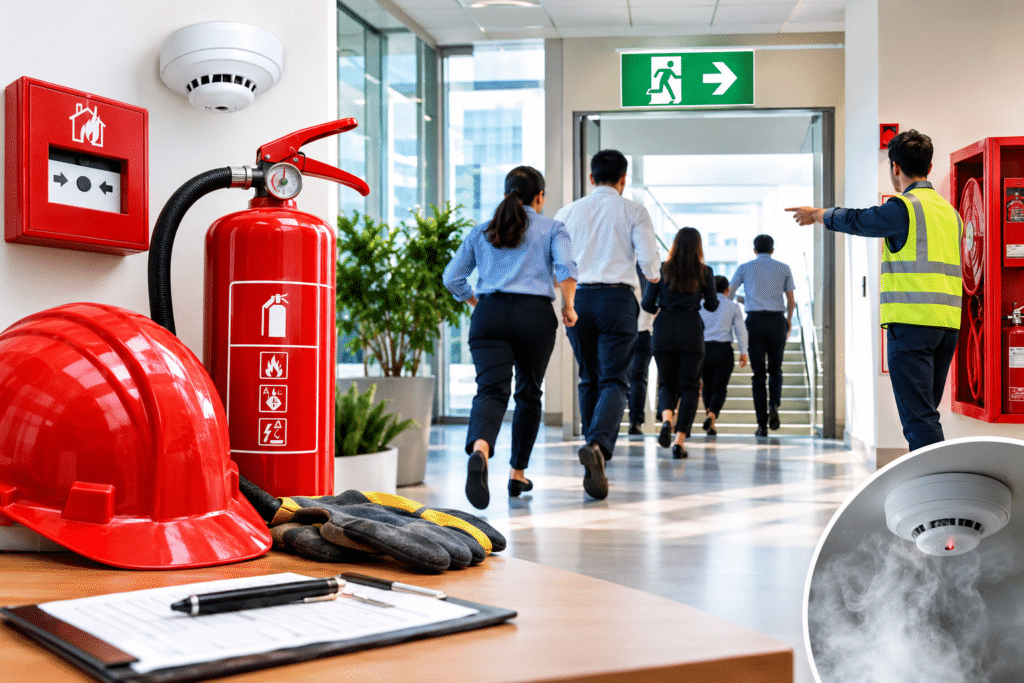
Review evacuation procedures, first-aid arrangements, emergency contacts, fire prevention measures, and severe-weather plans.
Conduct exercises and correct weaknesses identified during drills.
Step 6: Involve Employees
Encourage workers to report unsafe conditions and participate in safety discussions.
Investigate concerns promptly and communicate the corrective actions taken.
Step 7: Measure Progress and Improve
Review inspections, incident investigations, near-miss reports, training outcomes, and corrective action completion.
Use the findings to improve procedures and allocate resources where they will reduce risk most effectively.