








Introduction
Fire is one of the most dangerous hazards in workplaces, capable of causing serious injuries, fatalities, property damage, and business interruptions. Offices, factories, warehouses, restaurants, hospitals, and construction sites all face potential fire risks. Electrical faults, flammable materials, cooking equipment, and poor housekeeping can increase the likelihood of a workplace fire.
Fire safety at work is essential for protecting employees, visitors, customers, and business assets. It involves identifying fire hazards, preventing ignition, maintaining fire protection equipment, preparing emergency plans, and ensuring everyone understands evacuation procedures.
Employers must take practical steps to reduce fire risks and comply with applicable workplace safety and fire protection requirements. Employees also play an important role by following safety instructions, reporting hazards, and participating in emergency drills.
This guide explains the importance of fire safety at work, common workplace fire hazards, prevention strategies, emergency planning, evacuation procedures, and employee training.
1. Why Is Fire Safety at Work Important?
Fire safety is a fundamental part of workplace health and safety. A small fire can spread rapidly when combustible materials, inadequate ventilation, or unsafe working practices are present. Implementing effective fire safety measures helps organizations protect lives and reduce financial losses.
Protecting Employees and Visitors
The primary objective of workplace fire protection is to prevent injuries and fatalities. Smoke inhalation, extreme heat, and toxic gases can threaten people before flames reach their location. Clear escape routes, working alarms, emergency lighting, and regular drills help people respond quickly during an emergency.
Preventing Property Damage
Workplace fires can destroy buildings, equipment, inventory, documents, and computer systems. Installing suitable detection and suppression systems can help reduce potential losses.
Maintaining Business Continuity
A serious fire can force a business to close temporarily or permanently. Fire prevention measures and emergency plans can reduce disruption and help organizations recover more effectively.
Meeting Legal and Safety Requirements
Employers must understand and comply with the fire safety legislation, building requirements, and occupational safety regulations applicable to their location and industry. In Pakistan, businesses should consult the relevant provincial authorities, building and fire service requirements, and applicable occupational safety laws to determine their obligations.
2. Common Workplace Fire Hazards
Understanding fire hazards is the first step toward preventing workplace emergencies.
Electrical Equipment and Faulty Wiring
Damaged electrical cables, overloaded sockets, defective appliances, and poorly maintained machinery can generate heat or sparks that ignite combustible materials.
Prevention measures:
- Arrange regular inspections of electrical installations.
- Replace damaged cables and plugs immediately.
- Avoid overloading electrical outlets.
- Use qualified electricians for electrical repairs.
- Switch off equipment when appropriate and safe.
Flammable Liquids and Chemicals
Paints, fuels, solvents, cleaning products, and certain industrial chemicals can ignite easily. Some materials may also react dangerously when stored together.
Prevention measures:
- Store flammable substances in suitable, approved containers.
- Keep chemicals away from heat sources and ignition points.
- Maintain appropriate ventilation.
- Follow safety data sheets and manufacturer instructions.
- Restrict access to designated chemical storage areas.
Poor Housekeeping
Cardboard, paper, packaging, oily rags, and other combustible waste can help a fire spread. Cluttered corridors can also prevent employees from escaping safely.
Prevention measures:
- Remove combustible waste regularly.
- Keep stairways and corridors clear.
- Store materials in designated areas.
- Dispose of oily or chemical-soaked materials safely.
- Maintain clean and organized workstations.
Cooking Equipment and Heat Sources
Prevention measures:
- Maintain cooking equipment according to manufacturer instructions.
- Clean grease from suitable surfaces and extraction systems.
- Never leave cooking equipment unattended when supervision is required.
- Train kitchen staff in emergency procedures.
- Use an appropriate fire suppression system where required.
Hot Work Activities
Welding, grinding, soldering, and cutting operations can produce sparks capable of igniting nearby materials.
Prevention measures:
- Implement a hot-work permit system where appropriate.
- Remove combustible materials from the work area.
- Provide suitable fire protection equipment.
- Assign a trained fire watch when required.
3. Essential Fire Prevention Measures
Effective fire safety at work depends on prevention rather than relying entirely on emergency response.
Conduct Regular Fire Risk Assessments
A fire risk assessment identifies potential ignition sources, combustible materials, people at risk, and existing protective measures. A practical assessment should include:
- Identifying potential fire hazards.
- Determining who could be affected.
- Evaluating existing fire prevention and protection measures.
- Identifying improvements that are necessary.
- Recording findings where required.
- Reviewing the assessment after significant changes or incidents.
Special attention should be given to workers with disabilities, temporary employees, contractors, visitors, and people unfamiliar with the premises.
Maintain Electrical Safety
Electrical equipment should be installed, inspected, and maintained according to applicable standards and manufacturer instructions. Employees should report burning smells, unusual heat, sparks, damaged plugs, or repeated circuit-breaker trips. Electrical faults should be investigated by qualified personnel. Workers should never attempt unsafe repairs.
Store Combustible Materials Properly
Paper, wood, fabrics, packaging, fuels, and chemicals should be stored in designated locations. Keep combustible materials away from heaters, electrical panels, machinery, and other potential ignition sources. Avoid storing materials in escape corridors, staircases, or areas intended for emergency access.
Install Suitable Fire Detection Systems
Smoke detectors, heat detectors, and fire alarm systems provide early warning of potential danger. The appropriate system depends on the building layout, occupancy, workplace activities, and applicable regulations.
Provide Suitable Firefighting Equipment
For example, ordinary combustible materials, flammable liquids, cooking oils, and energized electrical equipment may require different extinguishing agents.
Using the wrong extinguisher can increase danger. Water must not be used on burning cooking oil or energized electrical equipment. Firefighting equipment must remain accessible, clearly identified, and properly maintained.
4. Developing an Effective Workplace Fire Emergency Plan
An emergency plan explains what employees should do when a fire occurs. Every workplace should establish procedures appropriate to its size, layout, activities, and fire risks.
Establish Clear Emergency Responsibilities
Assign responsibilities to trained personnel where appropriate. These may include:
Fire safety coordinator: Oversees fire safety arrangements and emergency preparedness.
Fire wardens: Help communicate evacuation instructions and assist with evacuation duties within their training.
First-aid personnel: Provide first aid when it is safe to do so.
Managers: Support emergency communication and business continuity.
Employees: Raise the alarm, follow instructions, and evacuate promptly.
No employee should be expected to undertake duties that place them at unreasonable risk.
Create an Emergency Communication System
Employees must know how to raise the alarm and contact emergency services.
Emergency information should explain how to report a fire, identify the workplace location, and communicate the nature of the incident. Display emergency contact information where employees can easily find it. Ensure workers understand the local procedure for contacting the fire service.
Identify Assembly Points
Assembly points should be positioned away from the building, smoke, fire service access routes, and other hazards. The emergency plan should identify alternative assembly locations when the primary point becomes unsafe.
Plan for Vulnerable Individuals
Emergency arrangements should consider people who may require additional assistance, including employees with mobility, hearing, visual, or other functional limitations. Develop suitable evacuation arrangements in consultation with the individuals concerned and relevant safety professionals. Provide accessible alarms and communication methods where necessary.
Maintain Emergency Documentation
Keep emergency plans, inspection records, training documentation, and drill reports updated. Review the plan whenever workplace layouts, staffing, equipment, hazardous materials, or operational activities change significantly.
5. Workplace Fire Evacuation Procedures
Employees should understand the procedure before a fire occurs.
Step 1: Raise the Alarm
If you discover a fire, activate the nearest fire alarm or follow the workplace’s established emergency reporting procedure.
Step 2: Contact Emergency Services
Follow the workplace emergency plan for contacting the local fire service.
Provide the building’s location, the suspected fire location, and any known information about people who may be trapped. Do not delay evacuation while trying to obtain additional information.
Step 3: Leave the Building Immediately
Stop work and use the nearest safe, designated escape route.
Follow emergency signs and instructions from trained personnel.
Do not collect personal belongings or return to your workstation.
Step 4: Avoid Elevators
Do not use ordinary passenger elevators during a fire unless an approved emergency evacuation system specifically directs their use.
Use designated stairways and escape routes, keeping away from smoke and flames.
Step 5: Close Doors Behind You
If it is safe, close doors as you leave without locking them. Closed doors may help slow the spread of smoke and fire.
Never delay your escape to close doors if doing so would expose you to danger.
Step 6: Proceed to the Assembly Point
Move directly to the designated assembly point.
Step 7: Account for Employees
Supervisors or designated personnel should account for employees and report missing people to emergency responders.
Nobody should re-enter the building to search for missing colleagues.
Step 8: Wait for Official Clearance
Do not return to the workplace until the fire service or another authorized person confirms that it is safe.
Important: If smoke blocks your usual exit, do not enter a smoke-filled corridor or stairwell. Use another safe escape route if available and follow the emergency plan. If you become trapped, close the door between yourself and the fire, seal gaps if possible without delaying other essential actions, call emergency services, and signal your location.
6. Fire Extinguisher Safety and Employee Training
Fire extinguishers can help control certain small fires, but they are not a substitute for evacuation or professional firefighting. Only appropriately trained personnel should attempt to extinguish a fire, and only when the workplace procedure permits it.
Fire Extinguisher Use
An attempt may be appropriate only when all the following conditions are met:
- The fire is small and contained.
- The correct extinguisher is available.
- The employee has received appropriate training.
- The alarm has been raised.
- A safe escape route remains available.
- Smoke and heat do not threaten the employee.
If the fire grows, smoke increases, or the escape route becomes unsafe, stop and evacuate immediately.
Basic Fire Extinguisher Operation
Some extinguishers use the PASS method:
- P — Pull:Pull the safety pin.
- S — Squeeze:Squeeze the operating handle.
- S — Sweep:Sweep from side to side at the base of the fire.
This method is not appropriate for every extinguisher design, so employees must follow the equipment’s instructions and their training. Never fight a fire if doing so could delay escape or expose you to smoke.
Conduct Regular Training
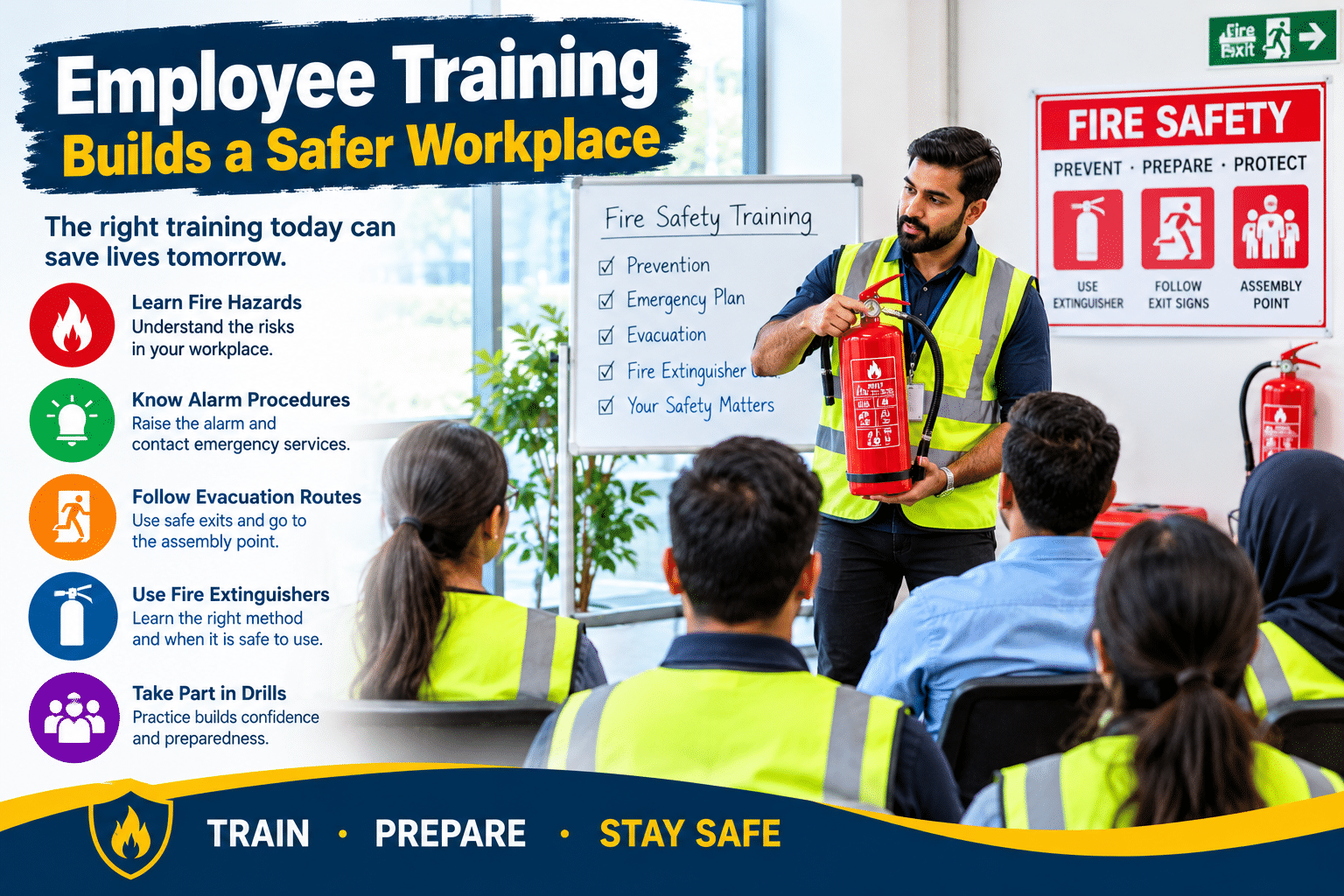
Training should cover fire hazards, alarm procedures, escape routes, assembly points, extinguisher limitations, and reporting requirements. New employees should receive training during induction, with refresher training provided as needed. Emergency drills help workers practise evacuation procedures and identify weaknesses in the emergency plan.
7. Fire Safety Equipment Every Workplace Should Consider
The equipment required depends on the workplace’s fire risk assessment and applicable regulations. Common examples include:
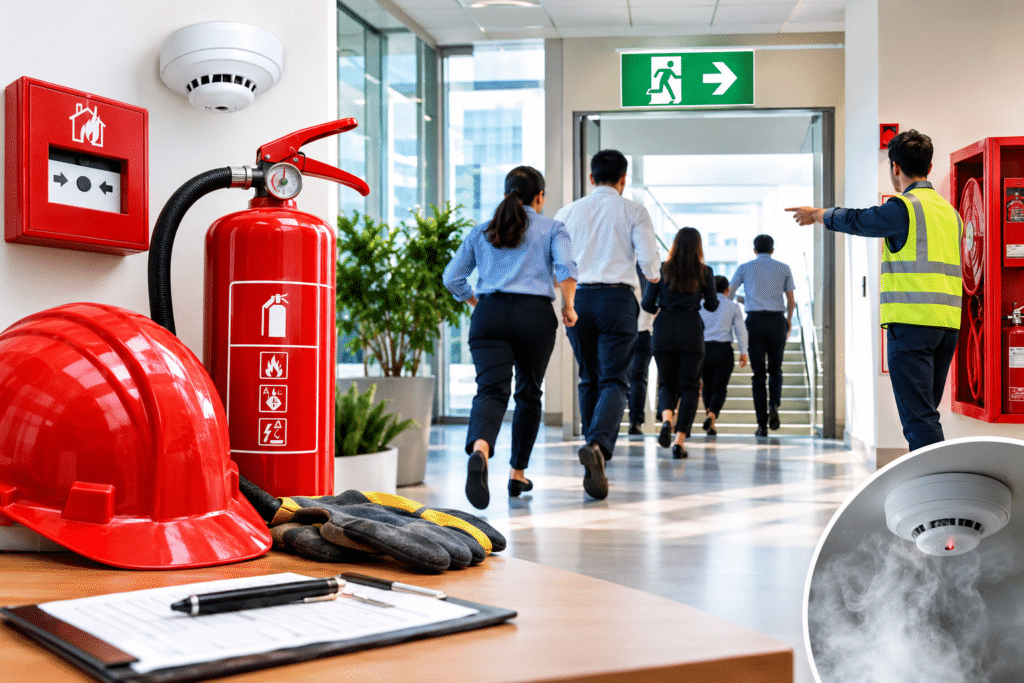
Fire alarms: Alert employees to danger and initiate evacuation.
Smoke and heat detectors: Identify signs of fire and support early warning.
Fire extinguishers: Provide a suitable first response to certain small fires when conditions are safe.
Emergency lighting: Helps occupants navigate escape routes during power failures.
Fire exit signs: Clearly identify designated evacuation routes and exits.
Fire doors: Help limit the spread of fire and smoke when properly installed and maintained.
Sprinkler or suppression systems: Help control or suppress fires where installed and appropriate.
First-aid supplies: Support treatment of minor injuries after the immediate danger has passed.
Equipment must be inspected and maintained according to applicable requirements. Employees should never block fire exits, remove safety signs, or disable alarms.
8. Employer Responsibilities for Fire Safety at Work
Employers have an important role in creating and maintaining a safe working environment. Their responsibilities may include:
- Assessing workplace fire risks.
- Implementing appropriate prevention measures.
- Maintaining safe escape routes.
- Installing and maintaining suitable fire protection systems.
- Providing employee training and emergency drills.
- Preparing and communicating emergency procedures.
- Providing suitable arrangements for people who need evacuation assistance.
- Investigating fire incidents and near misses.
- Reviewing safety arrangements when workplace conditions change.
The exact legal duties depend on the country, province, building type, and industry. In Pakistan, employers should check applicable provincial occupational safety legislation, local fire service requirements, and building regulations. Organizations should seek competent professional advice where fire risks are complex.
9. Employee Responsibilities During Fire Emergencies
Employees contribute to workplace fire safety through everyday actions and responsible emergency responses. Workers should:
- Follow workplace fire safety instructions.
- Keep exits and corridors clear.
- Report damaged electrical equipment.
- Store combustible materials correctly.
- Avoid unauthorized hot work.
- Participate in fire drills.
- Learn the nearest safe escape routes.
- Raise the alarm immediately when a fire is discovered.
- Evacuate promptly when instructed.
- Never re-enter a burning or evacuated building without authorization.
Employees should also report blocked exits, missing extinguishers, damaged fire doors, and defective alarm systems to the responsible person.
10. Common Workplace Fire Safety Mistakes to Avoid
Even workplaces with fire protection equipment can face serious risks if basic procedures are ignored.
Blocking Emergency Exits
Boxes, furniture, and stored goods can prevent rapid evacuation. Escape routes must remain clear and usable.
Ignoring Electrical Warning Signs
Burning smells, damaged wiring, and overheating equipment should never be ignored. Report problems promptly.
Disabling Fire Alarms
Fire alarms should not be disabled to avoid inconvenience or false alarms. Faulty systems must be addressed by qualified personnel.
Using the Wrong Extinguisher
Incorrect extinguishing agents can make certain fires more dangerous. Employees must understand which equipment is suitable for the hazards in their workplace.
Failing to Practise Evacuation
Employees who have never practised an evacuation may become confused during an actual emergency. Regular drills can reveal problems before lives are at risk.
Returning to Collect Personal Items
Phones, wallets, documents, and bags are not worth risking a life. Once evacuation begins, leave immediately.
11. How to Improve Fire Safety at Work in the Future
Modern fire safety practices increasingly combine traditional prevention measures with technology and data-driven risk management.
Smart Fire Detection
Connected detection systems can provide faster alerts and help authorized personnel identify the location of an alarm. These systems should be selected, installed, and maintained according to the building’s needs and applicable requirements.
Digital Inspection Records
Digital checklists can help organizations monitor extinguisher inspections, alarm testing, staff training, and corrective actions. Managers can use these records to identify recurring problems and improve accountability.
Improved Employee Awareness
Short training sessions, visual safety reminders, induction programs, and practical evacuation exercises can strengthen employees’ understanding of fire risks. Training should be accessible to workers with different language and communication needs.
Continuous Risk Assessment
Workplaces change over time. New machinery, chemical storage, renovations, and changes in staffing can create new hazards. Regular reviews help organizations adapt their fire prevention strategies to changing conditions.