




Introduction
Workplace safety is essential for every organization, whether it operates a factory, construction site, office, warehouse, hospital, or restaurant. Workplace accidents can cause serious injuries, financial losses, legal problems, and long-term health complications. Traditional safety methods, including inspections, safety training, protective equipment, and incident reporting, remain important. However, modern technology is creating new opportunities to identify risks before accidents occur.
AI in Workplace Health and Safety is becoming an important development in occupational risk management. Artificial intelligence allows organizations to analyze information, recognize patterns, identify potential hazards, and support faster decision-making. When combined with trained safety professionals, AI can help businesses improve prevention strategies and protect their employees.
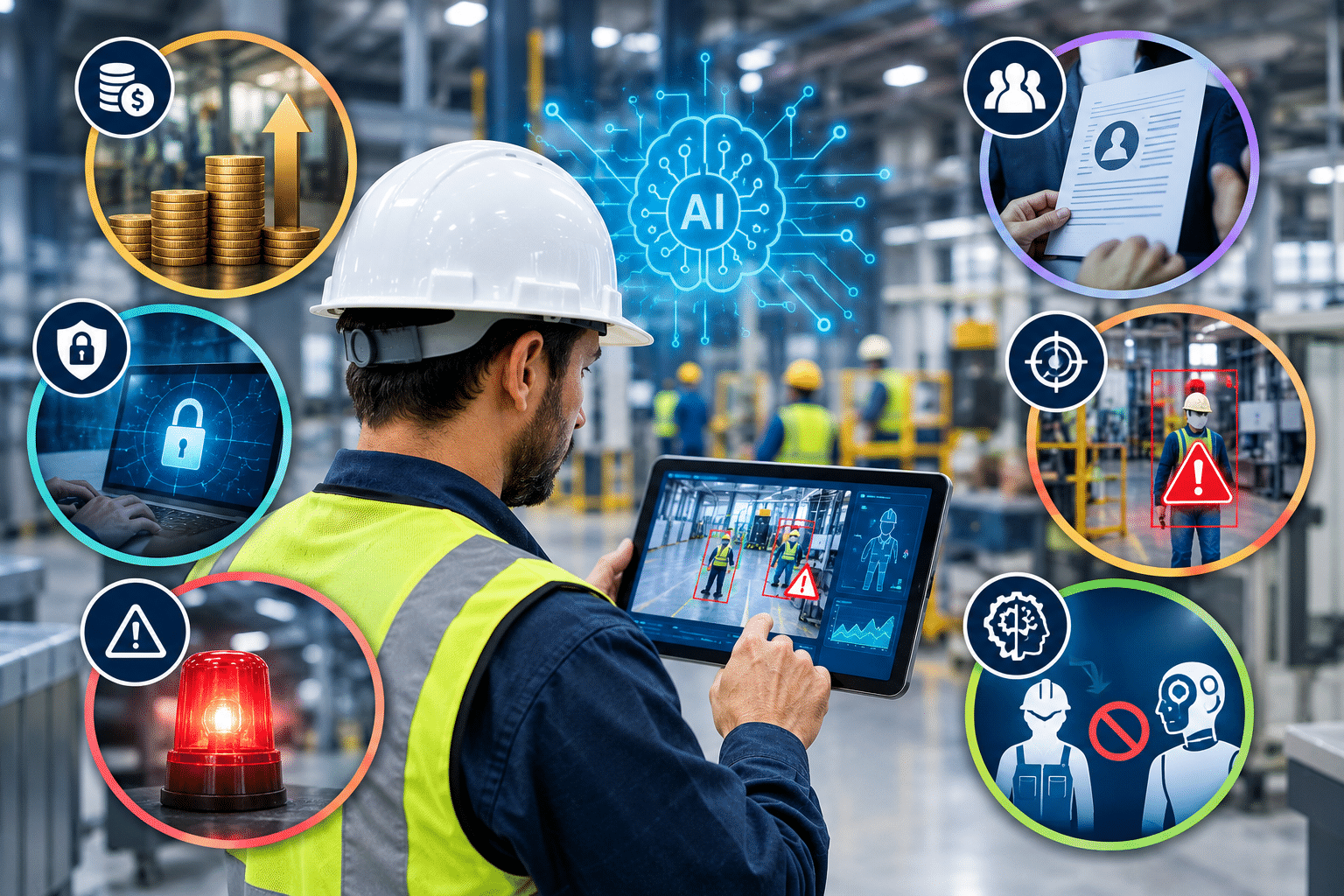
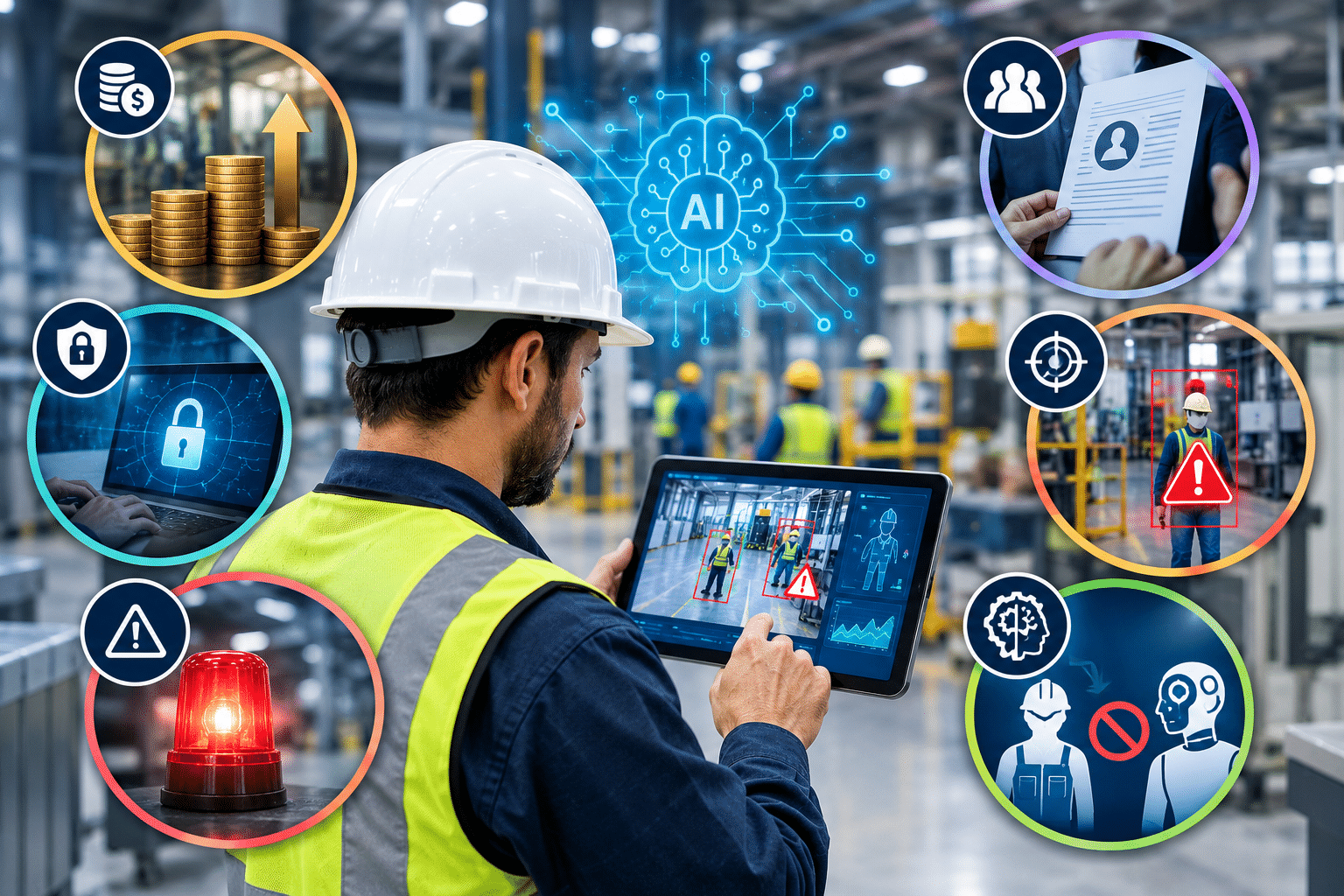
In 2026, organizations are increasingly exploring smart cameras, wearable devices, predictive analytics, and AI-powered monitoring systems. These technologies can support safety teams by highlighting unsafe conditions and helping them prioritize risks.
This article explains how AI in Workplace Health and Safety works, its major benefits, practical applications, challenges, and future possibilities.
What Is AI in Workplace Health and Safety?
AI in Workplace Health and Safety refers to the use of artificial intelligence technologies to identify workplace hazards, assess risks, monitor working conditions, and support accident prevention.
Artificial intelligence systems can process large amounts of information and identify patterns that may be difficult for people to recognize manually. Depending on the technology, these systems may use machine learning, computer vision, natural language processing, or predictive analytics.
For example, an AI-powered camera may identify when a worker enters a restricted area. A wearable sensor may detect unusual environmental conditions, while an analytics system may identify recurring accident patterns from workplace reports.
These systems do not automatically make every workplace safe. Their effectiveness depends on accurate data, appropriate implementation, regular maintenance, and human oversight.
The main objective of AI in Workplace Health and Safety is to help organizations move from reacting to accidents toward identifying and controlling hazards before harm occurs.
How Artificial Intelligence Is Changing Workplace Safety
Artificial intelligence is changing safety management by helping organizations collect, analyze, and respond to information more efficiently.
1. Early Hazard Detection
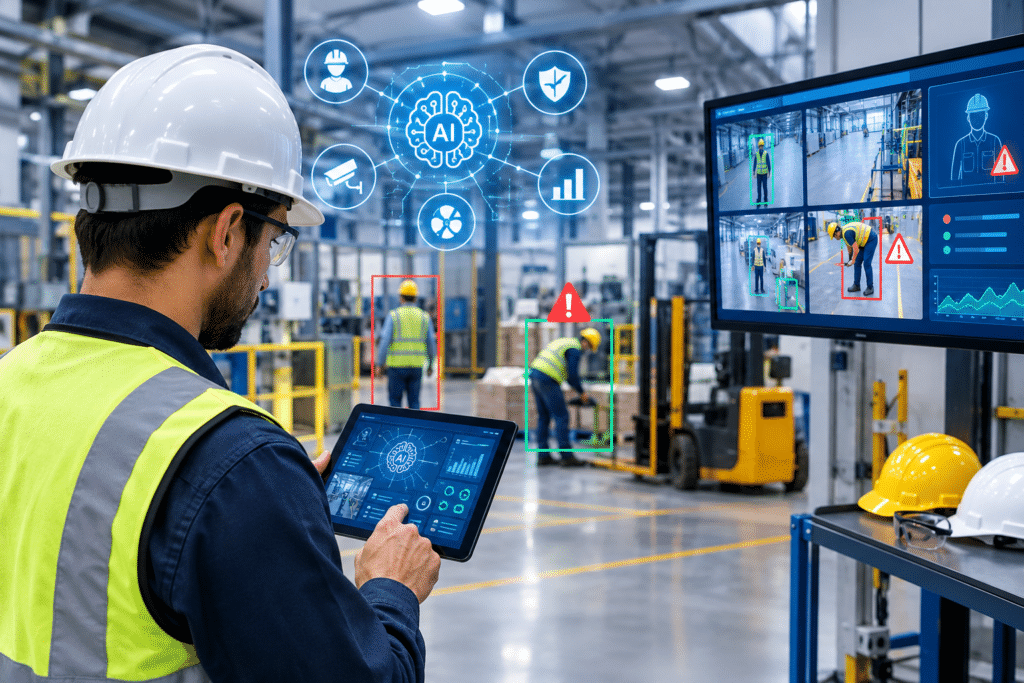
One of the most valuable applications of AI in Workplace Health and Safety is early hazard detection. Traditional inspections often depend on employees or safety officers noticing hazards during scheduled visits. Although inspections remain necessary, some dangerous conditions can develop between inspections.
AI-supported monitoring systems may identify hazards such as:
- Workers entering restricted areas.
- Missing helmets or other required protective equipment.
- Unsafe movement around industrial machinery.
- Objects blocking emergency exits.
- Potentially dangerous vehicle and pedestrian interactions.
When a system detects a possible hazard, it can notify the responsible team for verification and corrective action.
2. Predictive Risk Analysis
Predictive analytics uses historical and current information to identify patterns associated with workplace risks.
A system might identify that equipment failures frequently occur after extended operating periods or that certain areas experience repeated near-miss incidents. Safety professionals can use these findings to schedule inspections, improve maintenance, revise procedures, and provide targeted training.
However, predictions are not guarantees. AI systems can overlook hazards or produce inaccurate results when data is incomplete, biased, or outdated. Human assessment remains essential.
3. Smart Personal Protective Equipment
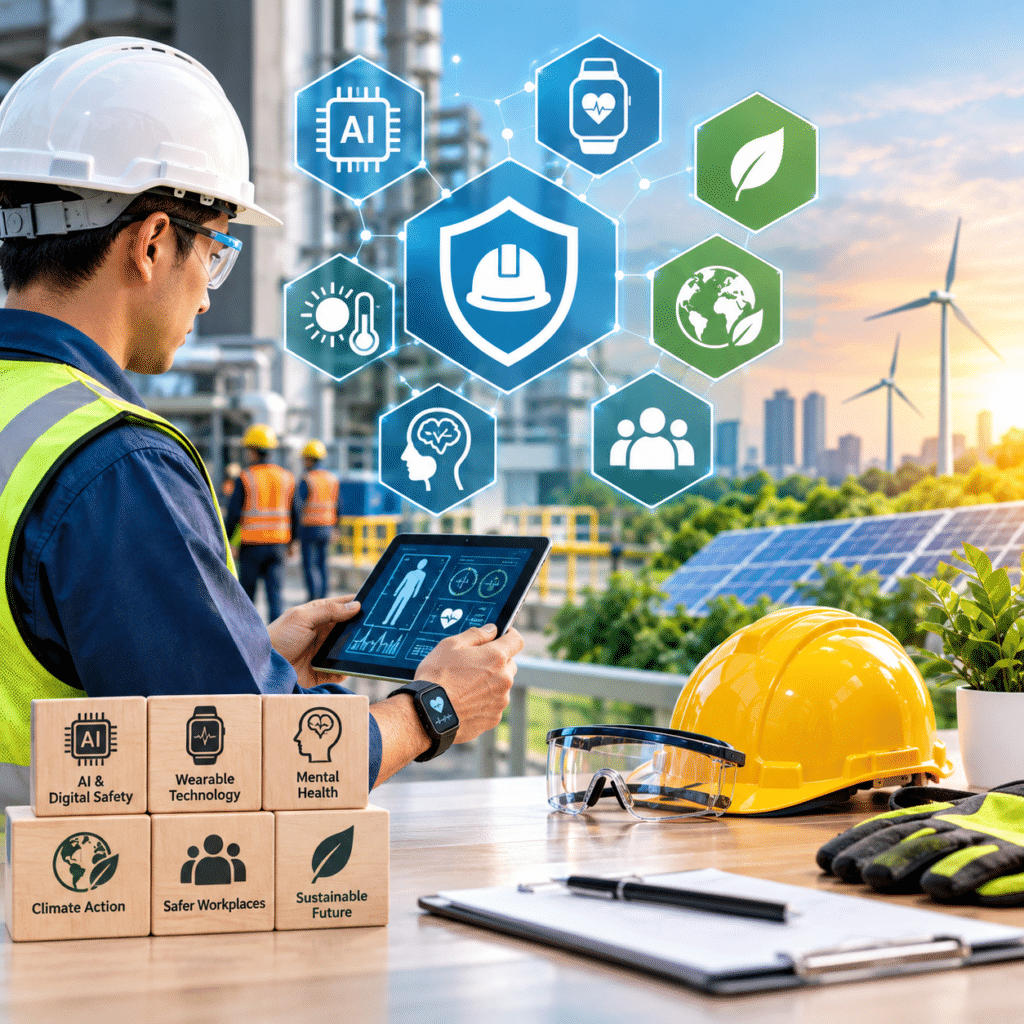
Personal protective equipment, including helmets, gloves, protective footwear, respirators, and safety glasses, is essential in many workplaces. AI-enabled devices can add another layer of protection. Depending on their design, smart helmets and wearable sensors may monitor environmental conditions, worker location, temperature, or other safety-related measurements.
Such technology can support quicker intervention, but it should not replace established protective equipment, exposure controls, or appropriate medical and safety procedures.
4. Computer Vision and Smart Cameras
In workplaces, this technology may help detect unsafe behavior, identify equipment movement, or monitor compliance with selected safety requirements.
For instance, a system could alert a supervisor when a person enters a hazardous machine zone while equipment is operating.
AI in Workplace Health and Safety can also help identify potential conflicts between forklifts and pedestrians in warehouses. These warnings may give workers and supervisors additional time to respond.
Nevertheless, camera systems can make mistakes because of poor lighting, obstructed views, unusual clothing, or crowded working conditions. Alerts should therefore be checked before disciplinary or other important decisions are made.
5. Workplace Environmental Monitoring
Employees may face environmental hazards such as excessive heat, airborne contaminants, noise, poor ventilation, and unsafe chemical exposure. AI-supported monitoring systems can analyze readings from suitable sensors and identify conditions that may require attention.
For example, a system may detect increasing temperatures in an industrial workspace and notify management that additional controls should be considered. In environments where air quality matters, sensor data can help identify unusual changes that require investigation. AI cannot independently measure every hazard.
Key Benefits of AI in Workplace Health and Safety
The adoption of AI can provide several benefits when organizations select suitable systems and implement them responsibly.
Improved Accident Prevention
AI can help safety teams recognize warning signs before they develop into serious incidents.
Faster Safety Responses
Better Risk Management
AI can help organize safety information and highlight areas requiring additional attention. This allows teams to prioritize inspections and corrective measures.
More Efficient Inspections
Digital tools can assist with inspection records, equipment monitoring, and hazard reporting. Safety officers can then devote more time to complex assessments and communication with employees.
Improved Safety Training
AI-supported training platforms may provide interactive scenarios and learning activities based on particular workplace risks.
For example, construction employees can practice identifying unsafe scaffolding, falling-object hazards, and inadequate fall protection through simulated training.
Stronger Decision-Making
When supported by reliable data, AI can help management compare incident patterns, evaluate prevention programs, and identify opportunities for improvement. These benefits depend on how the technology is used.
Real-World Applications of AI in Different Industries
AI in Workplace Health and Safety can support a range of industries, although each workplace requires a different approach.
1. Manufacturing and Factories
Manufacturing facilities may use AI to monitor machinery, detect selected unsafe conditions, analyze maintenance records, and identify potential interactions between workers and automated equipment. These systems can support existing machine guarding, lockout procedures, and scheduled inspections.
2. Construction Sites
AI-supported cameras and site-monitoring tools may help identify selected hazards, such as workers entering restricted zones or missing required protective equipment. They cannot replace competent supervision, suitable scaffolding, fall protection, or mandatory safety training.
3. Warehouses and Logistics
Warehouses frequently involve forklifts, heavy loads, storage racks, and busy pedestrian routes. AI monitoring may help detect unsafe traffic patterns, identify blocked routes, and analyze near-miss reports.
4. Healthcare Facilities
Hospitals and healthcare facilities must manage risks involving infection prevention, lifting patients, equipment handling, and staff fatigue. AI may support scheduling analysis, equipment monitoring, and the identification of patterns in safety reports. Healthcare organizations must protect confidential information and ensure that automated recommendations are reviewed appropriately.
5. Offices and Remote Workplaces
Office environments also present health and safety concerns, including poor ergonomics, electrical hazards, stress, and repetitive strain injuries. AI-supported ergonomic applications may provide workstation guidance or reminders to take breaks. Organizations can also use digital reporting tools to identify recurring workplace concerns. These systems should support employee well-being rather than create intrusive monitoring practices.
Challenges of Using AI in Workplace Safety
1. High Initial Costs
AI systems may require cameras, sensors, software subscriptions, technical support, staff training, and infrastructure upgrades. A practical starting point is to identify the most serious workplace hazards and select technology that addresses a specific safety need.
2. Data Privacy Concerns
Monitoring systems can collect information about employee activities, locations, and behavior. Organizations should explain what data is collected, why it is needed, who can access it, and how long it will be retained.
3. Incorrect Alerts
Too many inaccurate alerts may cause employees to ignore warnings. Organizations should test systems in real working conditions, review their performance, and maintain clear procedures for responding to alerts.
4. Cybersecurity Risks
Connected cameras, sensors, and workplace software can introduce cybersecurity vulnerabilities. Businesses should use appropriate access controls, secure networks, software updates, and incident-response procedures to protect safety systems and sensitive information.
5. Overdependence on Technology
AI should not replace trained safety professionals, employee experience, or legal responsibilities. A system may fail because of technical faults, missing data, or unexpected working conditions. Organizations must maintain manual reporting methods, emergency procedures, and regular safety inspections.
Best Practices for Implementing AI in Workplace Health and Safety
Step 1: Identify Major Workplace Hazards
Begin with a formal risk assessment. Review incident records, near misses, equipment failures, employee feedback, and existing safety procedures.
Step 2: Select the Right Technology
Choose technology that addresses a clearly defined problem. For example, environmental sensors may be appropriate for monitoring selected exposure risks, while computer vision may help monitor restricted areas. Avoid purchasing expensive systems simply because they are marketed as innovative.
Step 3: Involve Employees
Explain how the technology works and how it will support safety. Consult workers about privacy, usability, and possible concerns. Employees who understand a system’s purpose are better positioned to report problems and participate in its improvement.
Step 4: Test Before Full Implementation
Run a pilot project in a controlled area. Evaluate whether the system detects relevant hazards accurately and provides useful warnings. Document false alarms, missed hazards, maintenance requirements, and employee feedback.
Step 5: Train Workers and Supervisors
Provide training on alerts, reporting procedures, system limitations, and emergency responses. Workers must understand that an AI-generated warning is a signal to assess a possible hazard, not a substitute for professional judgment.
Step 6: Measure Performance
Evaluate whether the system contributes to safer working conditions.
Step 7: Review and Improve
Regularly inspect equipment, update software, review data quality, and reassess risks when working conditions change. AI in Workplace Health and Safety should form part of a continuous improvement program rather than a one-time technology project.
Future
The future of AI in Workplace Health and Safety is likely to involve more connected sensors, smarter analytics, improved hazard recognition, and greater integration with workplace management systems.
Wearable devices may provide better information about environmental exposure, while digital simulations may improve safety training.
Another important development will be responsible AI governance. Businesses will need clear policies covering data accuracy, privacy, cybersecurity, accountability, and human oversight.
In Pakistan, these technologies could be particularly useful in industries such as construction, manufacturing, logistics, and energy, where effective hazard management is essential. However, successful adoption will depend on affordability, staff training, reliable infrastructure, and compliance with applicable safety requirements. The strongest future approach will combine technology with competent leadership, employee participation, practical training, and proven risk-control measures.