

Introduction
Food safety has become increasingly dependent on how well food products can be tracked throughout the supply chain. From farms and processing facilities to transportation, supermarkets, restaurants, and consumers, every stage can affect the safety and quality of food.
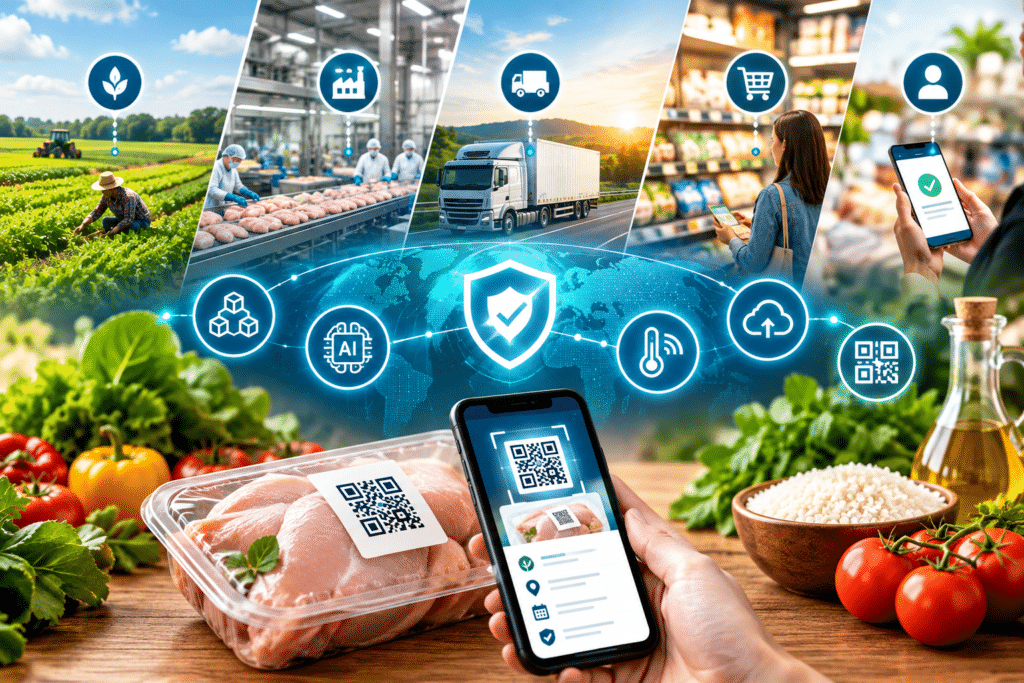
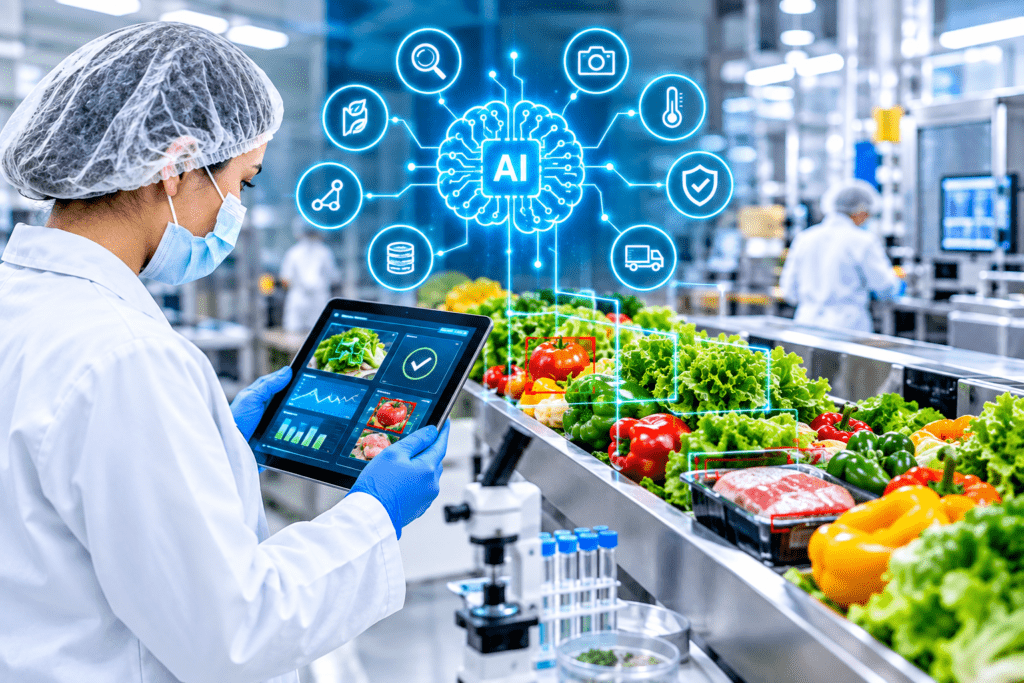
Food Traceability in 2026 is increasingly supported by digital technologies that allow businesses to record, monitor, and share information about food products in real time. Technologies such as blockchain, artificial intelligence (AI), Internet of Things (IoT) sensors, cloud platforms, QR codes, and digital identification systems are changing the way food businesses manage safety risks.
Traditional paper-based records can be slow to access, difficult to verify, and vulnerable to errors. Digital traceability systems can provide faster access to information and help companies identify where a food product came from, where it has been processed, and where it was distributed.
What Is Food Traceability?
Food traceability is the ability to follow the movement and history of food products and ingredients through different stages of the supply chain. A traceability system can record information such as:
- Where raw materials originated
- Supplier and farm information
- Production and processing dates
- Batch or lot numbers
- Transportation details
- Storage conditions
- Distribution locations
- Retail information
- Product recall information
The main objective is to make it easier to identify a food product and its journey through the supply chain. For example, if a batch of packaged food is discovered to contain a harmful contaminant, a traceability system can help a company identify the affected batch, suppliers, processing facility, and distribution locations. This can support a more targeted and faster recall.
Why Food Traceability Matters in 2026
The modern food supply chain involves many organizations and geographic locations. This complexity creates challenges for food safety. Food Traceability in 2026 helps organizations respond to these challenges by improving visibility throughout the supply chain.
1. Faster Food Recalls
When a safety problem is discovered, time is critical. Digital records can help companies identify affected products and locations more quickly. Instead of manually checking large numbers of paper documents, food safety teams can search digital databases using batch numbers, supplier information, or production dates. This can reduce the amount of time needed to identify potentially affected products.
2. Better Supply Chain Visibility
Digital traceability allows companies to monitor products from their origin to their final destination. Businesses can gain better visibility into:
- Suppliers
- Processing facilities
- Warehouses
- Transportation
- Retail locations
- Product batches
Greater visibility can help organizations identify weaknesses and improve food safety controls.
3. Improved Consumer Transparency
QR codes and digital product records can provide information about ingredients, production locations, certifications, and other relevant details. A consumer may scan a QR code on packaging and access information about the product using a smartphone.
4. Reduced Food Waste
When businesses have better information about inventory, product movement, and shelf life, they can make more informed decisions about storage and distribution. Better tracking can help prevent products from being unnecessarily discarded because their location or expiration information is unclear.
Digital Technologies Transforming Food Traceability in 2026
Several technologies are playing an important role in modern traceability systems.
1. Blockchain Technology
Blockchain provides a distributed digital ledger that can record transactions and information across a network. In food supply chains, blockchain can be used to record information about product movement and transactions.
For example, information about a food product can be recorded as it moves from a producer to a processor, distributor, retailer, and finally the consumer. One potential advantage is improved transparency between supply chain participants.
However, blockchain does not automatically guarantee that the information entered into the system is accurate. Businesses still need reliable data collection, verification procedures, and strong food safety controls.
2. Artificial Intelligence
Artificial intelligence can analyze large amounts of supply chain data and identify patterns that may be difficult to detect manually. In Food Traceability in 2026, AI can support:
- Risk identification
- Supply chain monitoring
- Anomaly detection
- Demand forecasting
- Recall management
- Supplier risk assessment
- Data analysis
For example, an AI system may identify unusual patterns in temperature records or product movement and alert food safety personnel for further investigation. AI can therefore support human decision-making rather than completely replacing food safety professionals.
How Food Traceability Improves Food Safety
Food Traceability in 2026 can strengthen food safety management by connecting information from different stages of the food supply chain.
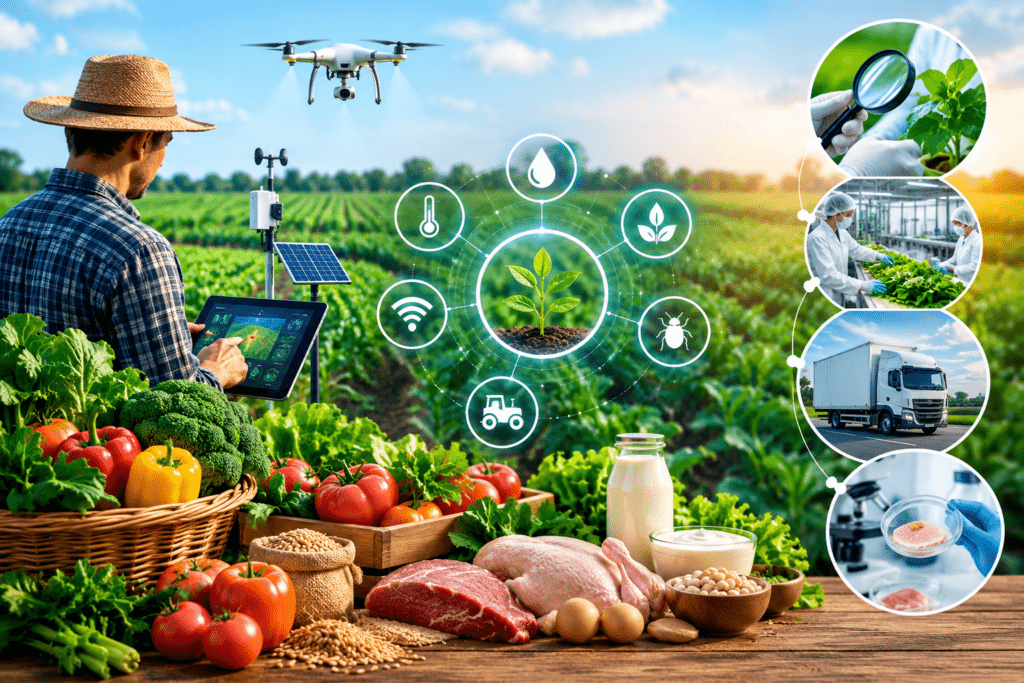
Farm-Level Monitoring
Traceability can record information about farms, suppliers, crops, livestock, and agricultural inputs. This information can help businesses understand the origin of raw materials.
Processing-Level Monitoring
Food processing facilities can connect production records with specific batches. If contamination is identified, companies can investigate the relevant production period and ingredients.
Transportation Monitoring
Digital sensors can monitor conditions during transportation. Temperature-sensitive products can be tracked to identify potential cold-chain problems.
Retail-Level Monitoring
Retailers can use digital records to identify where particular batches have been distributed. This can support faster product withdrawal when necessary.
Consumer-Level Information
Consumers can receive more information about food products through QR codes and digital platforms. This can improve transparency and encourage informed purchasing and storage practices.
Role of Digital Traceability in Food Recalls
Food recalls are one of the most important applications of traceability. When a food safety problem is discovered, companies need to determine:
- Which product is affected?
- Which batch or lot is involved?
- Which ingredients were used?
- Where was the product manufactured?
- Where was it distributed?
- Which retailers received it?
- How much product needs to be removed?
Digital traceability systems can help answer these questions more quickly.
A targeted recall can potentially reduce unnecessary product destruction because companies may be able to identify the specific batches affected rather than removing an entire product line.
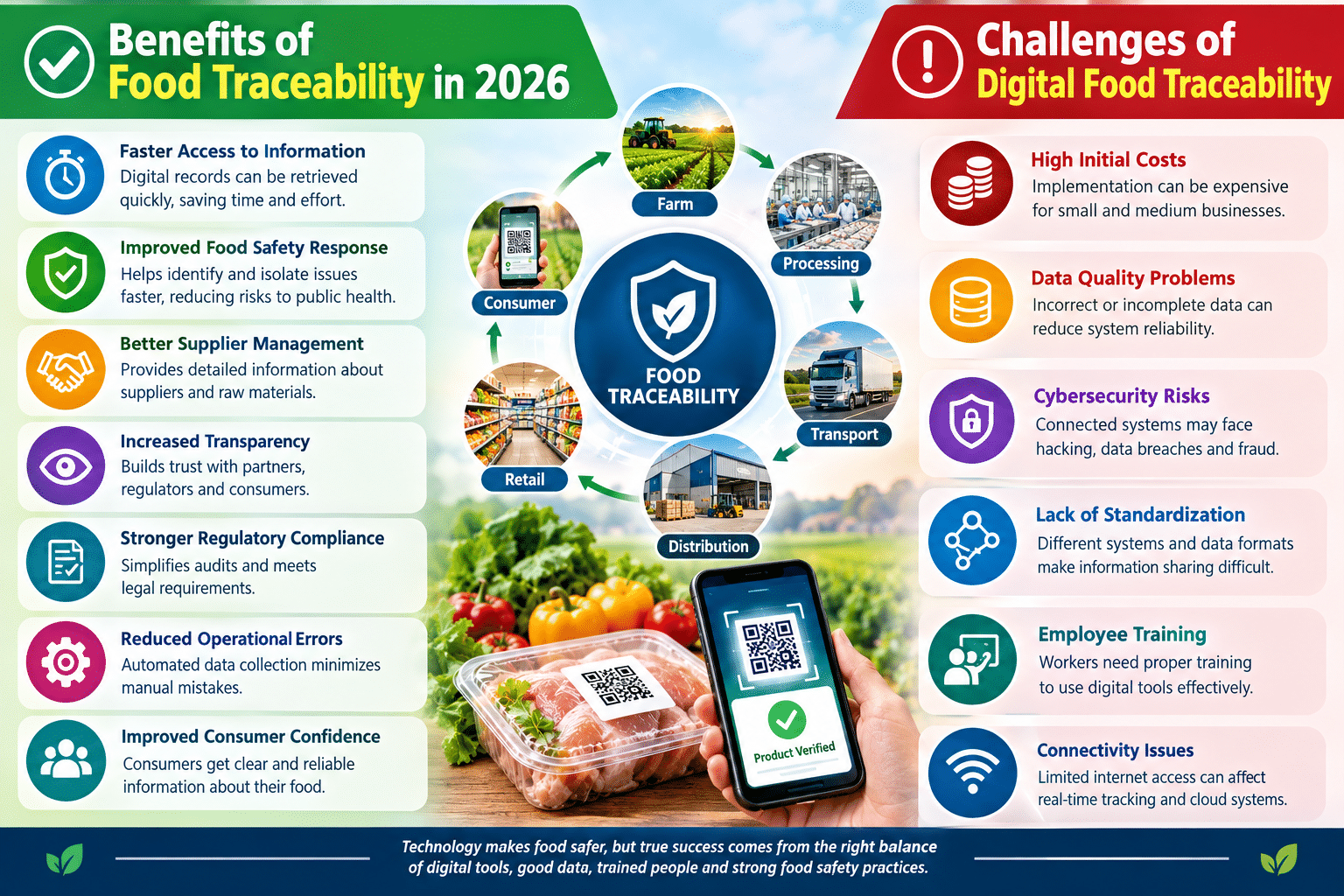
Benefits of Food Traceability in 2026
Modern digital traceability can provide several benefits for food businesses.
Faster Access to Information
Digital records can be searched and retrieved much faster than paper documentation.
Improved Food Safety Response
Businesses can investigate food safety incidents more efficiently.
Better Supplier Management
Companies can maintain more detailed information about suppliers and raw materials.
Increased Transparency
Supply chain information can be shared with authorized partners and, where appropriate, consumers.
Stronger Regulatory Compliance
Digital records can support audits and regulatory requirements.
Reduced Operational Errors
Automated data collection can reduce some types of manual record keeping errors.
Improved Consumer Confidence
Transparent product information can help consumers understand where their food comes from and how it has moved through the supply chain.
Challenges of Digital Food Traceability
Despite its benefits, implementing digital traceability can create challenges.
High Initial Costs
Small businesses may find it expensive to purchase software, sensors, scanners, and other digital equipment.
Data Quality Problems
Incorrect or incomplete data can reduce the value of a traceability system.
Cybersecurity Risks
Connected systems can create cybersecurity concerns. Businesses need appropriate access controls, authentication, backups, and security procedures.
Lack of Standardization
Different organizations may use different systems and data formats, making information sharing difficult.
Employee Training
Workers need training to correctly use digital traceability tools and record information.
Connectivity Issues
Businesses operating in areas with limited internet connectivity may face difficulties using cloud-based systems. These challenges demonstrate that technology should be combined with appropriate procedures, training, verification, and food safety management.
Food Traceability and Small Food Businesses
Digital traceability is not only relevant to multinational food companies. Restaurants, bakeries, catering companies, food manufacturers, and small retailers can also benefit. A small business can begin with relatively simple systems such as:
- Digital supplier records
- Electronic invoices
- Batch numbers
- QR codes
- Digital temperature logs
- Cloud-based inventory records
- Electronic recall procedures
Businesses do not necessarily need to implement every advanced technology at once. A practical approach is to identify the most important food safety risks and gradually introduce technology where it can provide the greatest benefit.
Future of Food Traceability
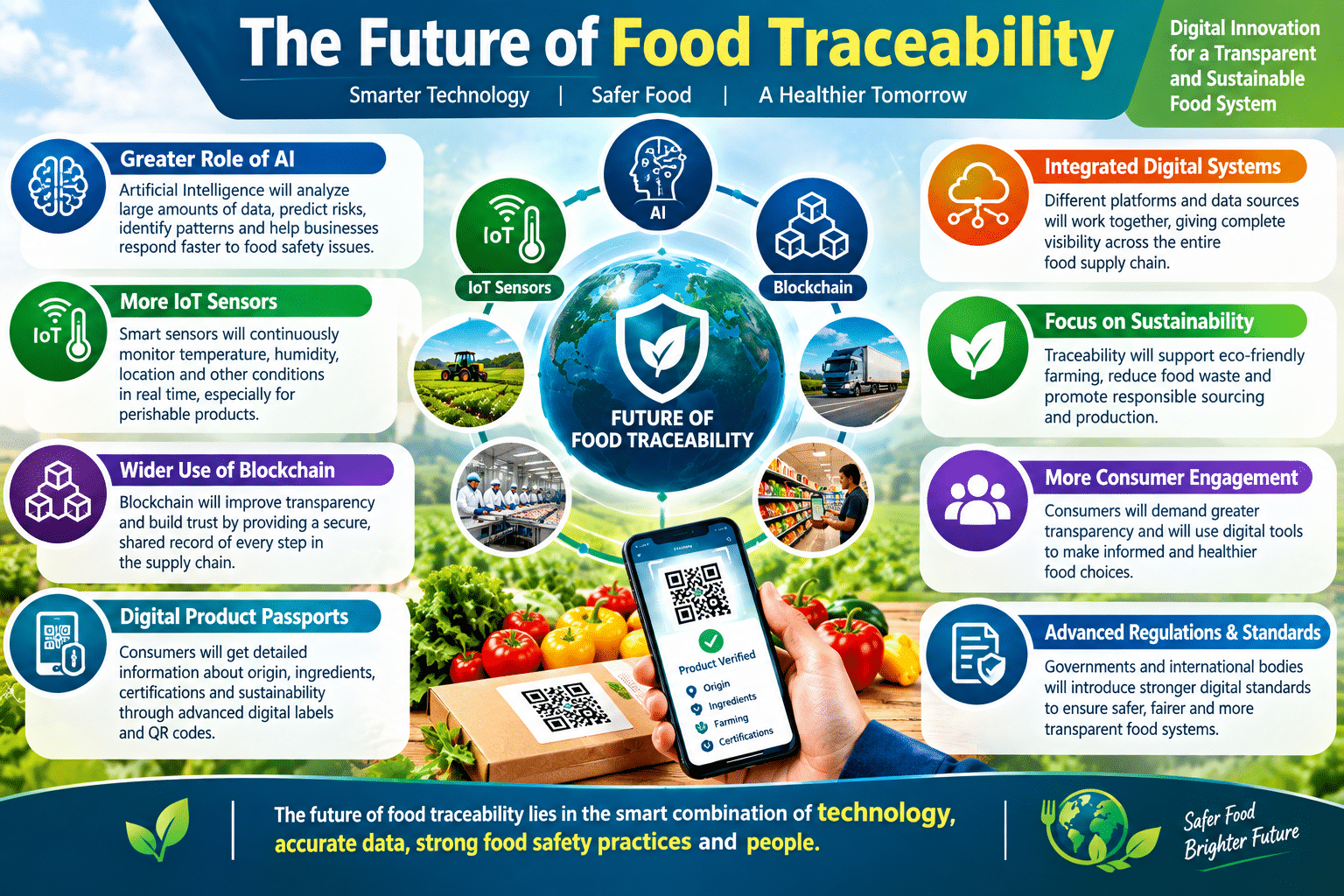
The future of Food Traceability in 2026 and beyond is likely to involve greater integration between different digital systems. AI may increasingly analyze traceability data, while IoT sensors can continuously monitor environmental conditions. Blockchain and other distributed technologies may support information sharing between supply chain participants.
Digital product passports and advanced labeling systems may also provide consumers with more detailed product information. However, technology alone cannot guarantee food safety. Effective traceability requires accurate data, trained employees, strong food safety procedures, supplier controls, verification, and regulatory oversight. The strongest systems are likely to combine digital technology with established food safety principles and human expertise.