Introduction
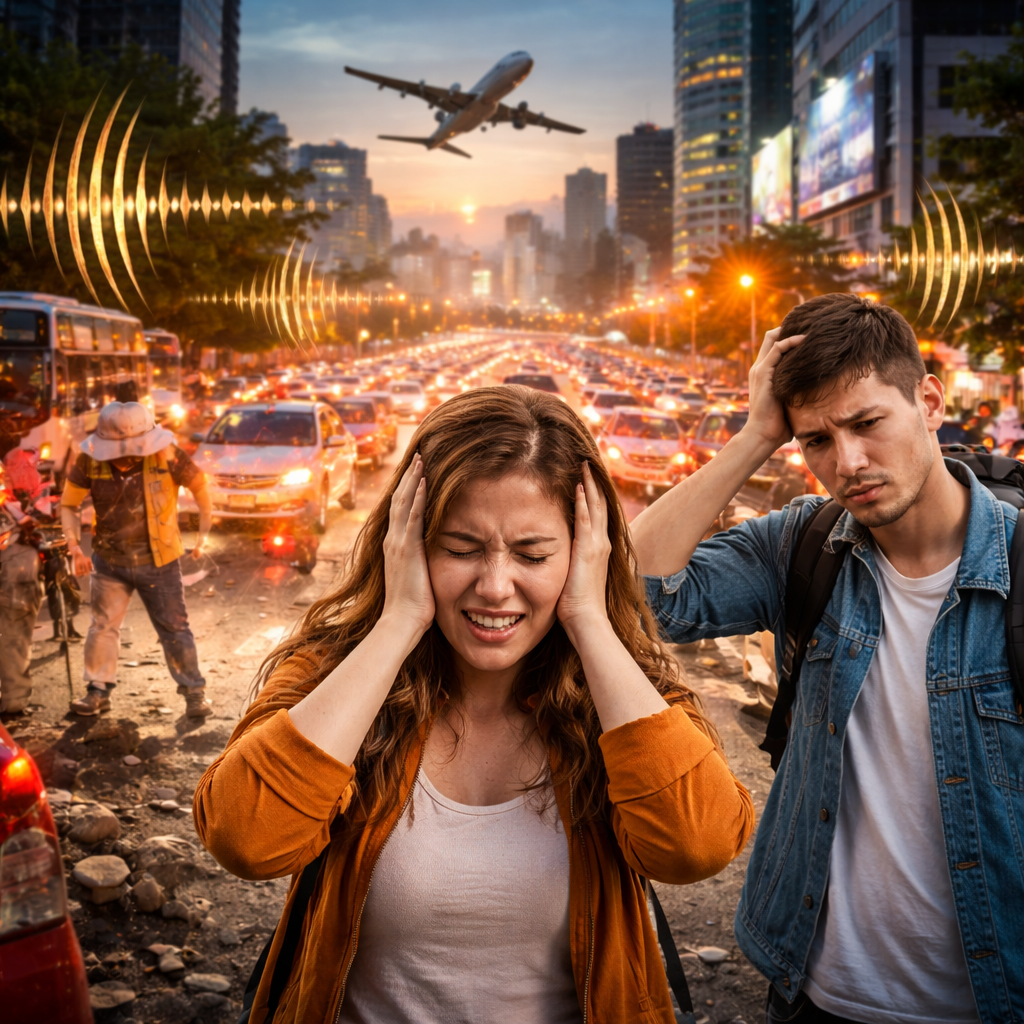
Urban noise pollution and its impact on human health in 2026 has become one of the most alarming environmental and public health concerns worldwide. As cities expand rapidly and transportation systems grow, noise levels are increasing beyond safe limits. Millions of people living in urban areas are exposed daily to harmful sound levels that silently damage their physical and mental well-being.
In 2026, experts warn that urban noise pollution and its impact on human health in 2026 must be treated as seriously as air and water pollution. While noise may not be visible, its long-term consequences are dangerous and widespread.
What Is Urban Noise Pollution and Its Impact on Human Health in 2026?
Urban noise pollution and its impact on human health in 2026 refers to excessive or harmful sound levels in cities that negatively affect human health. Noise above 85 decibels (dB) for prolonged periods can cause permanent health damage.
Common sources include:
- Traffic congestion and vehicle horns
- Construction activities
- Industrial machinery
- Public events and loudspeakers
- Airports and railway stations
With increasing urbanization, urban noise pollution and its impact on human health in 2026 continues to worsen.
Major Causes of Urban Noise Pollution and Its Impact on Human Health in 2026
- Traffic and Transportation
Traffic remains the largest contributor to urban noise pollution and its impact on human health in 2026. Cars, buses, motorcycles, and trucks create constant background noise in cities.
- Construction and Infrastructure Development
Rapid urban growth has increased construction projects. Heavy machinery, drilling, and demolition significantly add to urban noise pollution and its impact on human health in 2026.
- Industrial Activities
Factories operating near residential areas contribute to urban noise pollution and its impact on human health in 2026, especially in developing countries.
- Social and Recreational Events
Concerts, weddings, political gatherings, and loud celebrations raise city noise levels.
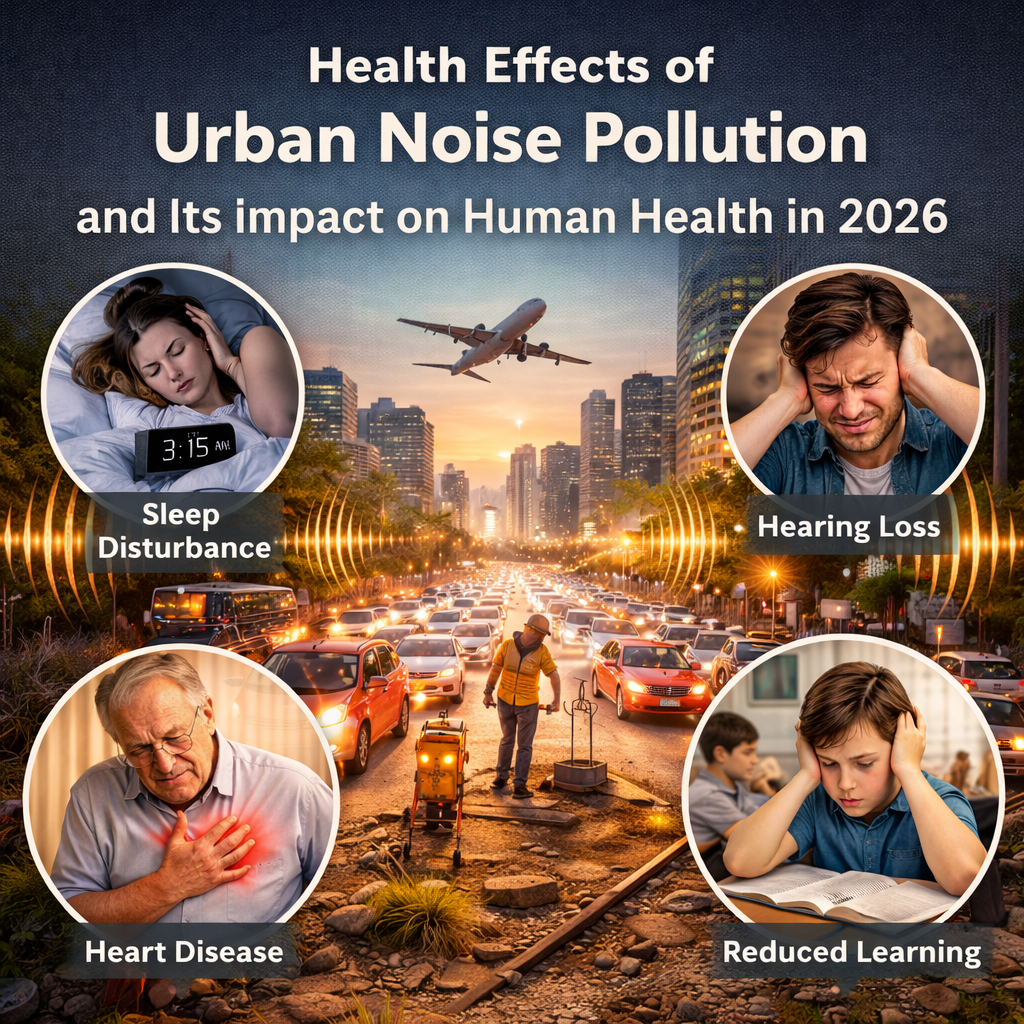
Health Effects of Urban Noise Pollution and Its Impact on Human Health in 2026
Urban noise pollution and its impact on human health in 2026 affects both physical and mental health.
- Hearing Damage
Prolonged exposure to loud urban environments leads to:
- Hearing loss
- Tinnitus (ringing in ears)
- Reduced sound sensitivity
Urban noise pollution and its impact on human health in 2026 is a leading cause of preventable hearing disorders.
- Sleep Disorders
Noise at night disrupts sleep cycles. Poor sleep caused by urban noise pollution and its impact on human health in 2026 results in:
- Insomnia
- Fatigue
- Reduced productivity
- Cardiovascular Diseases
Research shows a strong link between urban noise pollution and its impact on human health in 2026 and:
- High blood pressure
- Heart disease
- Increased stroke risk
Stress hormones rise when the body is exposed to constant noise.
- Mental Health Problems
Urban noise pollution and its impact on human health in 2026 also causes:
- Anxiety
- Depression
- Irritability
- Reduced concentration
Continuous noise increases psychological stress.
- Impact on Children’s Development
Children living in noisy environments may experience:
- Reduced learning ability
- Memory problems
- Behavioral issues
Urban noise pollution and its impact on human health in 2026 is particularly harmful to children and students.
Economic and Social Impact of Urban Noise Pollution and Its Impact on Human Health in 2026
Beyond health, urban noise pollution and its impact on human health in 2026 affects society:
- Reduced workplace productivity
- Increased healthcare costs
- Lower property values
- Decreased quality of life
Governments are now recognizing that controlling noise pollution is economically beneficial.
Practical Solutions to Reduce Urban Noise Pollution and Its Impact on Human Health in 2026
- Urban Planning Improvements
- Creating silent zones
- Building sound barriers
- Designing noise-absorbing roads
- Green Spaces
Planting trees reduces noise naturally. Urban forests help control urban noise pollution and its impact on human health in 2026.
- Stricter Noise Regulations
Governments must enforce noise limits and penalties for violations.
- Promoting Electric Vehicles
Electric vehicles produce less noise compared to traditional engines.
- Public Awareness Campaigns
Education about urban noise pollution and its impact on human health in 2026 encourages responsible behavior.
Case Study: Industrial Noise Pollution in an Urban Industrial Area
Background:
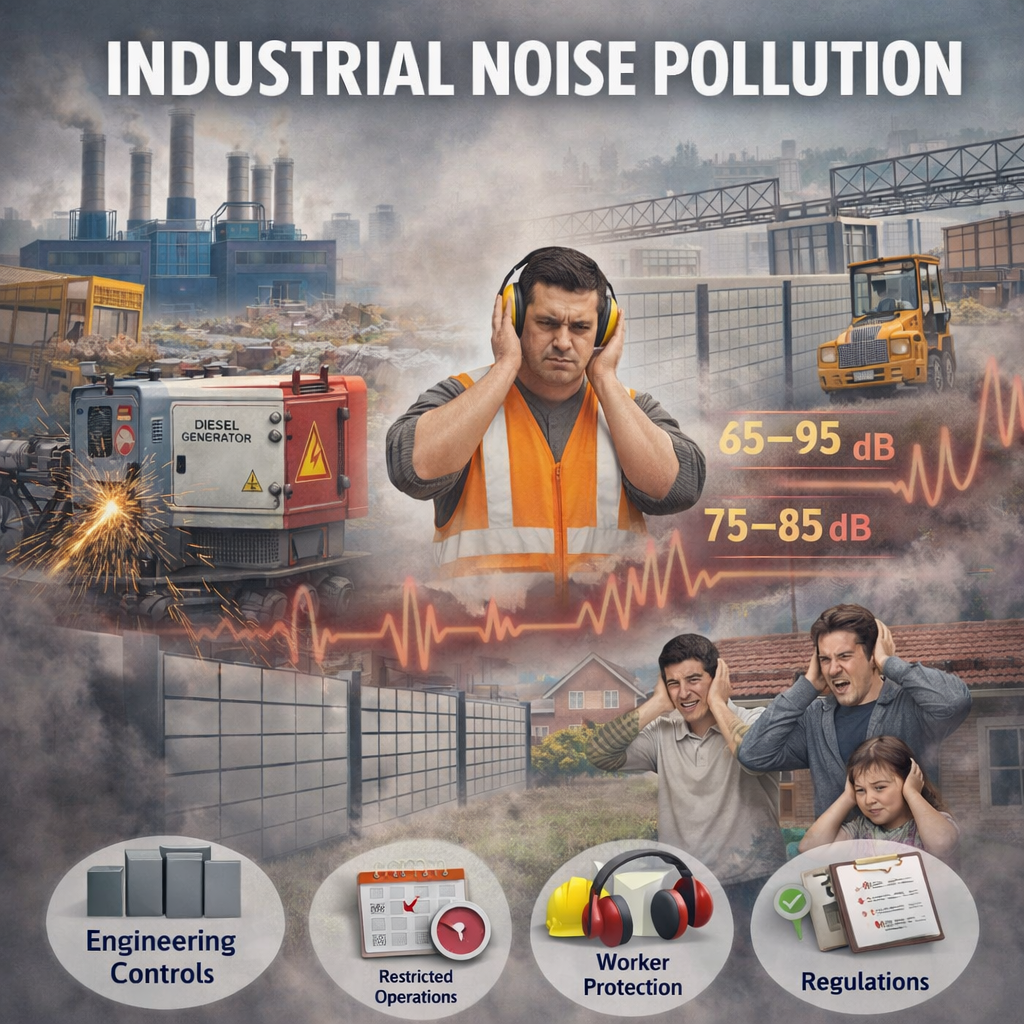
In 2026, residents living near the Sundar Industrial Estate (example case similar to many South Asian industrial zones) reported increasing complaints about excessive noise from nearby factories. The area included textile mills, steel fabrication units, and power generators operating 24/7.
Problem Identified
A local environmental protection agency conducted a survey and found:
- Average daytime noise levels: 85–95 dB
- Nighttime noise levels: 75–85 dB
- WHO recommended safe limit for residential areas: 55 dB (day) and 40 dB (night)
Major noise sources included:
- Heavy machinery
- Diesel generators
- Metal cutting and pressing equipment
- Transport trucks loading/unloading materials
Impacts on Community
- Health Effects
- Increased cases of hearing problems among factory workers
- Sleep disturbances in nearby residents
- Headaches, stress, and high blood pressure
- Reduced concentration among school children
- Environmental Effects
- Disturbance to local wildlife
- Reduced property value in residential zones
Investigation Findings
- Lack of soundproofing in factory buildings
- No proper silencers installed on generators
- Industries operating at night without regulation enforcement
- Poor zoning (residential areas too close to industrial sites)
Solutions Implemented
- Engineering Controls
- Installation of acoustic barriers and soundproof walls
- Use of vibration isolation pads for heavy machinery
- Regular maintenance of machines
- Installation of silencers on exhaust systems
- Administrative Controls
- Restricted night-time operations
- Rotational shifts to reduce worker exposure
- Mandatory use of ear protection equipment
- Policy & Regulation
- Government noise monitoring system
- Fines for industries exceeding legal noise limits
Results After 1 Year
- Average noise levels reduced to 60–65 dB (day)
- 40% reduction in community complaints
- Improved worker productivity
- Better health outcomes reported
Industrial noise pollution is a serious environmental and public health issue, especially in rapidly urbanizing regions. However, through proper regulation, engineering solutions, and community involvement, noise levels can be significantly reduced while maintaining industrial productivity.
The Future Outlook in 2026
If immediate action is not taken, urban noise pollution and its impact on human health in 2026 will continue to rise. Smart city technologies, better traffic management, and sustainable development policies can reduce harmful noise exposure. The future depends on balancing urban growth with environmental protection.